50 Things to Do Instead of Scrolling
You pick up your phone to check one thing. A little later, you're still scrolling—and you're not even particularly interested in what you're seeing.
Putting the phone down is the easy advice. The harder question is: what are you actually going to do instead?
You don't need to start a new hobby every time you have five spare minutes. You don't need a productivity challenge or a dramatic digital detox either. Sometimes you need something that takes almost no effort to begin. Other times, you have an hour—or an entire evening—that could become something much more interesting.
That's how this list works.
Instead of giving you 50 random activities, we've organized them around the situation you're actually in: how much time you have, how much energy you have, and what sounds good right now.
Don't choose the most impressive thing on the list.
Choose something you'll actually start.
If you have… | Try… |
|---|---|
5 minutes | Something with almost no setup |
15 minutes | A small activity you can stop easily |
About an hour | A proper hobby session |
More time | Make, learn, move, explore or meet someone |

If You Have Five Minutes
These aren't hobbies. That's intentional.
They're tiny interruptions you can use when opening a feed feels almost automatic. None requires buying equipment or planning your afternoon.
1. Step outside
Walk onto the balcony, doorstep, garden, courtyard, or pavement. You don't need a destination. Give yourself five minutes somewhere different from the place where you were scrolling.
2. Make a drink—and do nothing else
Tea, coffee, cold water, whatever you like. Make it without carrying your phone around with you, then actually drink it while it's still the temperature you intended.
3. Doodle on paper
Draw boxes, faces, leaves, patterns, imaginary maps—anything. The result doesn't need to be good enough to keep.
4. Write three lines
Not a journal entry. Just three lines.
What happened today?
What's on your mind?
What do you want to remember?
Stop there if you want.
5. Water a plant
One plant is enough. Check the soil, remove a dead leaf, turn the pot toward the light. A tiny physical task can fill a tiny gap.
6. Read a few pages
Keep a physical book, magazine, comic, or collection of short stories somewhere you normally reach for your phone. Five minutes is enough to move a bookmark.
7. Tidy one surface
Not “clean the house.”
Clear the coffee table. Straighten one shelf. Put away the things on your desk.
The boundaries matter.
8. Stretch
Stand up, roll your shoulders, move your neck gently, reach upward, or stretch your legs. You don't need to turn it into a workout.
9. Look outside properly
Find something you haven't noticed before: a bird, a cloud shape, the light on a building, someone tending a garden, the way a tree moves in the wind.
You don't have to optimize every empty moment. Paying attention counts.
10. Do absolutely nothing
Yes, really.
Sit for five minutes without replacing your feed with another task.
Not every spare moment needs to become productive.
If You Have 15 Minutes
Fifteen minutes is where an activity can start feeling like your thing.
You won't finish a scarf, paint a masterpiece, or become fluent in Italian. You don't need to.
11. Journal
Write one page about your day, something you're thinking through, or a question you've been avoiding.
If a blank page feels intimidating, start with:
“Right now, I'm thinking about…”
Then continue.
12. Fold something from paper
Origami has a wonderfully small footprint: paper, a surface, and one project.
Start with a simple shape you can complete rather than an elaborate model that turns your relaxing quarter-hour into an engineering dispute.
13. Sketch one object
Put a mug, shoe, plant, key, or piece of fruit in front of you and draw what you see.
One object. One page. Fifteen minutes.
14. Try hand lettering
Write one word or short phrase slowly and deliberately. Experiment with the shape, spacing, thickness, and style of the letters.
It's writing with the emphasis shifted from what the words say to how they look.
15. Color a page
Adult coloring is easy to stop and restart, which makes it particularly useful for small pockets of time.
Keep the book and pencils somewhere visible rather than buried in a cupboard.
16. Mend something
Sew on a loose button. Repair a small tear. Reinforce a worn patch.
If you enjoy making the repair visible rather than hiding it, that tiny practical job can lead toward Mend something as a hobby.
17. Take a short walk
Don't worry about steps, pace, distance, or turning it into exercise.
Walk to the end of the road and back. Circle the block. Take the longer route to a nearby shop.
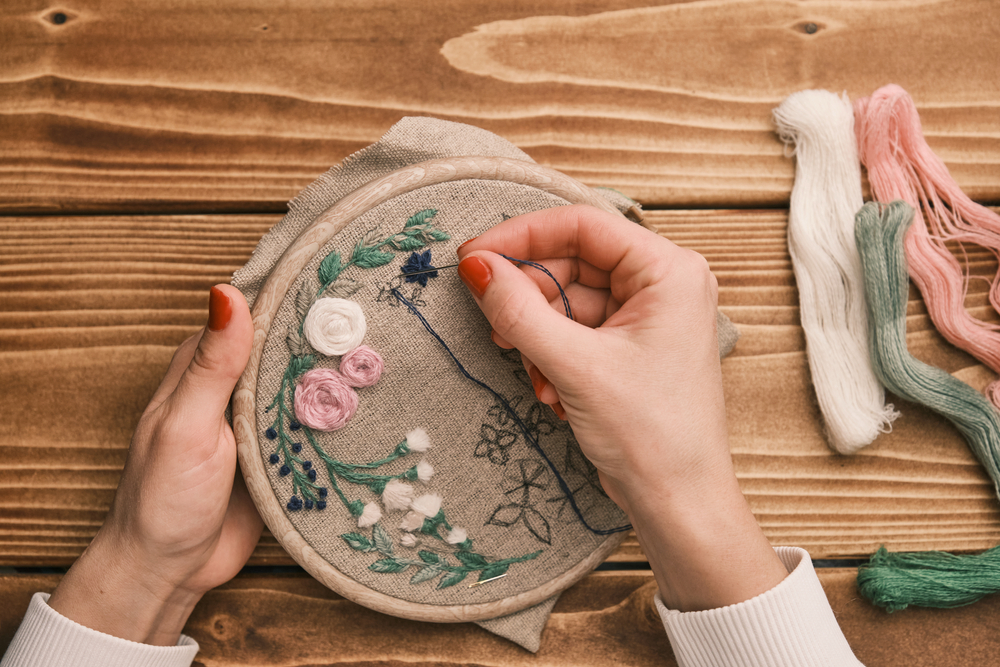
18. Add a few stitches to an embroidery project
Embroidery doesn't require you to complete something every time you pick it up.
A prepared hoop can make a good repeatable activity for short sessions: add a small section, put it down, return later.
19. Work on a puzzle
Leave a jigsaw somewhere it can remain unfinished, if you have the space.
Your goal for fifteen minutes can simply be one corner, one color, or a handful of pieces.
20. Write a letter
Not an email.
Write a note to a friend, relative, partner, or someone you haven't spoken to in a while. You don't even have to finish it in one sitting.
If You're Tired
This is where ambitious advice tends to fail.
You finish a long day, sit down, and telling yourself to “learn woodworking” isn't especially persuasive.
Choose something with a low barrier to starting.
21. Read something purely for pleasure
No professional development. No book you think you should finish.
Choose something you actually want to read.
22. Do a crossword
A crossword, word search, sudoku, or other paper puzzle gives you something small and defined to solve.
And when you've had enough, there's a natural place to stop.
23. Try adult coloring
No blank-page problem. The drawing is already there; you just choose what happens next.
24. Make a cup of tea and sit somewhere different
Move from the sofa to the balcony. Sit at the kitchen table. Take your drink outside.
Sometimes changing the setting is enough to interrupt the usual phone routine.
25. Listen to an album from beginning to end
Don't shuffle it. Don't browse while it plays.
Pick an album and let listening be the activity rather than background noise for another activity.
26. Add a few pieces to a jigsaw puzzle
No finish line required tonight.
Find the edge pieces. Work on one color. Add five pieces and walk away.
27. Fold simple origami
Choose something familiar or beginner-friendly rather than spending the whole session trying to decipher an advanced diagram.
The pleasure can be in the repetition.
28. Write down what you want tomorrow to look like
Not an elaborate productivity system.
Write a few things you need to remember, one thing you'd like to do, and anything you can prepare now.
Then close the notebook.
29. Sit outside and watch what's happening
Clouds, birds, rain, passing people, changing light.
Cloud watching and casual birdwatching require surprisingly little commitment to begin.
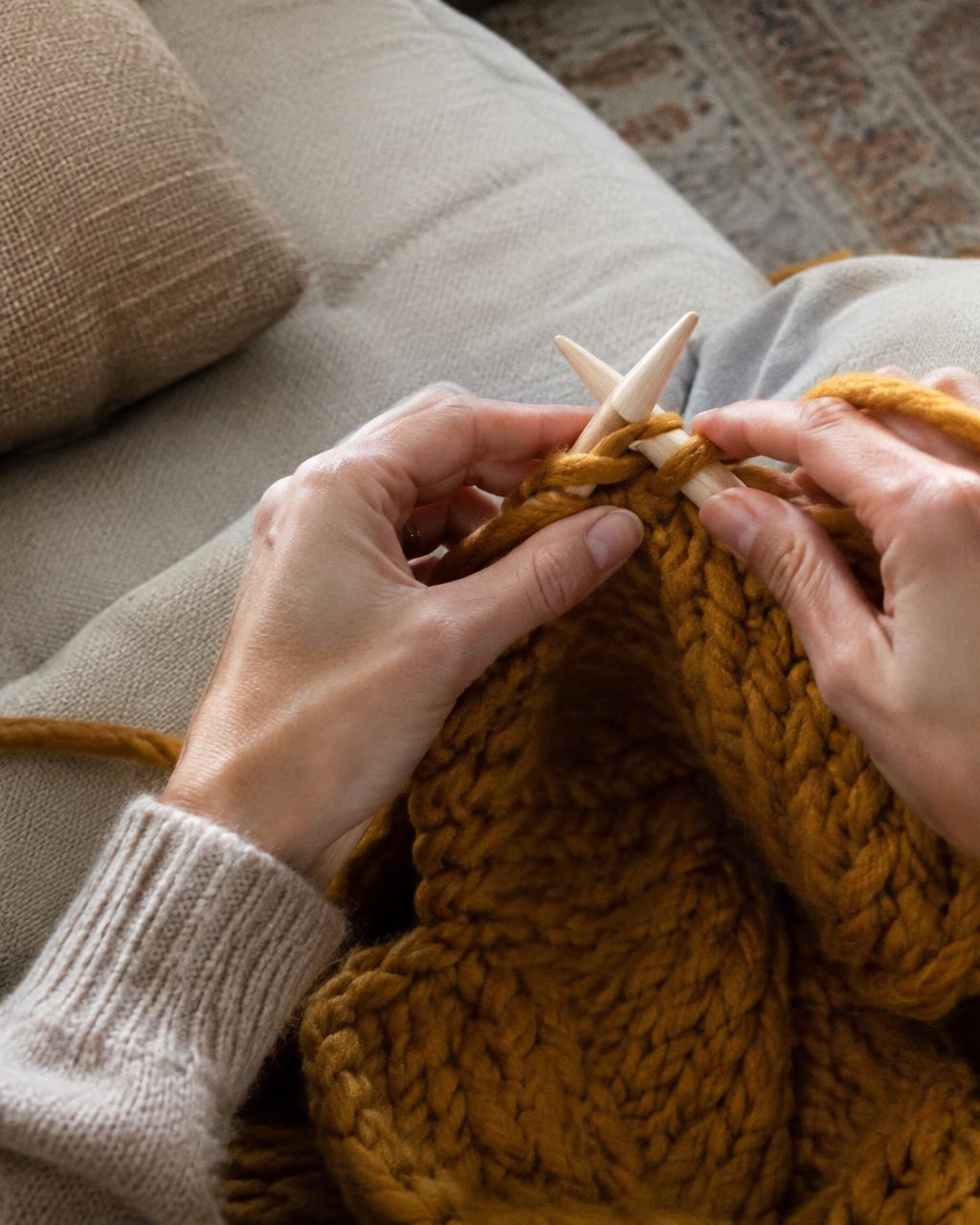
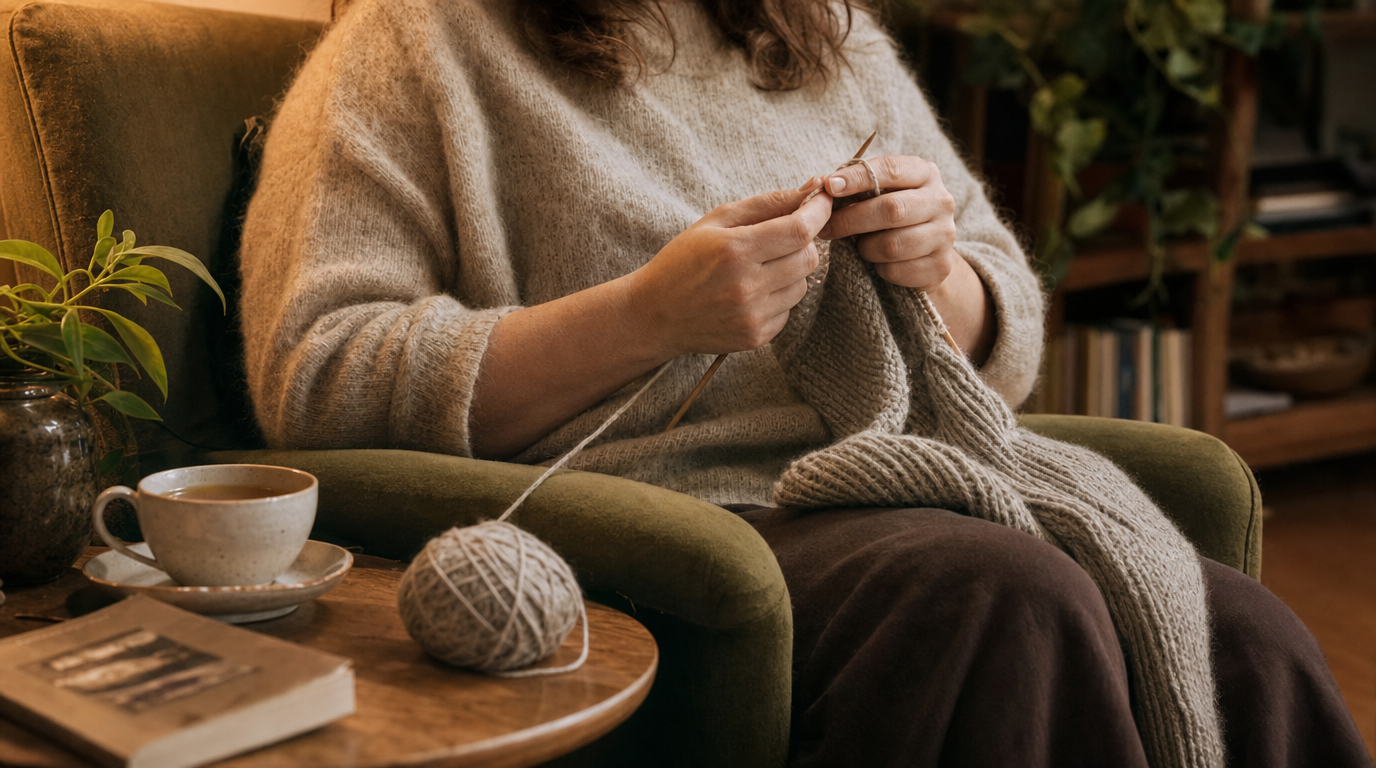
30. Do a few rows, stitches, or repeats of something
Knitting, crochet, embroidery, cross-stitch—if you've already learned the basics, repetitive handwork can fit neatly into a quiet evening.

If You Need to Move
Maybe you don't need another quiet activity.
Maybe you've been sitting long enough.
31. Walk somewhere without a purpose
You don't need an errand.
Choose a direction, walk for a while, then come back.
32. Do a short yoga session
If you already know a few comfortable movements, put together a simple sequence without turning on a video.
If you're completely new, learn safely first rather than improvising unfamiliar poses.
33. Work in the garden
Pull a few weeds. Water something. Repot a plant. Plant seeds. Inspect what's growing.
No garden? A balcony, windowsill, or container can still give you something living to tend.
34. Go for a bike ride
It doesn't have to be training.
A short ride around familiar streets or a nearby path can be enough to turn an empty hour into an outing.
35. Play badminton
With another person and a little space, badminton can move you quickly from “What should we do?” to actually doing something.
Keeping score is optional.
36. Throw a frisbee
A park, garden, beach, or other safe open space is enough.
This is one of those activities that's almost absurdly simple once the object is already in your hand.
37. Try table tennis
If you have access to a table, it's social, active, and easy to play casually without turning every match into a tournament.
38. Go birdwatching on foot
Instead of making the walk itself the objective, give yourself something to notice.
How many different birds can you spot? Which calls sound different? Which ones do you recognize?
You don't need to identify everything.
39. Fly a kite
This one needs the right weather and an open space—which is exactly why it feels different from an activity available at all times.
40. Take a longer hike
If you've got more than an hour, suitable weather, and an appropriate route, turn the screen break into somewhere you actually go.
Prepare for the route and conditions rather than treating a hike like an extended stroll.
If You Want to Make Something
Scrolling gives you an endless stream of finished things to look at.
Sometimes it's more satisfying to end the hour with something that didn't exist before you started.
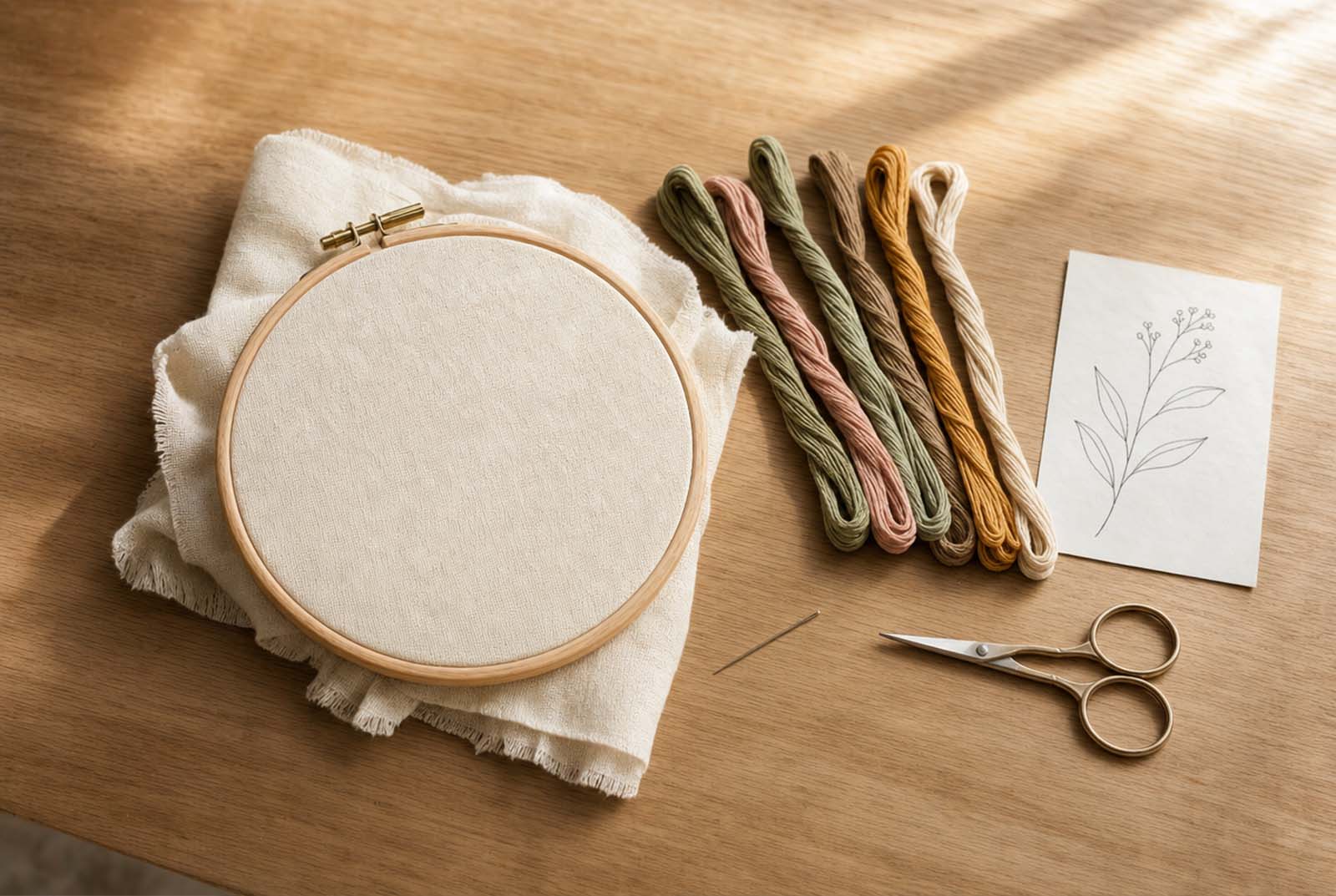
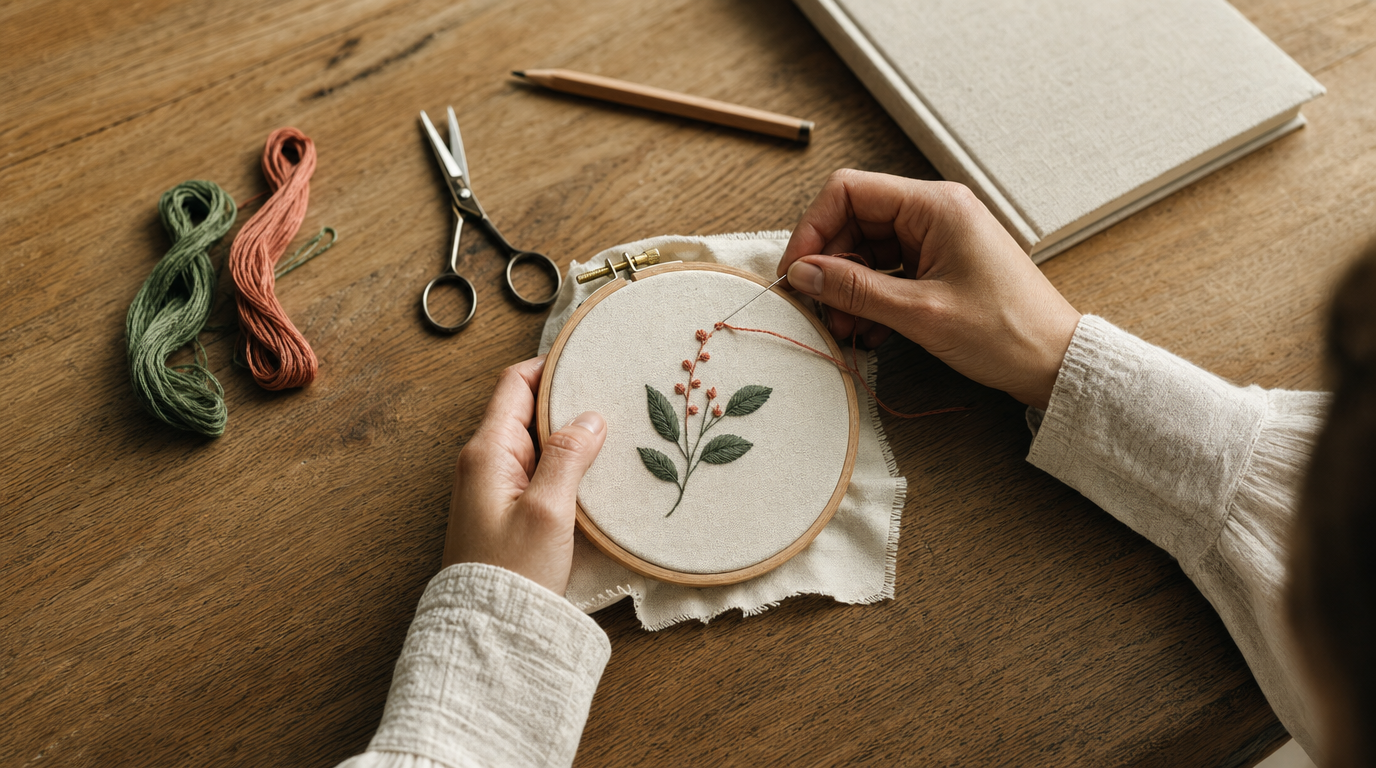
41. Try embroidery
A hoop, fabric, needle, and thread are enough for a basic start.
Begin with a small motif rather than an ambitious wall piece. OFFLIVA's existing beginner embroidery guide can take you through the first setup and stitches.
42. Learn crochet
Start with the basic movements and a small practice piece.
Your first objective doesn't need to be a blanket. Learning how yarn and hook work together is already the activity.
43. Make something from air-dry clay
Try a pinch pot, small dish, ornament, bead, or simple sculptural object.
Small projects keep the setup manageable and give beginners a reasonable finish line.
44. Paint with watercolour
Paint a leaf. A cup. A loose landscape. A set of color swatches.
You don't have to know how to “paint properly” before you're allowed to put color on paper.
45. Bake bread
This is not a five-minute scrolling replacement—which is why it belongs here rather than at the beginning.
When you have a larger block of time, measuring, mixing, shaping, waiting, and baking can give the day a completely different rhythm.
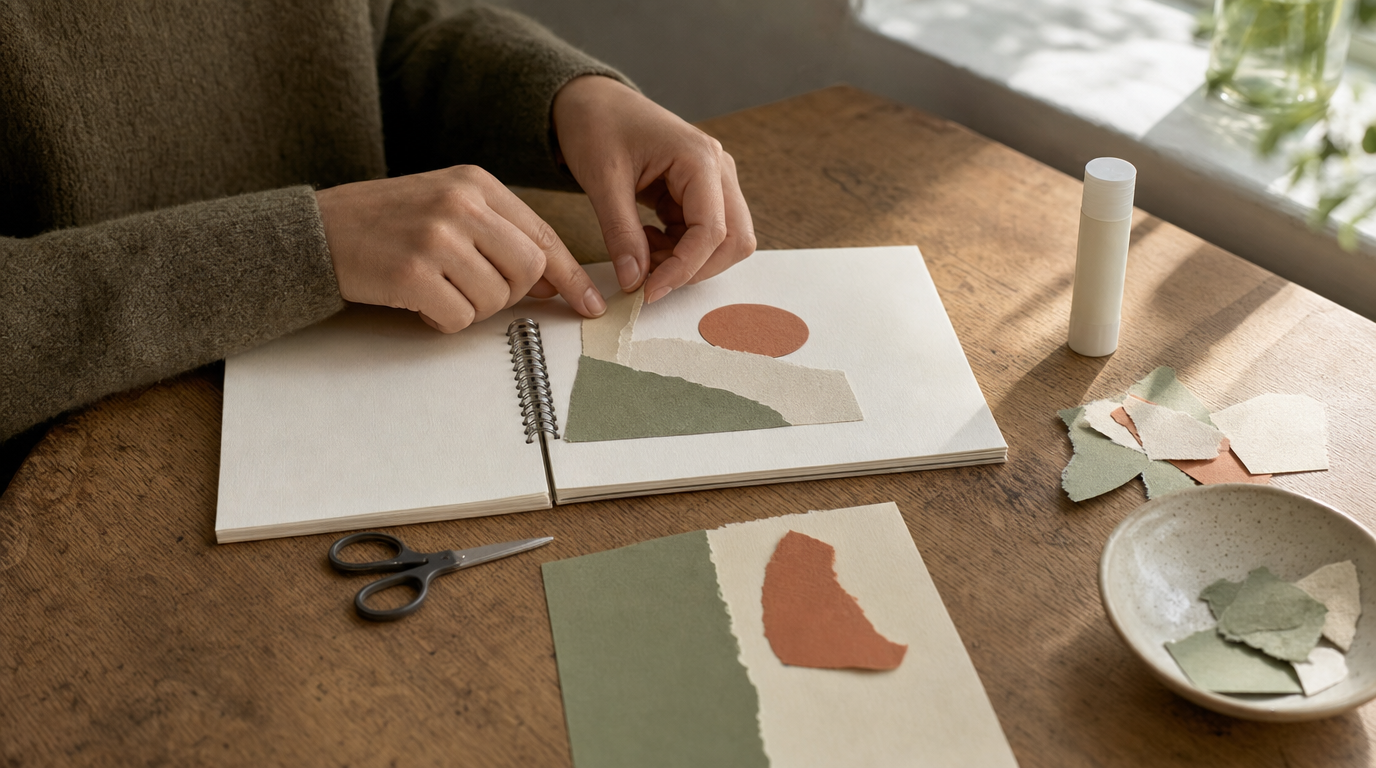
46. Make a collage
Use old magazines, packaging, colored paper, tickets, scraps, printed material, or other paper you already have.
Keep a small envelope or box for interesting paper scraps, so you already have materials waiting when you feel like making something.
47. Press flowers
Collect suitable flowers or leaves responsibly, press them, and later use them for cards, bookmarks, framed arrangements, or other small projects.
Part of the hobby is simply noticing what is growing around you.
48. Make a candle
Candle making requires more setup and attention than sketching or journaling, so save it for a session when you actually have time to follow the materials' instructions and handle hot wax safely.
49. Build a terrarium
Choosing the container, arranging the substrate, placing plants, and adjusting the composition gives you a small physical world to build—and something to care for afterward.
50. Practice hand lettering
Choose a phrase, quote, name, or even a single letter and make the lettering itself the project.
Try another version.
Then another.
The repetition is part of it.
You Don't Need to Turn Every Spare Minute Into Productivity
There's a trap hiding in articles like this.
You decide you're scrolling too much, so suddenly every minute reclaimed from your phone has to become exercise, education, creativity, housework, or personal development.
It doesn't.
You can sit on a bench.
You can drink coffee.
You can stare out of a window.
You can be bored.
You can spend twenty minutes on a puzzle that achieves absolutely nothing except being enjoyable.
The point isn't to make every minute “useful.” It's to have choices besides automatically opening the same feed.
Make the Alternative Easier to Reach
Knowing 50 alternatives won't help much if every one of them is packed away while your phone is already in your hand.
So choose three, not fifty.
For example:
When I have five minutes: I'll step outside.
When I'm tired: I'll read.
When I have an hour: I'll work on embroidery.
Then make those options visible.
Put the book where you normally sit.
Leave the notebook and pen together.
Keep your current craft project ready rather than dismantling it after every session.
Put walking shoes somewhere convenient.
Multiple current guides make the same practical observation: an alternative works better when its setup fits the moment and it is easy to reach.
When an Alternative Starts Becoming a Hobby
Here's something worth noticing.
Maybe you doodle once instead of scrolling.
Then you do it again tomorrow.
A week later, you buy a small sketchbook because you'd like to keep your drawings together.
Now you're curious about shading.
That's different.
A scroll replacement fills a moment.
A hobby is something you voluntarily return to because the activity itself has started becoming interesting.
You don't need to decide in advance that embroidery, birdwatching, journaling, gardening, or watercolor will become “your hobby.”
Try something small first.
If you keep coming back, follow the curiosity.
Not Sure What You'd Actually Enjoy?
Maybe the problem isn't a lack of options.
There are too many.
You could knit, hike, paint, garden, bake, journal, play chess, watch birds, make pottery, solve puzzles, learn calligraphy—and staring at another enormous list doesn't necessarily make choosing easier.
That's why OFFLIVA's Find My Hobby works differently.
Instead of dropping you into a library of 140 hobbies and asking you to choose...
How much time do you have?
Would you rather be indoors or outdoors?
Do you want to do something alone or with other people?
What kind of mood are you after?
What's your budget?
How much learning do you want?
Then it narrows the library to hobbies that fit those answers.
Frequently Asked Questions
What can I do instead of scrolling on my phone?
Start with an activity that fits the time you actually have. With five minutes, step outside, doodle, read a few pages, stretch, or write three lines. With 15 minutes, try journaling, origami, sketching, coloring, walking, or a small piece of an existing craft project. If you have an hour or more, try a hobby such as embroidery, watercolor, gardening, cycling, baking, or crochet.
What can I do instead of scrolling when I'm tired?
Choose something with very little setup: read for pleasure, color, work on a jigsaw, listen to an album, write a few lines, fold simple origami, sit outside, or continue an already-prepared knitting, crochet, embroidery, or cross-stitch project.
Don't choose an activity simply because it sounds productive. Choose one you can realistically imagine starting when you're tired.
Do I need to quit social media completely?
No. This article isn't asking you to eliminate your phone or social media. The goal is simply to have alternatives for the times when you're scrolling automatically but would rather be doing something else.
What are some good hobbies to replace scrolling?
There isn't one universal best hobby. A useful replacement needs to fit your available time, budget, energy, space, setting, and whether you want to be alone or with others.
For one person that's embroidery. For another it's walking, chess, gardening, journaling, birdwatching, crochet, or baking.
If you don't know where to start, use Find My Hobby to narrow the options.
What if I don't have enough time for a hobby?
You don't necessarily need hours. Some hobbies can be enjoyed in short sessions, especially once any setup is ready. Journaling, sketching, hand lettering, coloring, origami, puzzles, embroidery, and similar activities can all work in relatively small pockets of time.
Start with the time you actually have rather than waiting for the perfect free afternoon.