Finding a hobby sounds like it should be easy.
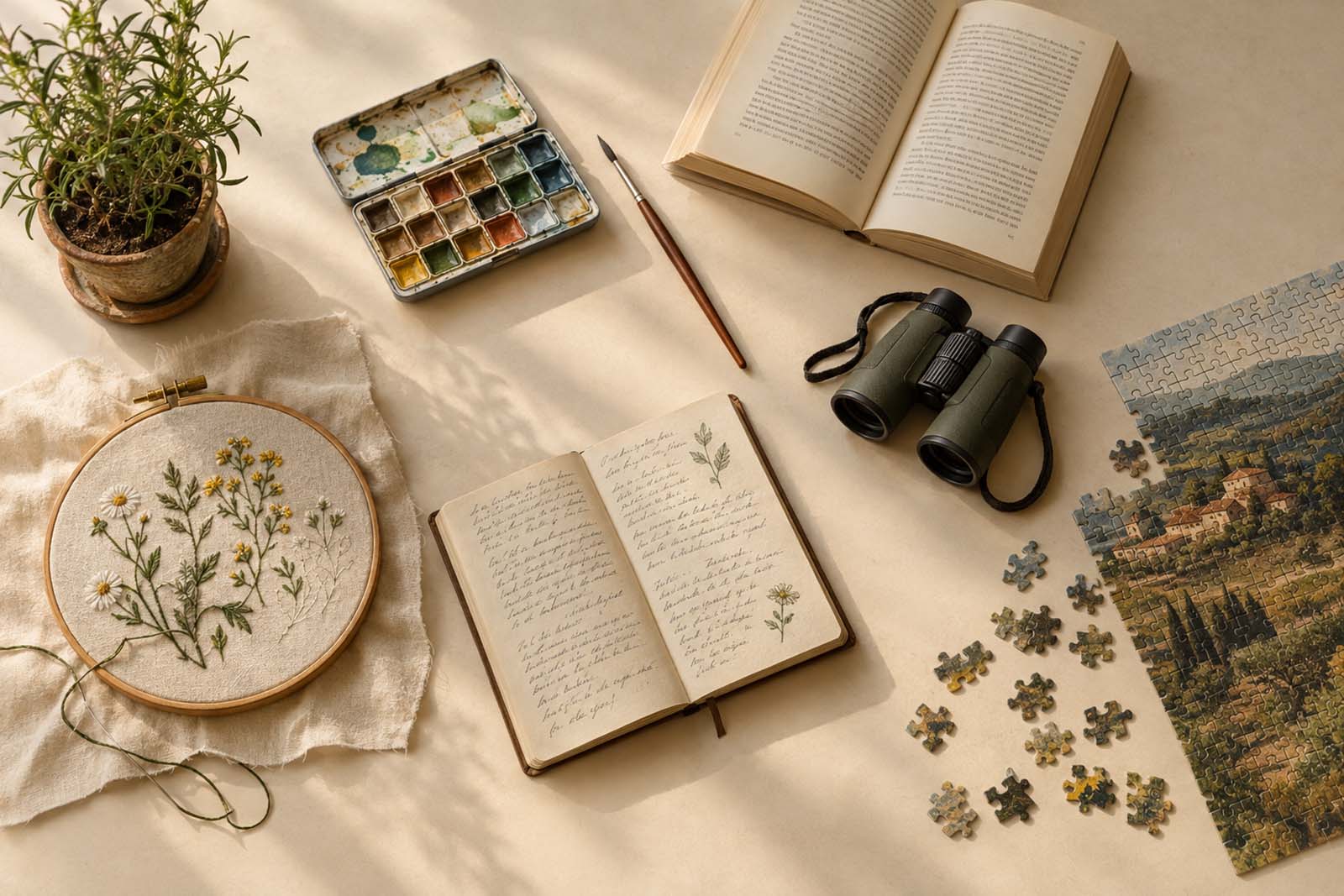
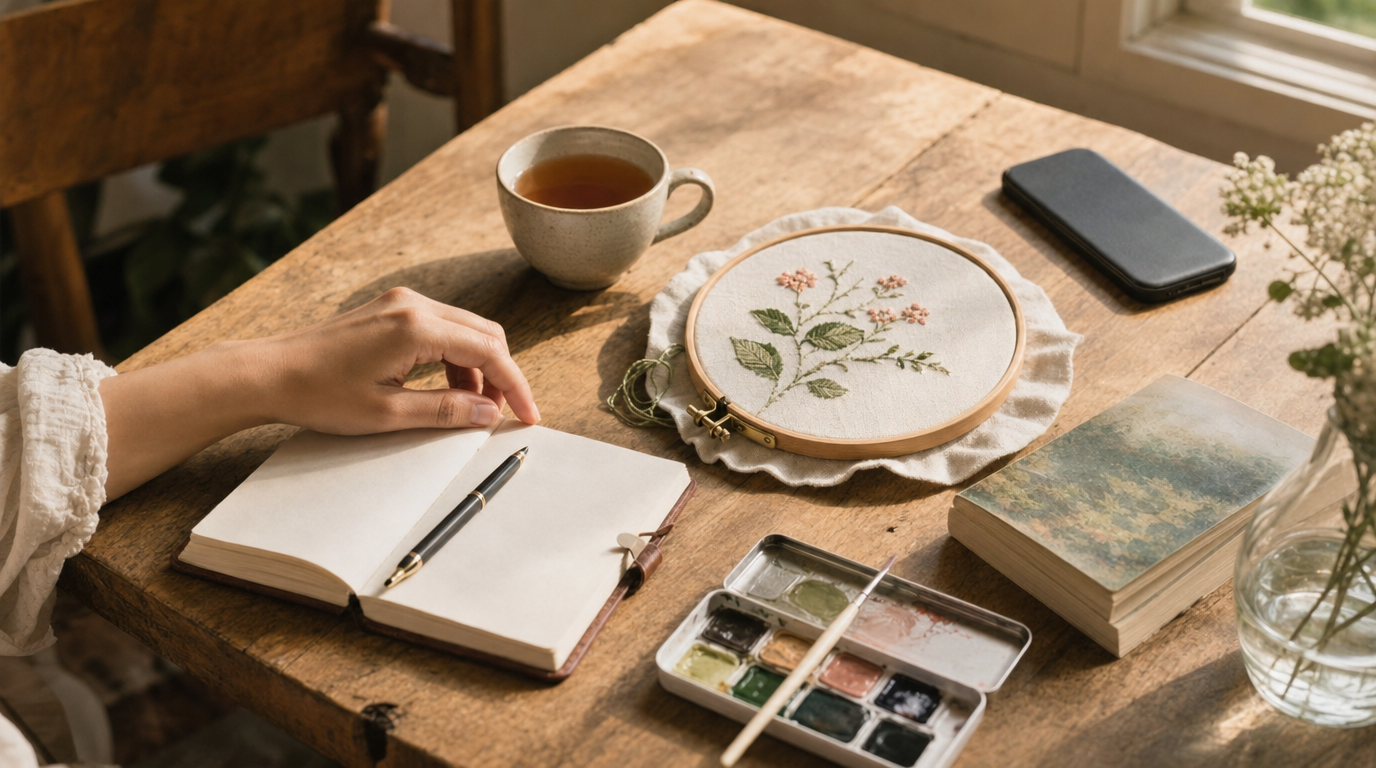
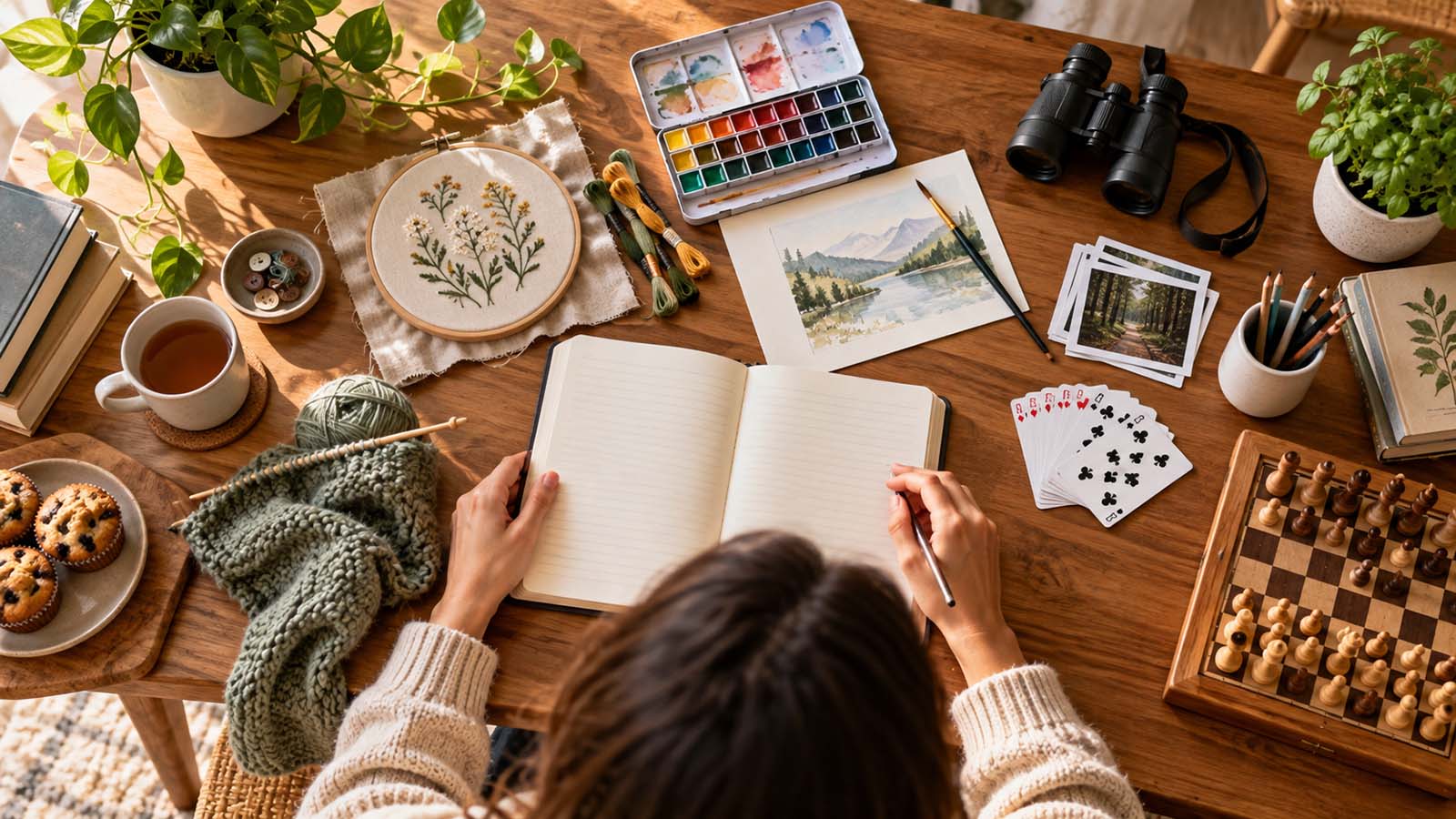
There are thousands of possibilities. You can paint, hike, garden, bake, knit, photograph birds, learn chess, restore furniture, join a choir, collect things, make things, grow things or spend your weekends exploring somewhere new.
And yet having more options doesn't necessarily make choosing easier.
You can spend an evening reading lists of hobbies, save ten ideas that look interesting, watch people doing them online—and still have no idea what you actually want to do.
The problem may be the question you're asking.
Instead of asking:
“What hobby should I have?”
Try asking:
“What would I actually enjoy doing with my free time?”
Those are surprisingly different questions.
This guide will help you narrow the possibilities based on the life you actually have: your time, energy, budget, environment and preference for doing things alone or with other people.
You don't need to discover your passion today.
You just need to find something worth trying.
Stop looking for your perfect hobby
One reason finding a hobby becomes difficult is that we expect too much from the decision.
We want the hobby that perfectly matches our personality. Something we'll be naturally good at. Something interesting enough to keep doing for years.
That turns a small experiment into a major decision.
But you aren't choosing a career.
You're deciding what to do with a few hours of your free time.
You can try embroidery for three evenings and decide you don't enjoy it. You can spend a month gardening and discover you'd rather be hiking. You can take one pottery class without becoming a potter.
None of those outcomes means you failed.
They gave you information about what you enjoy.
1. Start with what you want from a hobby
Before thinking about specific activities, think about the experience you're looking for.
Imagine you unexpectedly have two free hours this weekend.
What sounds good?
I want to make something
You may enjoy activities where you can see something gradually take shape.
Possibilities include:
Embroidery
Knitting
Painting
Pottery
Woodworking
Bookbinding
Calligraphy
Baking
The finished object can be satisfying, but ask yourself whether you'd enjoy the process of making it too.
I want to slow down
Maybe your everyday life already contains enough activity.
You don't need a hobby that feels like another project.
Consider activities such as:
Reading
Journaling
Jigsaw puzzles
Birdwatching
Gardening
Sketching
Fishing
These can give you something specific to pay attention to without requiring constant stimulation.
I want to move
If you spend much of your day sitting, you might prefer a hobby that gets you out of the chair.
That could mean:
Walking
Hiking
Cycling
Dancing
Swimming
Table tennis
Kayaking
Gardening
You don't have to choose the most physically demanding activity. The right level is one you're comfortable returning to.
I want to be around people
A hobby can also create a reason to regularly meet other people.
You might prefer:
Board games
Book clubs
Volunteering
Community theater
Dance classes
Choirs
Team sports
Cooking groups
A shared activity can also remove some of the pressure of meeting simply to socialize.
I want to learn something
Perhaps what you enjoy most is the feeling of understanding something you couldn't do before.
You might explore:
Chess
Astronomy
A musical instrument
A new language
Calligraphy
Photography
Cooking
Gardening
The subject matters, but so does the experience of gradually getting better at it.
You may want more than one of these things. That's useful information too.
2. Be realistic about your time
It's easy to choose hobbies for the life you wish you had.
Maybe that imagined version of you spends entire Saturdays woodworking in a beautiful workshop.
The real version of you might have forty minutes after dinner.
Choose for that person.
Ask yourself how much uninterrupted free time you can realistically give a hobby most weeks.
If you usually have 15–30 minutes
Look for hobbies that are easy to start and stop:
Sketching
Journaling
Hand lettering
Origami
Reading
Embroidery
Small puzzles
If you usually have about an hour
You have room for activities with a little more setup:
Painting
Knitting
Cooking
Gardening
Cycling
Practicing an instrument
Board games
If you prefer longer sessions
Activities such as hiking, pottery classes, woodworking, kayaking, volunteering or longer creative projects may fit better.
These aren't strict rules. They're simply a way to notice whether the activity fits your schedule.
A hobby that takes twenty minutes to prepare may not be a great choice if you usually have thirty minutes available.
3. Match the hobby to your energy, not just your time
Having an hour available doesn't mean you have an hour of energy.
This matters particularly when you're choosing something for evenings or after work.
Suppose you like the idea of going cycling after dinner. If you're regularly too tired to get the bike out, change clothes and leave the house, the hobby may spend more time in your imagination than in your week.
That doesn't make cycling a bad hobby.
It might simply be a bad fit for that particular part of your life.
Think about when you're most likely to do your hobby.
Low-energy time: Reading, puzzles, embroidery, journaling or gentle creative activities may be easier to begin.
Moderate-energy time: Gardening, cooking, photography, painting or casual cycling might work.
Higher-energy time: Hiking, dancing, sports and more involved outdoor activities may fit better.
The goal isn't to classify every hobby perfectly. It's to avoid building your plan around energy you rarely have.
4. Decide whether you want to stay home or go somewhere
Where a hobby happens affects how easy it is to maintain.
Home-based hobbies have a major advantage: the activity can be close at hand.
But getting out of the house may be exactly what you're looking for.
Mostly at home
Consider:
Embroidery
Knitting
Reading
Baking
Painting
Puzzles
Calligraphy
Indoor gardening
Mostly away from home
Consider:
Hiking
Cycling
Birdwatching
Volunteering
Dance classes
Pottery classes
Community theater
Kayaking
Flexible
Some hobbies work almost anywhere.
Photography, sketching, reading, journaling and chess can move between home, cafés, parks, clubs and trips.
Don't choose based on which category sounds better.
Choose based on where you genuinely want to spend your free time.
5. Ask yourself how social you want the hobby to be
People sometimes choose a social hobby because they think they should meet more people.
Others automatically choose solitary hobbies because they're easier to start.
Neither is necessarily the right answer.
Ask what you actually want.
I want time alone
Activities such as reading, painting, gardening, embroidery, photography and solo walking can provide plenty of independent time.
I'd like some interaction
Consider activities that can be done alone or socially:
Hiking
Cycling
Chess
Craft groups
Book clubs
Photography walks
Gardening groups
I specifically want to meet people
Look for hobbies built around regular participation:
Volunteering
Community theater
Dance classes
Board-game groups
Choirs
Team activities
If you're unsure, choose something flexible. A hobby you can practice alone but occasionally share with others gives you both options.
6. Set a starter budget before you shop
A new interest can quickly turn into a shopping project.
You decide to try watercolor and suddenly you're comparing professional paints.
You decide to start hiking and find yourself researching equipment for expeditions you aren't planning.
Buying things can create the feeling that you've begun.
But owning hobby equipment and doing the hobby are different activities.
Before buying anything, decide how much you're comfortable spending on the experiment.
Then ask:
What is the minimum I need to try this properly?
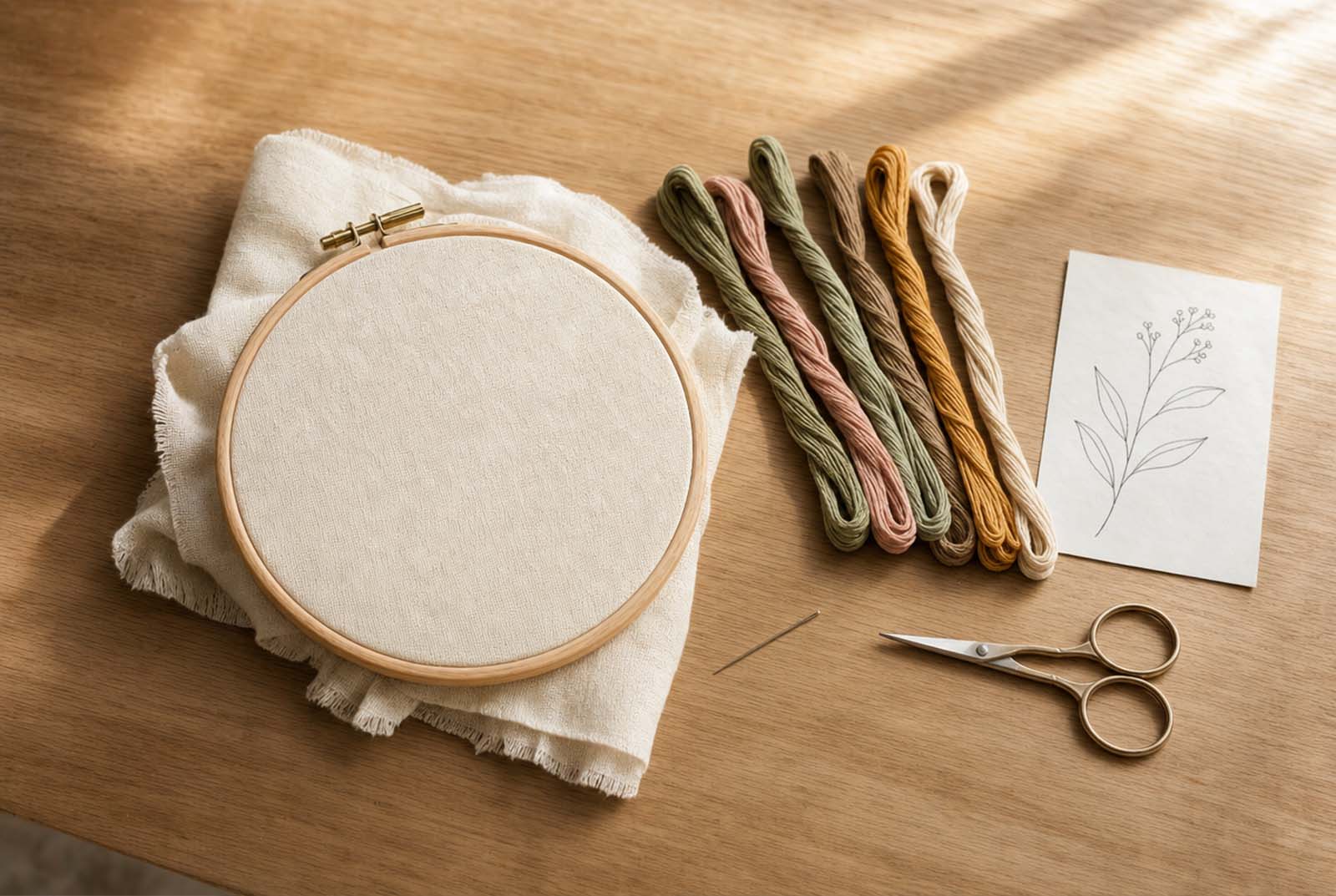
For embroidery, that might mean a hoop, fabric, needle, thread and simple pattern—not a cabinet full of supplies.
For birdwatching, you can begin by simply observing birds before deciding whether you want additional equipment.
For painting, a small beginner set may tell you far more about your interest than a collection of professional materials.
For an equipment-heavy activity, renting, borrowing or taking an introductory class may make more sense than buying immediately.
If you still enjoy the hobby after several sessions, better tools may become worthwhile.
7. Look backward before looking outward
If you still have no idea what you'd enjoy, stop browsing hobby lists for a moment.
Look at your own history.
Ask yourself:
What did I enjoy before I started worrying about whether I was good at things?
Maybe you drew constantly as a child.
Maybe you liked taking things apart.
Maybe you enjoyed climbing trees, collecting stones, making friendship bracelets, writing stories, baking with someone in your family, growing plants or playing cards.
You don't necessarily need to restart the exact activity.
Look for the characteristic underneath it.
Someone who loved building model kits might enjoy woodworking or bookbinding.
Someone who collected leaves and shells might enjoy nature journaling, gardening or birdwatching.
Someone who loved drawing imaginary houses might enjoy sketching, painting or miniature making.
Your earlier interests aren't instructions.
They're clues.
8. Separate the hobby from the identity
There's another trap that's surprisingly easy to fall into:
Liking the idea of being someone who does a hobby.
You may love the idea of being a painter.
But do you enjoy mixing colors, practicing brush control and making paintings you don't particularly like?
You may love the idea of being a guitarist.
But do you enjoy repeating chords until your fingers know where to go?
You may love the idea of having a beautiful vegetable garden.
But do you enjoy watering, weeding and paying attention to plants week after week?
Every hobby has an ordinary version.
That's the version you need to enjoy.
Ask:
Would I still want to do this if nobody ever saw the result?
If the answer is yes, you've found something worth testing.
9. Make a shortlist of three—not thirty
At this point, you probably have some clues.
Now deliberately narrow your options.
Choose three hobbies:
One easy option — something you can try with little preparation.
One intriguing option — something you've thought about before but never attempted.
One wildcard — something you wouldn't normally choose but are curious enough to test.
For example:
Easy: Journaling
Intriguing: Embroidery
Wildcard: Birdwatching
Or:
Easy: Walking
Intriguing: Photography
Wildcard: Pottery
Don't research another fifty possibilities.
Three is enough.
If you'd rather have OFFLIVA narrow the options for you, use the Find My Hobby tool. It considers factors such as your available time, preferred setting, social style, mood, budget and experience.
10. Try before you commit
Now comes the part that hobby research can't replace:
Actually doing something.
Whenever practical, find the lowest-commitment version of your chosen activity.
Borrow equipment.
Use supplies you already own.
Take a beginner class.
Visit a local group once.
Try a small project.
Rent before buying.
Start with a short route.
The goal of your first attempt isn't to prove you've found your hobby.
It's to gather better information.
You may discover that you dislike something you expected to love.
That's progress.
You may also discover that an activity you nearly dismissed feels surprisingly satisfying.
That's why trying beats browsing.
11. Use the three-session test
Don't judge every hobby by the first attempt.
The first session often contains setup, confusion and the awkwardness of doing something unfamiliar.
Instead, give a promising activity three reasonable attempts.
Session 1: Explore
Learn the basics.
Don't worry about performance. Notice what the activity actually involves.
Session 2: Repeat
Come back knowing a little more.
Does anything already feel easier? Which parts do you look forward to?
Session 3: Decide
Now ask yourself:
Did I enjoy the process?
Did starting feel manageable?
Did I want to continue once I began?
Am I curious about what I could try next?
Would I willingly make time for another session?
Don't ask whether you're talented.
That isn't the test.
Ask whether you want to do it again.
12. Notice why hobbies don't stick
Sometimes the problem isn't the activity itself.
It's the way you've arranged it.
There's too much friction
Your painting supplies are packed into three different cupboards.
Your bicycle needs maintenance every time you think about riding it.
Your guitar is hidden in its case.
If possible, make starting easier.
You chose something for your fantasy schedule
A hobby that needs four uninterrupted hours won't happen often if your free time arrives in thirty-minute pieces.
Find a smaller version or choose something else for now.
You turned it into another achievement
You began running and immediately started measuring every kilometer.
You started reading and created an annual book target.
You learned photography and immediately thought about building an audience.
Goals aren't inherently bad.
But if they remove the part you enjoyed, they're working against the hobby.
You bought too much too early
Now the unused supplies make you feel guilty.
Don't let the money you've already spent decide how you spend your future free time.
It's okay to stop.
You simply don't like it
This is perhaps the best reason of all.
Not every hobby needs troubleshooting.
Sometimes you tried something and discovered it isn't for you.
Cross it off and move on.
What if nothing interests you?
If every hobby suggestion feels uninteresting, don't force yourself to identify a passion.
Make the experiment smaller.
Instead of asking:
“What hobby do I want?”
Ask:
“What would I be willing to try for thirty minutes?”
Maybe that's drawing something on your desk.
Walking through a neighborhood you've never explored.
Planting one herb.
Learning one card game.
Cooking one unfamiliar dish.
Watching birds from your window.
Making one small paper object.
You don't need enough enthusiasm to imagine doing it for the next five years.
You need enough curiosity to begin once.
Curiosity can come before enthusiasm.
Don't confuse being a beginner with disliking the hobby
Beginners are usually bad at things.
Your first embroidery stitches may be uneven.
Your first sketch may look nothing like the object in front of you.
Your first chess game may end quickly.
Your first dance class may involve spending a surprising amount of time wondering where your feet are supposed to go.
Being inexperienced can be uncomfortable.
Try to separate two feelings:
“I'm frustrated because I can't do this yet.”
and
“I don't enjoy doing this.”
They're not the same.
If you're frustrated but still curious, another session may be worthwhile.
If the process itself feels dull every time, try something else.
You are allowed to have seasonal hobbies
You don't have to maintain every hobby throughout the year.
You might garden in spring, hike in autumn, work on puzzles during winter evenings and barely touch any of them for months at a time.
Interests can change with your schedule, environment and circumstances.
A hobby doesn't become less legitimate because you put it down and return later.
This also means you don't need to find the one hobby that meets every need.
You might have something creative for home and something active for weekends.
That's enough.
Your hobby doesn't need to become useful
Eventually, someone may ask whether you're going to sell your paintings.
Or your pottery.
Or your photographs.
Or whether you'll start performing once you become good at your instrument.
You don't have to.
A hobby can remain something you do because doing it is enjoyable.
It doesn't need customers.
It doesn't need followers.
It doesn't need to become a side business.
It doesn't even need to make you particularly accomplished.
Your free time doesn't always need to produce something measurable.
A simple way to start today
If you've reached the end of this guide and you're still thinking about possibilities, don't open another list.
Do this instead:
Decide what you want: make, slow down, move, connect or learn.
Look at the time and energy you realistically have.
Decide whether you'd rather be home or out, alone or with people.
Set a small starter budget.
Choose three possibilities.
Pick the easiest one to try.
Schedule one session within the next seven days.
Give it up to three attempts before deciding.
Then stop researching.
Go do the thing.
Find something that fits your life
There is no universally best hobby.
The activity your friend loves might bore you. Something you dismissed years ago might suit your life perfectly now.
That's why finding a hobby isn't really about finding the longest possible list of ideas.
It's about understanding what kind of experience you want—and testing possibilities until something clicks.
If you'd prefer to browse some ideas first, see 25 Offline Hobbies for Adults That Are Actually Fun
Or let OFFLIVA narrow things down with Find My Hobby. Tell it about your time, setting, social preference, mood, budget and experience, and it will suggest hobbies that better match the way you actually want to spend your free time.
Choose one.
Try it.
You can always choose again.