There is a particular kind of boredom that comes from having plenty to watch, read, and scroll through—but very little you actually feel like doing.
You finish work, pick up your phone, and somehow an hour disappears. Nothing terrible happened. You might even have enjoyed some of it. But when you put the phone down, you're still looking for something to do.
A hobby offers a different kind of free time.
Not necessarily a more productive one. You don't need to become skilled, make money, or turn every interest into a personal achievement. Sometimes it's enough to spend an hour making something slightly crooked, learning a song badly, or noticing a bird you've never paid attention to before.
The challenge is finding an activity that fits your actual life.
These 25 offline hobbies are organized by what you might want from your free time: making something, slowing down, moving your body, meeting people, or learning something new.
You don't need to try all 25. You only need to find one that makes you want to come back tomorrow.
First, what makes a good offline hobby?
A good offline hobby isn't necessarily one that keeps you away from screens every minute. You might use your phone to find a pattern, check a trail, or learn a technique.
The difference is what happens next.
The screen helps you begin. The activity becomes the experience.
Before choosing a hobby, consider three questions:
How much energy do you usually have? A quiet evening activity may suit you better than something that requires a long journey.
What can you realistically spend? Some hobbies begin with household materials. Others need equipment, lessons, or ongoing supplies.
Do you want solitude or company? Both can be rewarding, but they offer very different experiences.
With that in mind, let's find something worth doing.
Make something with your hands
There's something satisfying about working with physical materials. You can see your progress, make adjustments, and eventually hold something that didn't exist before.
These hobbies are especially appealing if much of your day happens on a screen.
1. Embroidery
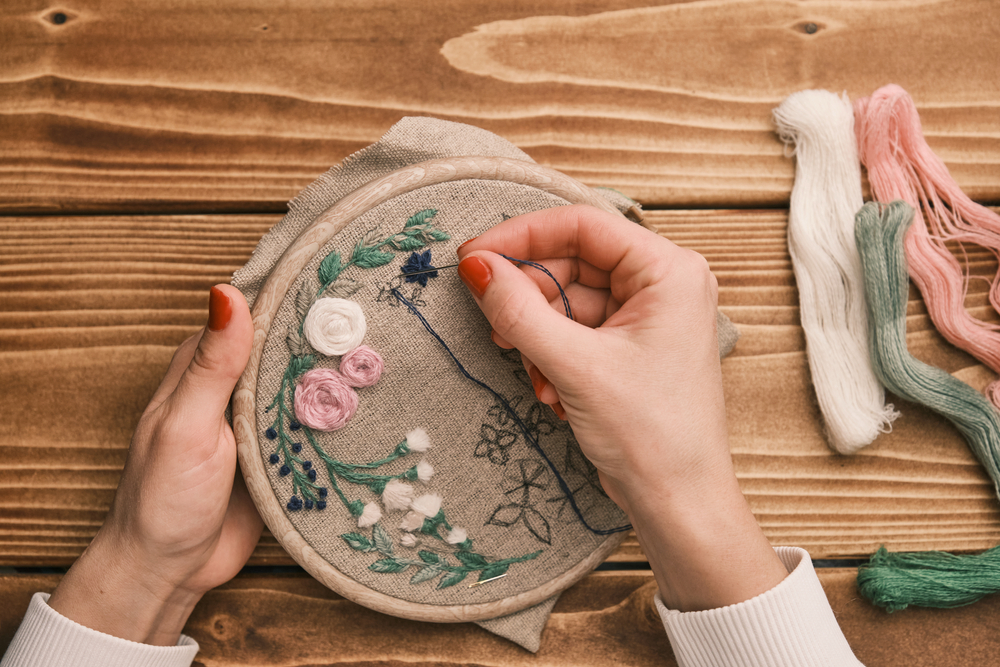
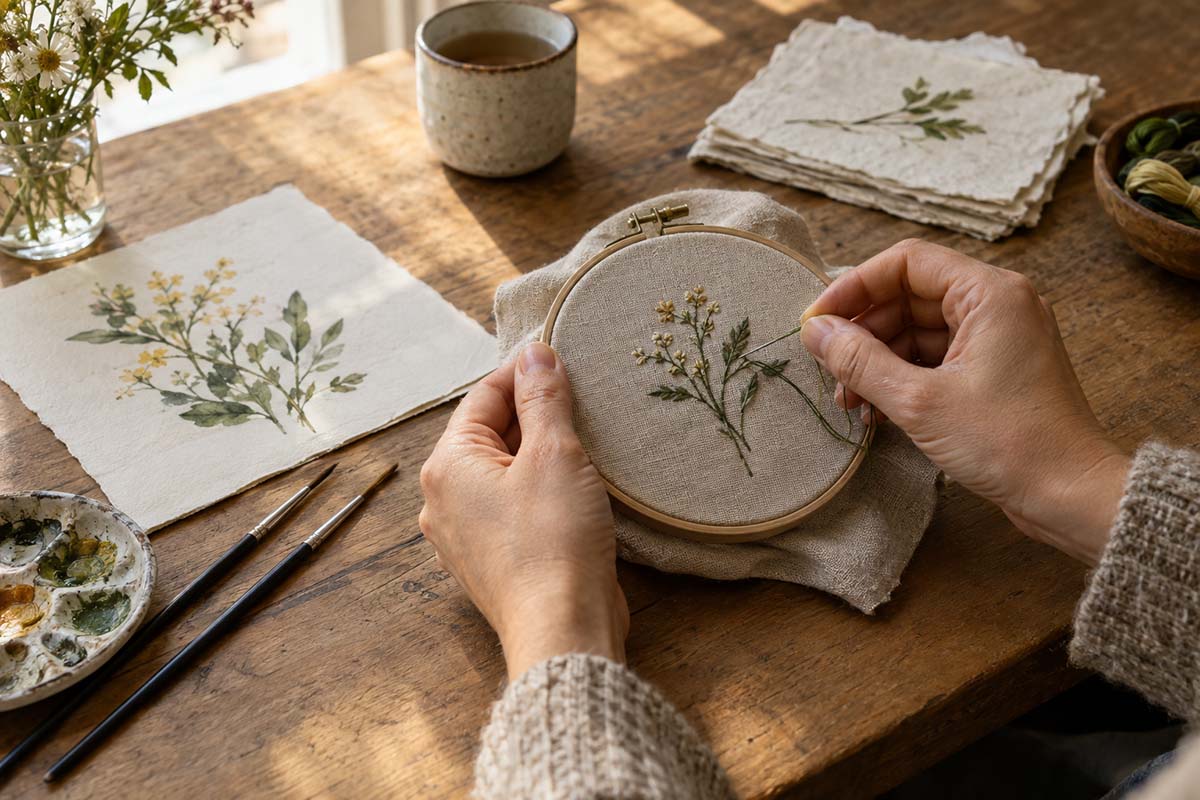
Embroidery is the art of decorating fabric with a needle and thread. It can be as simple as stitching a small flower onto a piece of cotton or as detailed as creating an elaborate textile illustration.
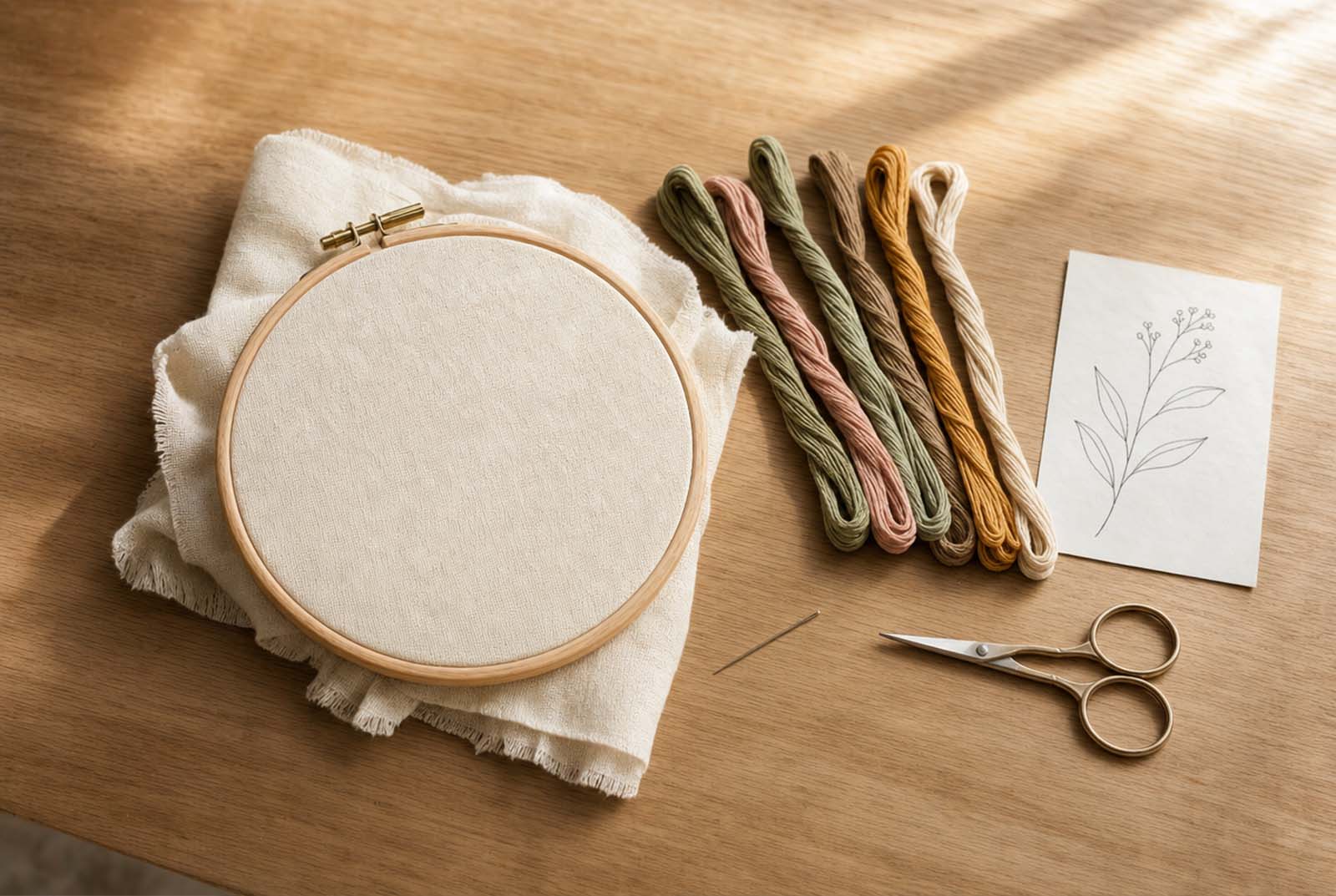
You don't need a sewing machine or a complicated toolkit. A small hoop, fabric, needle, thread, and simple pattern are enough to begin.
Try it first: Stitch a tiny leaf, star, or initial using one basic stitch. Keep the design small enough to finish in an evening or two.
Good for: Quiet evenings, creative beginners, and people who enjoy detailed work.
If this sounds appealing, explore our Embroidery hobby guide.
2. Watercolor painting
Watercolor rewards experimentation. A little more water changes the color. Two pigments meet and create something unexpected. Even a simple painting can feel expressive.
You don't need to begin with landscapes or portraits. Painting ordinary objects—a lemon, a cup, a leaf—helps you become familiar with how the medium behaves.
Try it first: Paint five versions of the same leaf, changing the amount of water and color each time.
Good for: Creative exploration, small workspaces, and anyone comfortable with imperfect results.
3. Pottery and clay modeling
Working with clay is a wonderfully physical experience. You press, roll, pinch, and shape a material that responds directly to your hands.
A pottery wheel is only one way to begin. Hand-building techniques can be learned without one, although traditional ceramic pieces usually need access to appropriate kiln firing.
Try it first: Book a beginner hand-building workshop, or experiment with air-dry clay for a decorative practice piece.
Good for: Tactile creativity and people who enjoy making three-dimensional objects.
Remember that air-dry clay isn't interchangeable with kiln-fired food-safe ceramics.
4. Knitting
Knitting turns a length of yarn into fabric through repeated movements. It can feel awkward at first, especially when you're learning how to hold the needles and control tension.
Then the motions gradually become more familiar.
You can make practical objects, but you don't have to begin with a sweater. A small square teaches you plenty.
Try it first: Learn the knit stitch and make a simple practice square using medium-weight yarn.
Good for: Repetitive handwork, longer-term projects, and portable creativity.
5. Paper crafting
Paper crafting covers everything from origami and paper flowers to handmade cards, collage, and decorative cut-paper designs.
It's one of the easiest creative hobbies to test because you can begin with materials you probably already own.
Try it first: Make three different paper objects from ordinary sheets of paper. Try a folded box, a simple origami animal, and a small collage.
Good for: Small budgets, limited space, and quick creative sessions.
Slow down and enjoy the quieter moments
Not every hobby needs to produce something impressive.
Some activities are enjoyable precisely because they ask very little of you beyond showing up and paying attention.
6. Reading for pleasure
Reading is easy to turn into another target: more books, longer reading lists, ambitious classics, and the pressure to finish everything you start.
It doesn't need to be that way.
Read mysteries, graphic novels, biographies, poetry, fantasy, or whatever genuinely holds your attention. A hobby should make room for your curiosity.
Try it first: Visit a library or choose a book you already own. Read for fifteen minutes without setting a page goal.
Good for: Quiet evenings, curiosity, and people who enjoy stories or ideas.
7. Journaling
Journaling doesn't have to mean writing a detailed account of your feelings every day.
You might record observations, collect interesting phrases, describe places you've visited, or keep a notebook of questions you want to explore.
The notebook belongs to you. It doesn't need an audience.
Try it first: Write about three things you noticed today that you might otherwise forget.
Good for: Reflection, writing practice, and low-cost creative routines.
8. Jigsaw puzzles
A jigsaw puzzle offers a clear, contained challenge. You can work on it for ten minutes, leave it on a table, and return later.
There's no need to finish quickly. Sorting colors, finding edges, and recognizing small details are part of the experience.
Try it first: Choose a modest puzzle with an image you genuinely like, rather than starting with a thousand nearly identical pieces.
Good for: Screen-free evenings, shared family activities, and people who enjoy visual challenges.
9. Birdwatching
Birdwatching changes how you experience familiar places.
A park becomes somewhere to notice movement and sound. A garden becomes a place to observe patterns. Even a short walk can reveal birds you previously passed without noticing.
You don't need expensive binoculars to begin. Your eyes, ears, and a little patience are enough for a first attempt.
Try it first: Sit near a window, garden, or park for fifteen minutes. Notice three different birds and write down their colors, movements, or calls.
Good for: Quiet outdoor time, observation, and curious beginners.
10. Container gardening
You don't need a large garden to grow something.
A balcony, patio, or suitable windowsill may provide enough room for herbs, flowers, or a small collection of plants. The important part is matching the plant to the light and conditions you actually have.
Gardening gives you something to check on, care for, and gradually understand.
Try it first: Choose one plant suited to your available light. Use an appropriate container with drainage and learn its basic watering needs.
Good for: Small spaces, hands-on routines, and people who enjoy gradual progress.

Get moving and explore
An active hobby doesn't have to mean joining a gym, competing with anyone, or tracking your performance.
Movement can simply be a way to explore places, practice a skill, or spend time outside.
11. Walking with a purpose
Walking becomes a hobby when you give it a little curiosity.
Instead of following the same route automatically, you might explore different neighborhoods, look for interesting architecture, visit local parks, or photograph unusual details along the way.
The activity is familiar. Your attention changes.
Try it first: Choose a route you've never walked before and give yourself one small mission: find five interesting doors, trees, buildings, or street details.
Good for: Flexible schedules, local exploration, and low-equipment activities.
12. Hiking
Hiking takes walking into trails, hills, forests, and other natural environments.
You don't need to start with a mountain. A short, well-marked trail suited to your ability is a much better introduction than an ambitious route that leaves you exhausted or unprepared.
Check the weather, route conditions, and local safety guidance before heading out.
Try it first: Find an easy local trail, check its current conditions, and plan a short walk with suitable footwear, water, and essential supplies.
Good for: Nature lovers, outdoor exploration, and people who enjoy changing scenery.
13. Cycling
Cycling can be transportation, exercise, exploration, or simply a pleasant way to spend an afternoon.
You don't need racing equipment or a complicated training plan. A properly fitting, roadworthy bicycle and a safe place to ride are the important starting points.
Try it first: Take a short ride on a familiar, low-traffic route or designated cycle path. Check your brakes and tires beforehand and follow local safety rules.
Good for: Exploring nearby places and people who enjoy active outdoor hobbies.
14. Dancing
Dancing is one of those hobbies where enjoyment doesn't require expertise.
You can explore salsa, ballroom, folk dance, swing, contemporary dance, or simply learn a few steps at home.
Classes can add structure and a social element, but practicing a short routine in your living room is also a valid beginning.
Try it first: Choose one style of dance and learn a simple sequence of steps. Repeat it until you can move through it comfortably.
Good for: Music lovers, social activities, and people who enjoy learning through movement.
15. Nature photography
Photography gives you a reason to notice light, patterns, textures, and small changes in the world around you.
You don't need to begin with a professional camera. A phone camera can be enough while you're learning composition and observation.
The point is to spend more time looking at the world than looking at the screen.
Try it first: Take a short walk and photograph five natural textures: bark, leaves, water, stone, or shadows.
Good for: Outdoor curiosity, creative observation, and people who like exploring at their own pace.
Connect with other people
Some hobbies become more enjoyable because of the people you meet through them.
You don't have to be naturally outgoing. A shared activity gives everyone something to focus on, which can make conversation feel more natural.
16. Board games
Modern board games offer much more variety than the classics you may remember.
Some are cooperative. Others involve storytelling, deduction, strategy, or simple party challenges.
The right game depends less on how complicated it is and more on who you're playing with.
Try it first: Organize a small game night with a short, beginner-friendly game. Borrow one if possible before buying a collection.
Good for: Friends, families, and regular social gatherings.
17. Community volunteering
Volunteering can become a meaningful recurring activity when you find a cause and role that suit your interests.
You might help at a community garden, assist with local events, support an animal shelter, or contribute to neighborhood projects.
Unlike many hobbies, volunteering also involves responsibilities to other people, so choose a commitment you can realistically maintain.
Try it first: Find a local organization and ask whether it offers a short introductory session or one-time volunteer opportunity.
Good for: Community-minded people and those who enjoy shared projects.
18. Cooking with others
Cooking becomes a different experience when it's shared.
You can exchange family recipes, experiment with unfamiliar ingredients, or learn a dish from someone who knows it well.
You don't need an elaborate dinner party. One recipe and a couple of willing participants are enough.
Try it first: Invite a friend to cook one unfamiliar dish together. Divide the tasks and enjoy the process, even if the result isn't perfect.
Good for: Food lovers, friends, and people who prefer socializing around an activity.
19. Joining a book club
A book club turns a solitary activity into an opportunity for conversation.
The best discussions aren't necessarily about whether everyone liked the book. They're about noticing how differently people respond to the same characters, ideas, or events.
You can join an existing club or start a small one.
Try it first: Invite two or three people to read a short book or story and meet for an informal discussion.
Good for: Readers, thoughtful conversations, and regular social routines.
20. Community theater
You don't have to dream of becoming an actor to enjoy community theater.
Local productions often involve set painting, props, costumes, lighting, stage management, and many other creative roles.
It's a collaborative hobby that combines practical work with the excitement of building something together.
Try it first: Look for a local theater group and ask about beginner-friendly workshops or volunteer opportunities.
Good for: Creative teamwork, performance interests, and people who enjoy group projects.
Learn something new, just because you can
Learning doesn't have to lead to a certificate, promotion, or side business.
You can study something simply because the subject interests you.
These hobbies are particularly rewarding for people who enjoy seeing their understanding develop over time.
21. Learning a musical instrument
The first few days with a musical instrument can sound rather unpromising.
That's normal.
Whether you choose a keyboard, ukulele, guitar, recorder, or another instrument, the early stage is about becoming familiar with the movements and sounds.
You don't need to perform for anyone.
Try it first: Borrow or try an instrument if possible. Learn a few notes or chords and practice a simple melody for ten minutes.
Good for: Music lovers and people who enjoy gradual skill-building.
22. Learning a language
Language learning can become an offline hobby when you move beyond apps and spend time with books, handwritten vocabulary cards, conversations, and everyday practice.
You don't need to aim for fluency immediately.
Learning how to introduce yourself, describe your surroundings, or understand a short passage is a perfectly worthwhile beginning.
Try it first: Learn ten useful words and write five simple sentences by hand.
Good for: Curious learners, travelers, and people who enjoy long-term projects.
23. Chess
Chess combines simple rules with an enormous range of possibilities.
You can enjoy it casually without memorizing openings or studying competitive strategy. The pleasure often comes from recognizing patterns and gradually making more thoughtful decisions.
A physical board also makes it easy to share the experience with someone else.
Try it first: Learn how the pieces move, then play one slow game with a friend or family member.
Good for: Strategy lovers, patient learners, and one-on-one social activities.
24. Calligraphy and hand lettering
Calligraphy and hand lettering turn ordinary words into visual designs.
You might explore traditional scripts, modern brush lettering, or simple decorative alphabets.
It's a hobby that rewards repetition, but you can still make something attractive with only a few practiced letterforms.
Try it first: Choose one lettering style and practice writing your name or a favorite short phrase.
Good for: Creative learners, stationery lovers, and people who enjoy precise handwork.
25. Astronomy and stargazing
Stargazing is an invitation to become familiar with the night sky.
You can begin by noticing the Moon, bright planets, and recognizable constellations. A telescope is not required for your first evening.
Visibility depends on your location, weather, light pollution, and time of year.
Try it first: On a clear evening, find a safe place with a good view of the sky. Spend fifteen minutes observing what you can see with your eyes alone.
Good for: Curious minds, quiet outdoor evenings, and people who enjoy learning about the natural world.
How to choose an offline hobby you'll actually stick with
Twenty-five possibilities can be inspiring. They can also become another list you read, save, and forget.
Instead of choosing the most impressive hobby, choose the one with the fewest obstacles between you and trying it.
Ask yourself:
Can I try it within the next seven days?
Do I already have most of what I need?
Does it fit my usual energy level?
Would I enjoy doing it even if I never became particularly good?
Am I interested in the activity itself, or just the idea of being someone who does it?
That last question matters.
It's easy to imagine yourself as a skilled painter, musician, gardener, or photographer. The more useful question is whether you'd enjoy the ordinary Tuesday version of that hobby—the practicing, experimenting, tidying up, and trying again.
Try the three-session rule
You don't need to make a long-term commitment immediately.
Give your chosen hobby three manageable sessions:
Session one: Explore. Get familiar with the materials, rules, or basic movements.
Session two: Repeat. Try again with a little more understanding. Notice what feels easier.
Session three: Decide. Ask yourself whether you want to return—not whether you're good at it.
Three sessions won't tell you everything about a hobby. But they can give you a more useful impression than buying supplies and trying something once.
What if none of these hobbies feels right?
That's okay.
You might need something quieter, more adventurous, less expensive, more social, or easier to fit into a busy week.
The goal isn't to persuade yourself to enjoy one of these 25 suggestions.
It's to discover the kind of activity that makes your free time feel like your own.
If you're unsure where to begin, try OFFLIVA's Find My Hobby tool. It helps narrow down activities based on your interests and preferences.
Find a hobby that fits your life →
Your next hour doesn't need another list
You now have 25 possibilities.
You don't need another hundred.
Choose one activity that caught your attention. Find out what you need to begin. Set aside a small amount of time and try it without expecting a remarkable result.
You might discover a hobby you keep for years.
You might discover that pottery isn't for you, that you prefer walking to hiking, or that you'd rather read books than discuss them.
That's useful too.
The point isn't to become a person with impressive hobbies.
It's to find something you genuinely enjoy doing.
And then do it.