From writing your own book to learning an instrument, these are interests you can make your own — at any pace, and for any reason.
There isn't a standard list of things you're supposed to enjoy at a certain age. One person might want to paint quietly at home. Another might want to join a choir, grow tomatoes, learn photography, or finally write the novel they've been thinking about for years. You might be starting something new, returning to an old interest, or looking for a fresh way to spend time with people you like.
The best hobby isn't necessarily the easiest, the most productive, or the one that's supposed to be “good for you.” It's one you actually want to return to.
Here are 21 possibilities, chosen to offer different kinds of satisfaction: creativity, curiosity, time outdoors, movement, and connection. Each includes a practical way to begin and something to consider before committing. They're suggestions, not prescriptions. Your interests, access, budget, experience, and physical comfort matter far more than your age.
How to Choose a Hobby You'll Actually Enjoy
Rather than buying supplies for several activities at once, start with a few questions.
Do you want to make something, learn something, move, or meet people? A book project and a choir rehearsal provide very different experiences. Both can be worthwhile.
How much space, equipment, or travel does it require? Some ideas work at the kitchen table. Others need a class, a shared venue, or a suitable outdoor location.
Would you rather work alone or alongside others? A solitary hobby doesn't have to be lonely, and a social hobby doesn't need to involve a big group.
Could you try it once before committing? Borrow a book, attend a trial class, use materials already at home, or ask a friend to join you. A low-pressure first attempt tells you more than a long shopping list.
If a hobby involves unfamiliar physical activity, adapt it to your mobility and experience. For new or demanding exercise, a healthcare professional or qualified instructor can help you choose an appropriate starting level.
Creative Hobbies: Make Something That's Yours
1. Write a Book — or Begin With One Story
A book doesn't have to be an autobiography. It could be a novel, a set of essays, a collection of family recipes and their stories, poetry, travel writing, or a short book you make for a handful of people. You might already be an experienced writer who wants a new project.
Why you might enjoy it: Writing offers space to explore ideas in your own voice and build something over time.
What you need: A notebook, word processor, or voice-recording method. Nothing more is required to start.
Try it this week: Write one scene, memory, or fictional exchange. Give it a title, save it, and decide later whether it belongs in a larger manuscript.
Keep in mind: Publication is optional. You can make a book for yourself without turning it into a commercial project. OFFLIVA's separate guide, Writing in Later Life: From a Single Story to a Book of Your Own, explores the process in more detail (link after that article is published).
2. Try Watercolor Painting
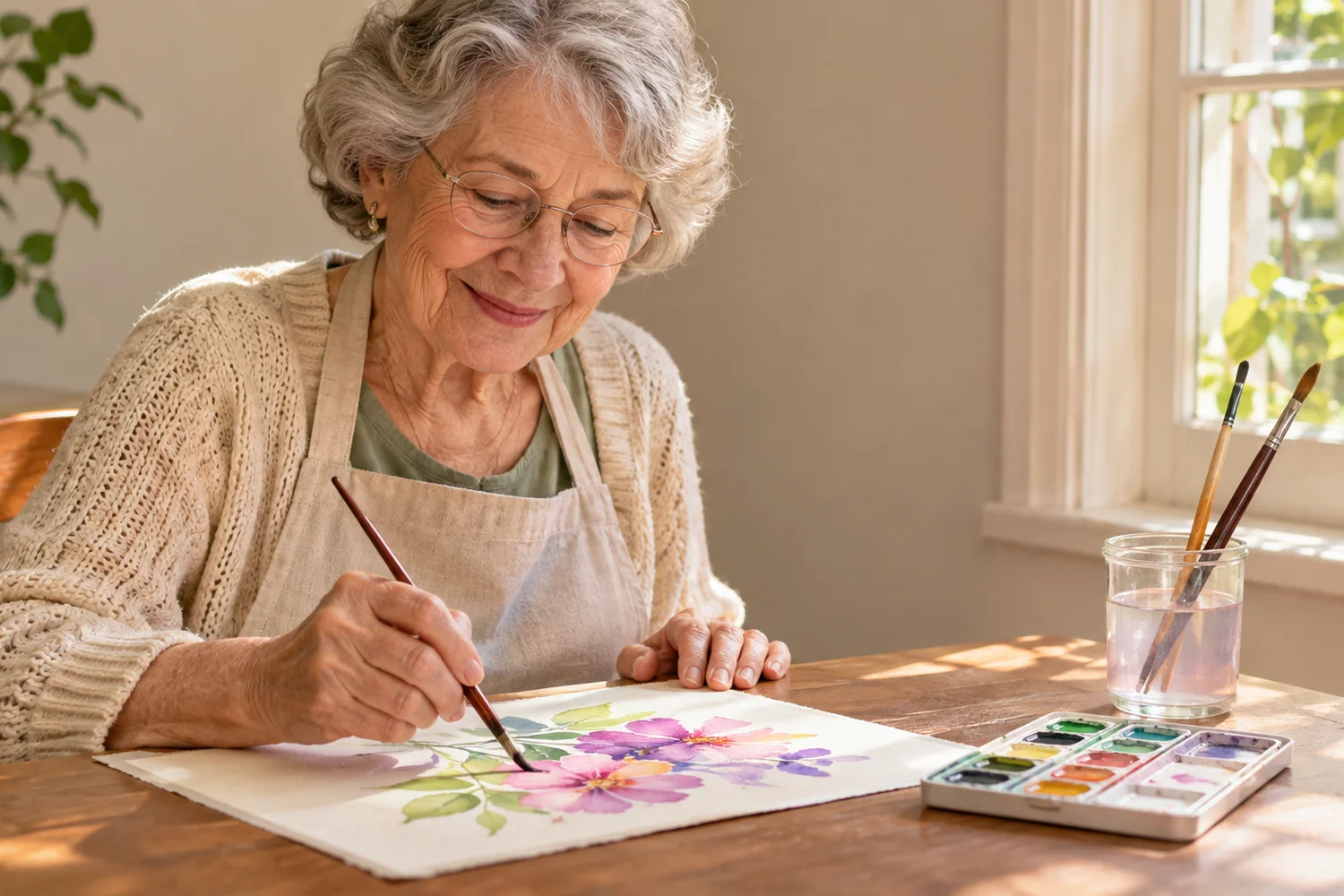
Watercolor can be wonderfully open-ended: loose color studies, small landscapes, flowers, or an abstract page of shapes. It doesn't require producing a frame-worthy painting every time.
Why you might enjoy it: You can experiment with color and notice how water changes a brushstroke.
What you need: A small watercolor set, a brush, paper intended for watercolor, and a container of water.
Try it this week: Paint six small squares using only two colors. Let them blend, and notice the differences between wet and dry paper.
Keep in mind: If holding a narrow brush is uncomfortable, try a thicker or adapted grip. You don't need to follow a complex tutorial on day one.
3. Learn to Sketch
Sketching is less about drawing perfectly and more about observing. Everyday objects, houseplants, windows, and familiar streets offer endless material.
Why you might enjoy it: A sketchbook gives you a reason to pay attention to details you usually pass by.
What you need: A pencil, paper, and an eraser if you want one.
Try it this week: Draw your favorite mug for ten minutes. Look at its shape and shadows rather than trying to make it look like a photograph.
Keep in mind: Your first sketches are practice, not a test of talent. OFFLIVA's Sketching Hobby Hub can be a useful next step.
4. Explore Photography
Photography can turn an ordinary walk, a family gathering, or a quiet afternoon into a small creative project. A phone camera is enough to begin.
Why you might enjoy it: You can work with light, composition, and the everyday places you know well.
What you need: Any working camera, including the one on your phone.
Try it this week: Photograph the same object in morning, midday, and evening light. Choose the image that tells the most interesting story.
Keep in mind: Ask before photographing or sharing identifiable people, especially children. Expensive equipment is not a prerequisite.
5. Try Embroidery
Embroidery turns simple stitches into patterns, letters, or small illustrations on fabric. Projects can be as modest as decorating a napkin or as ambitious as a large textile piece.
Why you might enjoy it: It's a portable, hands-on craft with an immediately visible result.
What you need: Fabric, a needle, thread, and optionally an embroidery hoop.
Try it this week: Practice one basic stitch on scrap fabric before starting a design.
Keep in mind: Good light and a comfortable grip make detailed work easier; a needle threader or larger needle can help if needed. OFFLIVA's Embroidery Hobby Hub covers the basics.
Hobbies for Learning and Curiosity
6. Learn a Musical Instrument
You don't have to perform in public to enjoy music-making. A keyboard, guitar, ukulele, or another instrument might offer a satisfying new challenge, whether you're new to music or returning after decades.
Why you might enjoy it: There's pleasure in recognizing a melody and gradually learning to play it yourself.
What you need: Access to an instrument and a beginner lesson, teacher, or reliable instruction book.
Try it this week: Learn a short phrase from a tune you like. Repeat it slowly and notice your progress.
Keep in mind: Consider instrument weight, hand comfort, volume, and practice space before purchasing.
7. Play Chess
Chess can be a casual game over coffee, a continuing puzzle, or a competitive interest. You can learn it at any experience level.
Why you might enjoy it: Each game asks you to make decisions, recognize patterns, and adapt to another person's ideas.
What you need: A chessboard or an accessible digital board, and someone to play with if you'd like company.
Try it this week: Learn how the pieces move, then play one relaxed game without a clock.
Keep in mind: You don't need to memorize openings or chase a rating. OFFLIVA's Chess Hobby Hub offers a place to explore further.
8. Research Your Family History
Family history is part detective work, part storytelling. You might investigate old records, identify people in photographs, or map how relatives moved between places.
Why you might enjoy it: Small clues can open up interesting questions about people and communities.
What you need: A notebook, existing photographs or documents, and perhaps library or archive access.
Try it this week: Choose one family photograph and record everything you know for certain about it. Write down unanswered questions separately.
Keep in mind: Check facts before repeating them, and respect living relatives' privacy. Paid genealogy subscriptions and DNA tests are optional, not starting requirements.
9. Learn a New Language
A new language might help you communicate with neighbors, follow a favorite film, enjoy travel, or understand a culture that interests you.
Why you might enjoy it: Even a small vocabulary can make familiar experiences feel new.
What you need: A phrasebook, audio lessons, class, or conversation partner.
Try it this week: Learn how to introduce yourself and ask one friendly question. Practice the phrase aloud a few times.
Keep in mind: Choose accessible materials and a pace you enjoy. Progress isn't measured only by fluency.
Nature and Outdoor Hobbies
10. Grow a Garden
Gardening can mean a few herbs on a windowsill, flowers in containers, or a larger outdoor plot. You don't need a yard to participate.
Why you might enjoy it: You can observe gradual changes and care for something living.
What you need: A suitable container or growing space, a plant, appropriate soil, and access to water and light.
Try it this week: Choose one plant suited to your actual light conditions and learn its watering needs.
Keep in mind: Raised beds, containers, and seating can reduce bending or standing. Follow plant-specific guidance, and avoid lifting heavy supplies without help if doing so is difficult.
11. Try Birdwatching
Birdwatching doesn't require a wilderness expedition. A balcony, garden, local park, or window may offer plenty to observe.
Why you might enjoy it: Identifying familiar birds encourages attention to seasonal and daily changes.
What you need: Your eyes, a notebook, and optionally binoculars or a local bird guide.
Try it this week: Watch one spot for fifteen minutes and write down three details about a bird's color, movement, or call.
Keep in mind: Observe wildlife from a respectful distance. Use accessible locations rather than assuming long walks are necessary. OFFLIVA's Birdwatching Hobby Hub can help you start.

12. Make Nature Walking a Regular Interest
A walk can be more than exercise. It might be a chance to notice trees, architecture, weather, or changes in a familiar neighborhood. The route can be short or long, depending on what works for you.
Why you might enjoy it: You can explore without needing a complicated project or expensive equipment.
What you need: A safe, suitable route and footwear appropriate for the surface.
Try it this week: Choose one familiar accessible path and look for five things you haven't noticed before.
Keep in mind: Check the weather, path conditions, rest stops, and your personal comfort. A seated garden visit or accessible nature trail may suit some days better than a longer walk.
13. Create Flower Arrangements
Flower arranging can be a visual, seasonal hobby using flowers from a garden, a market, or even a few stems from a local shop.
Why you might enjoy it: It's a way to experiment with color, height, shape, and simple displays.
What you need: A vase, clean water, and a few suitable stems.
Try it this week: Arrange three different stems in one container. Try grouping them at different heights instead of spacing them evenly.
Keep in mind: Some plants are toxic to pets or people; identify what you're handling, especially when using unfamiliar foliage. You can also use dried or artificial stems.
Social and Shared Hobbies
14. Join or Start a Book Club

A book club gives reading a conversational dimension. It might meet at a library, in someone's home, on a video call, or even by telephone.
Why you might enjoy it: People can have very different interpretations of the same story, making a familiar book feel fresh.
What you need: A book, article, or audiobook and at least one person interested in discussing it.
Try it this week: Invite a friend to read one short story and talk about a character's decision.
Keep in mind: Accessible formats and a flexible reading schedule matter more than completing a long novel every month.
15. Volunteer for a Cause You Care About
Volunteering can grow into a sustained interest: helping at a library, caring for community gardens, mentoring, coordinating collections, or contributing specialist skills.
Why you might enjoy it: It provides a chance to participate in work that matters to you and meet people with shared interests.
What you need: An organization with suitable, clearly defined roles and a commitment that fits your schedule.
Try it this week: Contact one local group and ask about a short introductory task or occasional role.
Keep in mind: Volunteering should be a choice, not an expectation. Ask about access, transport, training, costs, and responsibilities before agreeing.
16. Rediscover Board and Card Games
Games can be funny, collaborative, quick, or strategic. You might favor a familiar card game or enjoy learning something completely new.
Why you might enjoy it: The shared experience is often as enjoyable as the game itself.
What you need: A deck of cards or a game suited to your group, plus a surface to play on.
Try it this week: Organize a short game afternoon with a simple game everyone can learn.
Keep in mind: Large-print cards and clear rules can make play more comfortable. Choose games that match the group's interests, rather than assuming everyone wants a complex strategy game.
17. Sing With a Community Group
A choir or informal singing circle can be welcoming whether you've performed for years or simply love singing along to music.
Why you might enjoy it: Rehearsing a song with others creates a shared creative experience.
What you need: A group you enjoy, a convenient meeting time, and any accessible lyric sheets or recordings provided.
Try it this week: Attend an open rehearsal or ask a local community group whether beginners are welcome.
Keep in mind: Ask about auditions, fees, seating, accessibility, and the music they perform. Solo singing at home is also a perfectly good hobby.
Hands-On and Gentle-Movement Ideas
18. Learn to Knit
Knitting offers an ongoing progression, from simple squares to scarves, blankets, or more intricate patterns. Each project can teach a new technique.
Why you might enjoy it: Repeating stitches can feel absorbing, and a finished piece is something you can use or share.
What you need: Yarn and knitting needles appropriate to it.
Try it this week: Learn to cast on and knit a few rows. A practice square is enough.
Keep in mind: Choose comfortable needle sizes, rest your hands when needed, and try a group or instructor if video demonstrations are difficult to follow. OFFLIVA's Knitting Hobby Hub offers further guidance.
19. Explore Cooking as a Creative Project
Cooking as a hobby can mean learning dishes from another region, developing a family recipe notebook, baking bread, or testing one seasonal ingredient in several ways.
Why you might enjoy it: It offers experimentation, sensory pleasure, and something tangible to share.
What you need: A recipe that interests you, accessible kitchen equipment, and suitable ingredients.
Try it this week: Choose one familiar dish and change just one element — a herb, seasoning, or preparation method — while noting the result.
Keep in mind: Consider food safety, dietary requirements, and equipment comfort. You don't need expensive appliances or a complicated menu.
20. Make a Scrapbook
Scrapbooking combines photographs, paper, captions, tickets, recipes, and small pieces of visual storytelling. It can celebrate a trip, a community event, or almost any topic.
Why you might enjoy it: You can tell a story through design without needing to write a long narrative.
What you need: An album or notebook, copies of photographs, and suitable paper and adhesive.
Try it this week: Create one page around a single occasion. Add one sentence explaining why the images matter.
Keep in mind: Use copies or scans of irreplaceable originals, especially old photographs and documents. Archives often require special preservation materials.
21. Explore Tai Chi
Tai chi is a movement practice involving coordinated, usually slow actions and attention to posture and breathing. Classes vary in style and level.
Why you might enjoy it: You may appreciate learning a sequence and moving with focused attention, alone or in a group.
What you need: Comfortable clothing, suitable space, and preferably guidance from a qualified instructor familiar with beginners and adaptations.
Try it this week: Ask a local class about a beginner session and whether seated or supported options are available.
Keep in mind: Although tai chi can be adapted, not every sequence is appropriate for every person. If you're unsure about your balance, mobility, or a medical condition, seek individualized advice before beginning.
Which Hobby Might Suit You Best?
Start with the experience you're looking for, not a ranking of which hobby is supposedly best.
Want a long-term creative project? Book writing, photography, painting, and knitting offer something that can grow over months or years.
Want to begin with very little equipment? Sketching, birdwatching, nature walking, and writing can start with simple materials.
Want more conversation? Book clubs, games, community singing, or volunteering may make it easier to meet others.
Want an interest that works mainly at home? Writing, family-history research, knitting, language learning, and scrapbooking can often be adapted to your space.
Want movement? Nature walking, gardening, and tai chi are possibilities, subject to your comfort and circumstances.
You can combine interests too. Someone might photograph neighborhood plants, paint them in watercolor, and later make a small illustrated book. A book club might inspire someone to begin writing fiction. Hobbies don't need to stay in separate boxes.
A Simple Two-Week Hobby Experiment
If you're choosing between several ideas, try a small experiment instead of making a big commitment.
Days 1–3: Pick two interests. Choose things that genuinely appeal to you, not two items you think you ought to do.
Days 4–7: Try the first one. Make the first session easy to begin. Note what you enjoyed and what got in the way.
Days 8–11: Try the second. Use borrowed or inexpensive materials if possible. A single class or short attempt is enough.
Days 12–14: Decide what to repeat. Ask yourself which activity you thought about returning to, whether the cost and access are manageable, and what a next small step would be.
If neither interests you, that isn't failure. You've learned something useful about your preferences.
Frequently Asked Questions
What are good hobbies for someone over 80?
There's no universal answer. An 80-year-old might enjoy writing, chess, gardening, music, photography, social groups, or learning a language, just as a younger adult might. Match the activity to personal interests, access, budget, experience, and physical comfort rather than an age label.
Can I begin a hobby without buying expensive supplies?
Yes. Writing, sketching, birdwatching, nature walking, library-based book clubs, and some learning activities need little equipment to start. Borrow or try introductory materials before making larger purchases.
What if I prefer to stay at home?
Many options can be enjoyed at home, including book writing, painting, family-history research, puzzles and games, knitting, and learning an instrument. Social options may also be available by phone or video call.
Are hobbies proven to prevent dementia?
No single hobby should be promoted as a way to prevent or cure dementia. Research suggests that meaningful activities and social participation can be valuable for well-being, but evidence for lasting cognitive effects from specific activities is not conclusive. Choose something you enjoy rather than treating a hobby as a medical prescription.
What if I try something and don't enjoy it?
Stop, change the approach, or try something else. A hobby is not an obligation. The aim is to discover interests that add something to your life on your own terms.
The Best Hobby Is the One You'll Want to Return To
A rewarding interest doesn't have to become a business, a finished project, or an impressive achievement. You might write a book, keep one notebook, learn three songs, grow a handful of herbs, or spend an afternoon looking for birds.
Start with what makes you curious. Choose a manageable first step. Give yourself permission to be a beginner — or to bring decades of experience to something new.
And if the idea of writing a book appeals to you, start with one page. That's a perfectly good beginning.
Explore more hobbies using OFFLIVA's Find My Hobby quiz, and follow the relevant published Hobby Hubs for detailed beginner guidance.
Editorial references (verify for final fact-check)
National Institute on Aging, Participating in Activities You Enjoy As You Age: https://www.nia.nih.gov/health/healthy-aging/participating-activities-you-enjoy-you-age
National Institute on Aging, Cognitive Health and Older Adults: https://www.nia.nih.gov/health/brain-health/cognitive-health-and-older-adults
National Institute on Aging, Loneliness and Social Isolation — Tips for Staying Connected: https://www.nia.nih.gov/CommitToConnect
Centers for Disease Control and Prevention, Older Adult Activity: An Overview: https://www.cdc.gov/physical-activity-basics/guidelines/older-adults.html
CDC, Older Adults: Adding Activity Recommendations: https://www.cdc.gov/physical-activity-basics/adding-older-adults/index.html