How to begin, find your voice, organize your ideas, and decide what your writing could become.
A book doesn't have to begin with a perfect first sentence.
Sometimes it begins with an old photograph, a conversation you remember, a character who won't leave your imagination, or a question you've been carrying for years.
You might have written all your life. Perhaps you've published before. Or maybe you've been thinking about a book but haven't found a comfortable way to begin.
Whatever your experience, writing remains an open creative possibility.
You can write about your own life, invent someone else's, explore an idea, or collect stories that matter to you. You don't need to write a complete autobiography, and you certainly don't need to share anything you'd rather keep private.
If you'd like to begin with one story and see where it leads, here's a practical way forward.
There's More Than One Kind of Story to Write
When people talk about writing later in life, they often suggest memoirs or family histories. Those can be wonderful projects. But they aren't your only options.
You might want to try:
Memoir: Explore a particular period, relationship, place, or experience in your life.
Family history: Gather stories, photographs, documents, and recollections into a record of people and events.
Fiction: Invent characters, settings, and events, drawing from imagination rather than recording your own experiences.
Personal essays: Write individual pieces about ideas, observations, lessons, or moments that interest you.
Poetry: Explore feelings, language, and memories in a shorter, more flexible form.
A collection: Bring together letters, recipes with family stories, travel reflections, short stories, or other related pieces.
There's no reason your project must fit neatly into one category.
A family-history book may contain photographs and personal essays. A collection of travel memories might include poetry or sketches.
Start with the kind of writing you actually want to do, not the kind someone else assumes you should write.
Begin With One Story, Not an Entire Book
The idea of writing a book can feel enormous.
You imagine dozens of chapters, hundreds of pages, and years of material waiting to be organized.
Instead, choose one moment.
It could be an afternoon you remember clearly, the first time you visited a particular place, a small decision that changed something, or an encounter that still makes you laugh.
You don't have to tell your entire life story in order to tell a meaningful story.
A 15-Minute Story Exercise
Choose one meaningful object or moment.
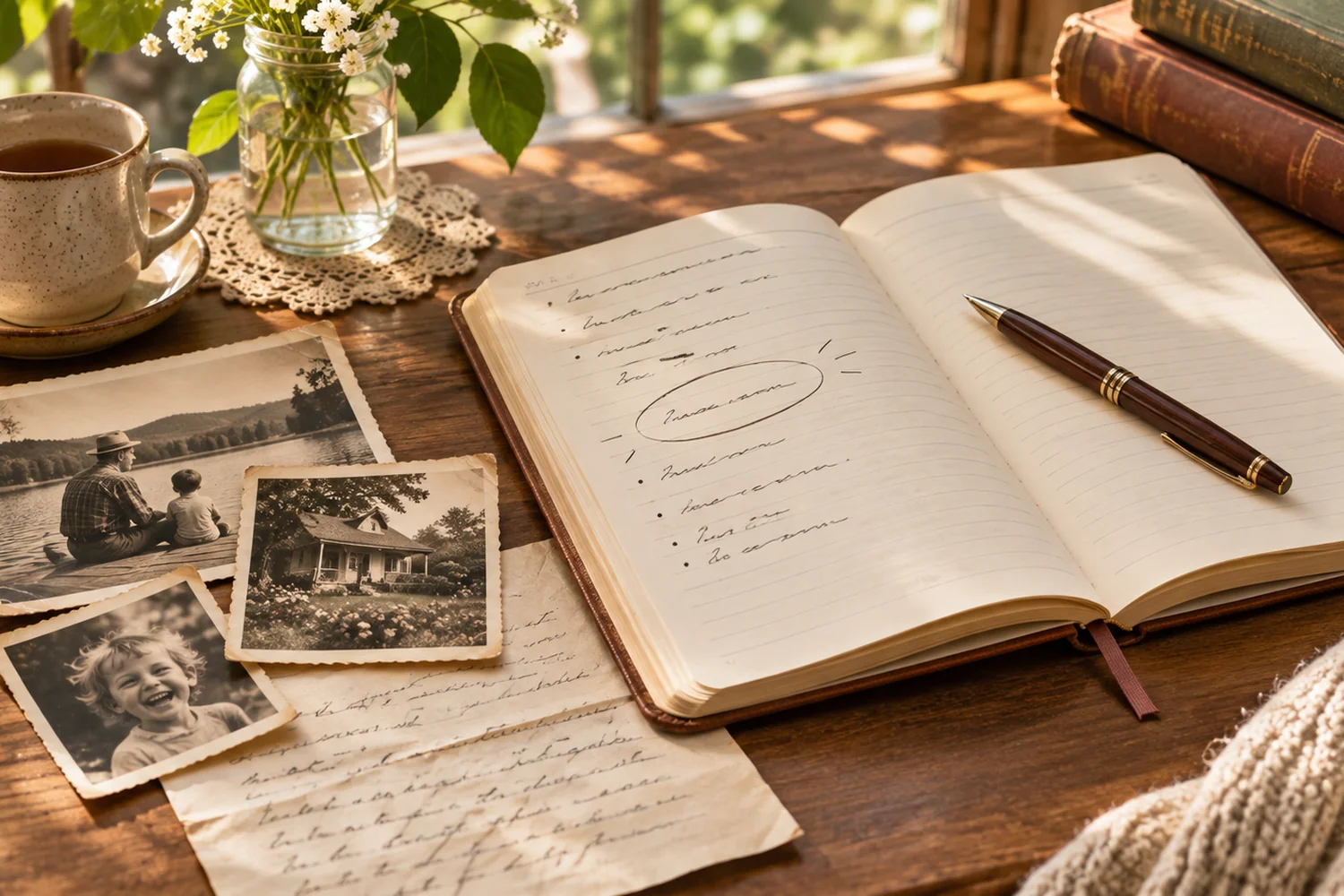
Perhaps it's a photograph, an old key, a letter, a favorite recipe, or a place you once knew.
Then consider five questions:
Where does the story begin?
Who was there?
What was happening?
What detail do you remember most clearly?
Why does the moment still interest you?
Now write a few paragraphs.
Don't worry about the title, chapter order, grammar, or whether the piece will eventually belong in a book.
For example, instead of beginning with "I grew up in a small town," you might describe the morning the town's bakery opened, the sound of its doorbell, and the person who always arrived first.
A particular scene gives the reader somewhere to stand.
If you're writing fiction, use the same exercise to invent a moment for your character. Where are they? What do they want? What happens next?
Fifteen minutes is only a suggested starting point. A few sentences can be enough, and you're free to continue for as long as you enjoy.
Seven Writing Prompts Worth Exploring
You don't need to answer these in order. Choose the one that sparks your curiosity.
1. A Place That Has Changed
Think about a street, house, garden, workplace, or neighborhood you once knew.
What would someone see if they visited it today? What would you still recognize?
2. A Conversation You Remember
Recall something another person said that amused, surprised, challenged, or encouraged you.
What was happening around that conversation?
3. Something You Learned to Do
Describe learning a skill, beginning a job, raising a garden, mastering a recipe, or attempting something unfamiliar.
What made it difficult? What made it satisfying?
4. A Decision and What Followed
Choose a decision that mattered to you.
You don't need to explain whether it was right or wrong. Tell the story of how it came about and what happened afterward.
5. The Object With a Story
Pick a photograph, book, piece of clothing, musical instrument, or other possession.
What makes it interesting? Who else might know its story?
6. A Character Who Interests You
Invent someone with an unusual habit, a private ambition, or a difficult choice to make.
Write a scene that reveals something about them without explaining everything.
7. Something You're Still Curious About
Write about a question, place, experience, or subject you'd like to explore now.
Your writing doesn't have to look backward. A new story can begin with something that hasn't happened yet.
These prompts are starting points, not assignments. One may lead to several pages while another goes nowhere. That's part of discovering your material.
Find a Writing Method That Suits You
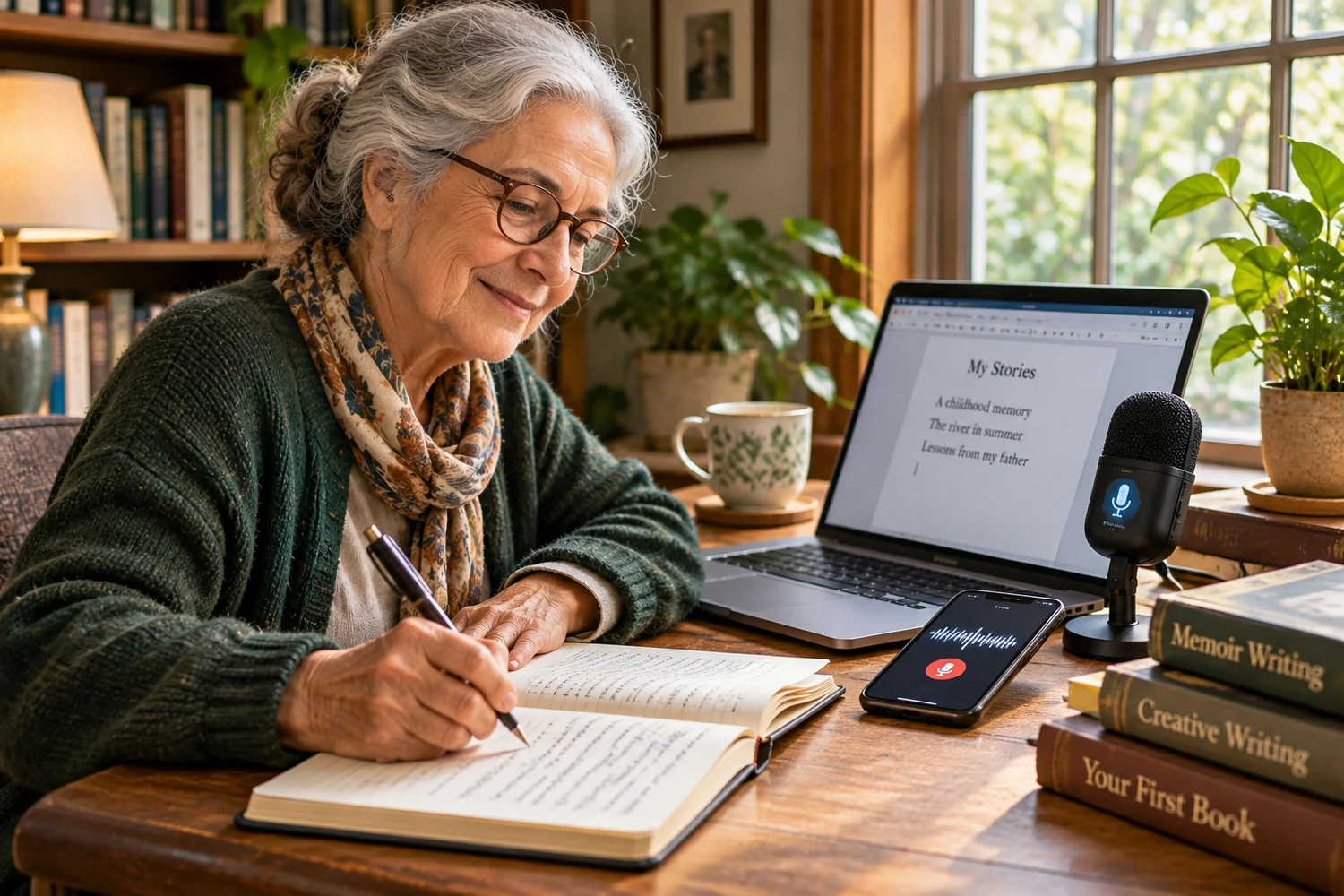
There's no single correct way to make a manuscript.
Some writers think best with a pen and notebook. Others prefer a computer because moving paragraphs, correcting sentences, and organizing chapters becomes easier.
You might choose one of several approaches.
Handwriting: A notebook can be simple and inviting. Number the pages and date your pieces so they're easy to find later.
Typing: A word processor lets you save separate stories, revise them, and organize them into folders or chapters.
Dictation: You can speak your ideas into a recording device or use speech-to-text software. Review the transcription afterward, since names and unusual phrases may be recorded incorrectly.
Writing with a partner: A trusted person might ask questions, record your answers with permission, type your words, or help you organize material.
The important distinction is that assistance shouldn't take control away from the writer.
If you're working with someone, decide together whether they're helping with transcription, offering editorial advice, or contributing as a collaborator.
And if you use a computer or recording device, save backup copies of work you care about.
Write in Your Own Voice
Many people hesitate because they believe a book must sound formal or literary.
But your natural way of telling a story is often one of its strongest qualities.
Imagine describing an experience to someone who's genuinely interested.
You probably wouldn't begin by searching for impressive vocabulary. You'd explain what happened and why it mattered.
Try putting that voice on the page.
Read a paragraph aloud.
Does it sound like something you might say? Is it clear? Does it make the reader curious about what comes next?
If not, try a simpler version.
You can refine sentences later. The first draft is where you discover what you want to say.
What If You Don't Remember Every Detail?
Personal stories and historical accounts involve different responsibilities.
You may remember the feeling of an event clearly but be uncertain about its exact date. You might remember a conversation's meaning without recalling the precise words.
When factual accuracy matters, use letters, photographs, records, or conversations with others to check details.
You can also write honestly about uncertainty:
“I believe this happened during our second summer in the house.”
For memoir, avoid presenting reconstructed dialogue as a verbatim quotation unless you have a reliable record.
For fiction, you have much greater freedom to invent.
Your writing can be vivid without pretending to know more than you do.
How Individual Stories Become a Book
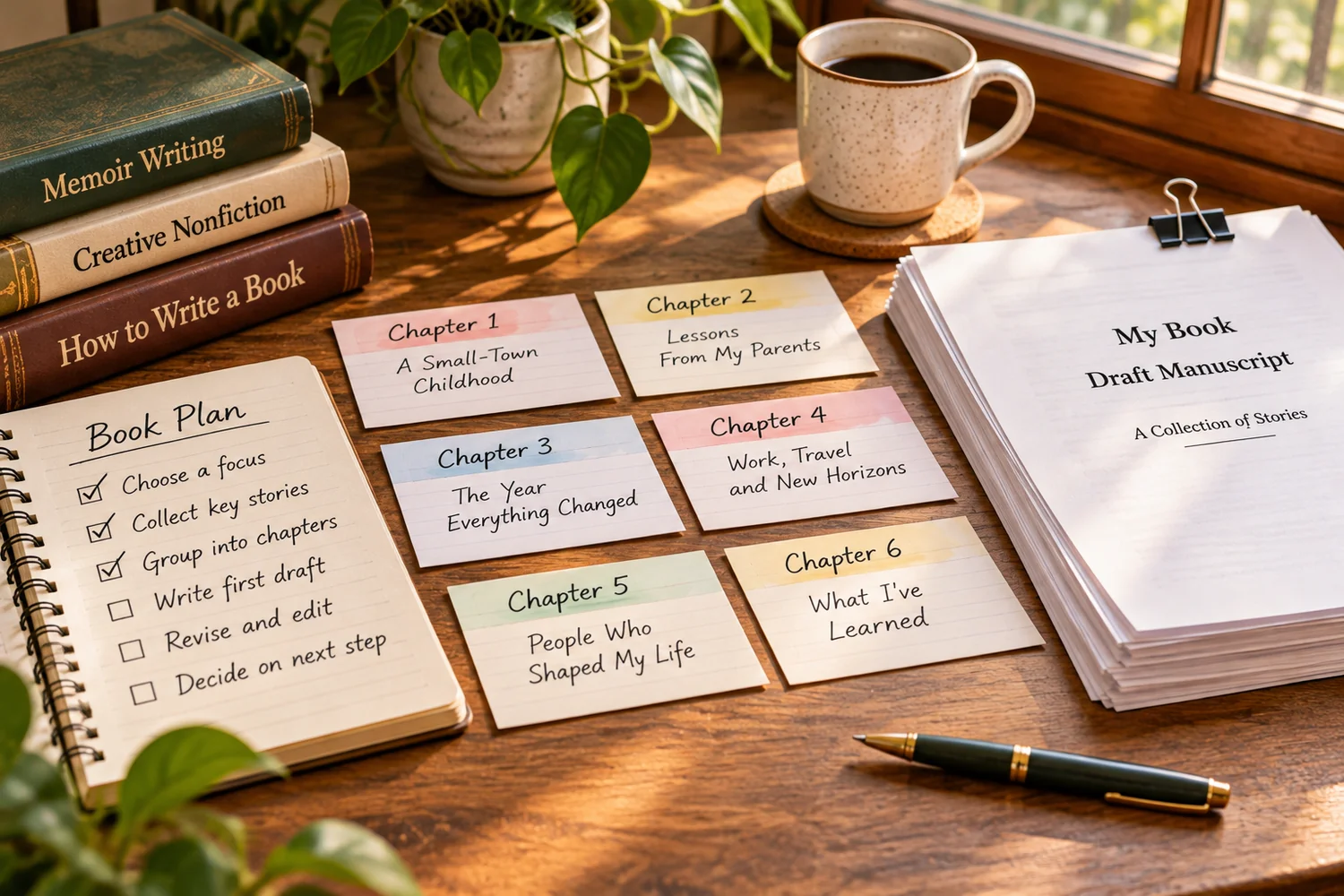
Once you have a handful of pieces, you can begin to consider whether they belong together.
You don't need to make that decision on the first day.
Start by placing your writing in one folder, notebook, or document collection.
Give each piece a simple title.
After you've gathered several, ask three questions:
What connects these pieces?
What might a reader want to understand?
Is there a larger story or idea beginning to emerge?
A book often takes shape when you notice the connections.
Option 1: Arrange Stories Chronologically
A chronological structure follows time.
You might begin with a particular period and move forward through the events that followed.
This works well for some memoirs and family histories, especially when understanding the sequence of events matters.
But you don't need to begin with childhood or include every year of your life.
Option 2: Organize by Theme
A themed collection groups stories around subjects rather than dates.
For example, a personal collection about places and belonging might include:
Part One: Places I Called Home
Part Two: The People Who Changed My Direction
Part Three: Work, Workplaces, and Unexpected Lessons
Part Four: Journeys and New Beginnings
Part Five: Things I Understand Differently Now
This is only an illustrative structure, not a template everyone should follow.
You could arrange your material around creativity, family traditions, travel, friendships, or something completely different.
Option 3: Build a Continuous Narrative
If you're writing fiction or a memoir centered on a single experience, you may prefer a more continuous story.
Think about its movement.
What situation introduces the reader to the story?
What changes?
What questions or difficulties emerge?
What does the ending allow the reader to understand?
You don't need to settle every detail in advance. Some writers outline carefully; others discover the structure by drafting.
Both approaches can work.
A Practical Organizing Exercise
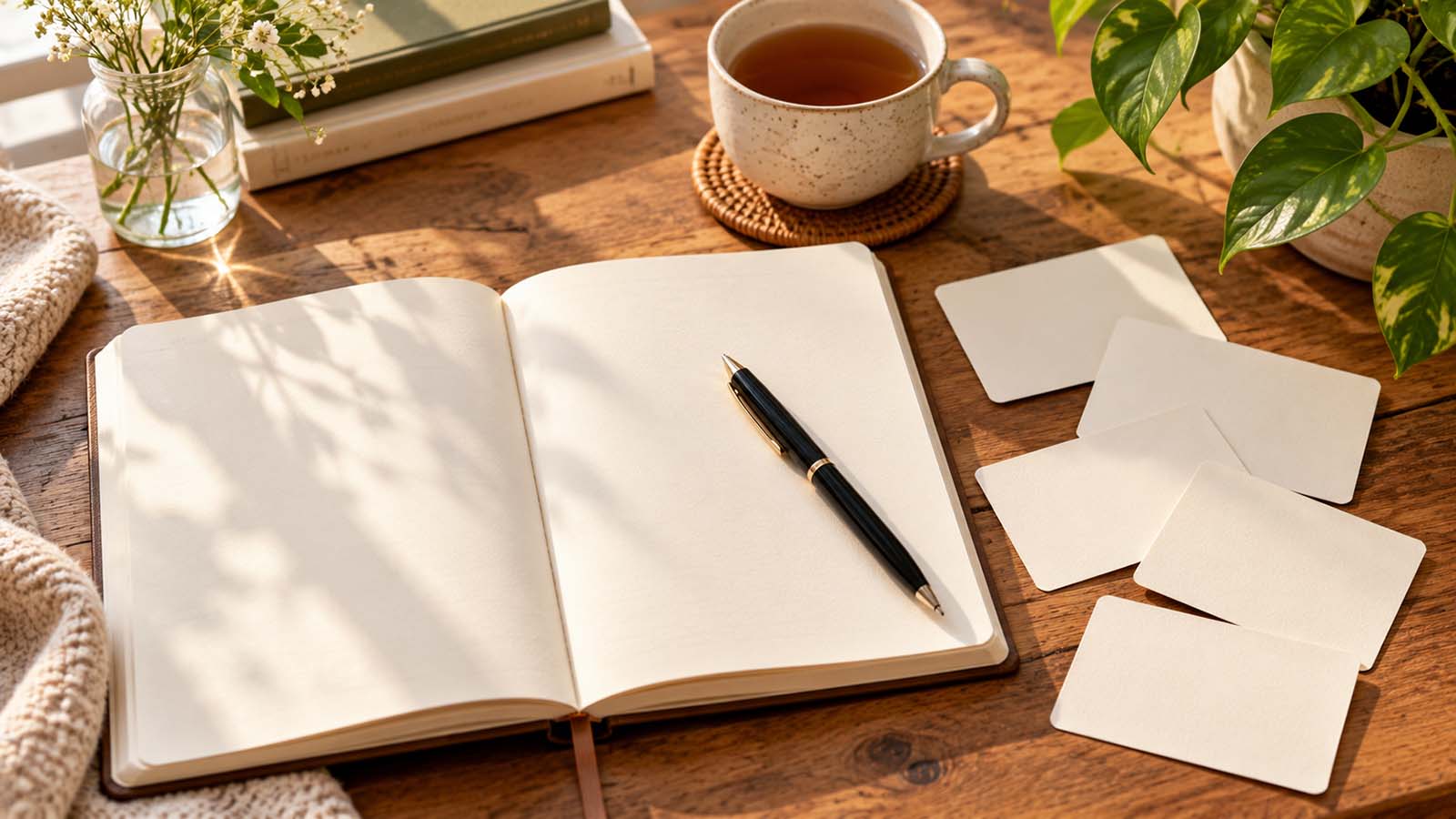
Print or write the titles of your existing pieces on separate slips of paper.
Arrange them in an order that interests you.
Try placing the strongest or most intriguing story first. Then ask what a reader might naturally want to read next.
Move the pieces around.
This small exercise can make a collection feel less abstract.
You're no longer imagining an entire book from nothing. You're finding a path through work you've already created.
When Family Stories Are Part of the Project
You may want to include someone else's recollections alongside your own.
A conversation can reveal perspectives, details, and stories you hadn't considered.
If you're interviewing someone, begin by explaining what you're working on and why you'd like to record their experiences.
Ask permission before recording, transcribing, distributing, or publishing the conversation.
A person agreeing to talk doesn't automatically mean they agree to have their words printed in a book or posted online.
The same care applies to private letters, family photographs, and sensitive stories involving other people.
A thoughtful book respects not only the writer's voice but also the privacy and wishes of those whose lives appear in it.
And remember: you're under no obligation to include painful experiences or private details simply because someone else considers them important.
Revising Without Losing Your Voice
Finishing a first draft is an accomplishment, but revision is where a collection begins to work as a whole.
You don't need to correct everything at once.
Try three separate readings.
First Reading: The Bigger Picture
Does each chapter or story belong in the collection?
Is the order understandable?
Are there missing explanations or repeated sections?
At this stage, moving or removing a whole section may matter more than changing individual words.
Second Reading: Clarity
Read with someone unfamiliar with the material in mind.
Will they know who the people are? Can they follow when and where events happen? Are important terms explained?
You may know the history behind every name and place, but the reader doesn't.
Third Reading: Sentences and Details
Now refine word choice, punctuation, grammar, and consistency.
Reading aloud can help you notice awkward phrasing.
If you invite feedback, ask specific questions, such as:
“Was there a point where you felt confused?”
Or:
“Which part did you want to know more about?”
You don't have to accept every suggestion.
An editor or trusted reader can help you communicate your intentions more clearly. They shouldn't replace your intentions with their own.
Does Your Writing Have to Become a Published Book?
No.
A manuscript can be valuable without ever appearing in a bookstore.
You might decide to keep a private collection of stories, give copies to friends or family, produce a small printed book, or publish for a broader readership.
Each destination calls for a different amount of preparation.
A private collection might be a neatly organized document or a bound notebook.
A family keepsake might combine stories with photographs, letters, recipes, or captions.
A small printed edition may involve editing, page layout, cover design, and selecting a printing service.
A publicly available book generally calls for additional decisions about editing, rights, formatting, distribution, and how you want readers to discover it.
If you move toward publication, take time to understand the process before paying for services.
Be clear about what a provider will deliver, what rights you retain, and who controls your files.
You don't need to make all those decisions now.
First, decide what you want the book to accomplish and who you hope will read it.
A book written for five people can be every bit as intentional as a book written for thousands.
A Gentle Four-Session Starting Plan
You can begin without committing to a strict daily schedule.
Session One: Choose Your Subject
Write down three story ideas, characters, or themes that interest you.
Choose one and write a short piece about it.
Session Two: Give the Story More Detail
Return to the piece.
Add a specific place, action, conversation, or observation that helps the reader picture what's happening.
Don't worry about making the writing perfect.
Session Three: Start Something Related
Write another piece that connects to your first.
It might involve the same person, place, theme, or fictional world.
Notice what the two pieces have in common.
Session Four: Consider the Larger Project
Read both pieces.
Ask whether you'd enjoy exploring the subject further.
If so, make a list of five possible additional pieces or chapters.
If not, choose another idea.
These are four creative sessions, not a deadline.
You might complete them in one week or spread them over several months.
Writing is allowed to fit into your life.
Frequently Asked Questions
Is It Too Late to Begin Writing a Book?
There is no upper age limit for beginning a writing project. The relevant questions are what you'd like to write, what methods work for you, and what you want the finished work to become.
Do I Need Previous Writing Experience?
No. You can begin with short pieces and learn as you go. Experienced writers, meanwhile, may find that a new genre or form offers a different challenge.
What If I Have Many Stories but Don't Know How to Organize Them?
Give each story a title and make a simple list. Look for shared people, periods, places, or themes. Try different orders before deciding on chapters.
Can I Write a Book by Speaking Instead of Typing?
Yes. Recorded narration and speech-to-text tools can help turn spoken stories into a draft. Transcriptions still need checking and editing, and anyone helping you record should understand how the material will be used.
How Long Should My Book Be?
There isn't one required length for every kind of book. A short collection intended for family, a full-length memoir, and a novel serve different purposes. Let the material and intended reader help determine the scope.
Should I Write About My Own Life or Try Fiction?
Choose the subject that genuinely interests you. Personal experience can inform fiction, and fiction can explore ideas that matter deeply to you without requiring an autobiographical account.
One Page Is a Beginning
You don't need a finished outline, a publication plan, or even a book title to start.
Choose something worth writing about.
Describe a scene. Explore an idea. Invent a character. Record a memory in your own words.
Tomorrow, or whenever you feel like returning, you can write another page.
Eventually, you may discover a collection, a manuscript, or a book beginning to take shape.
You may also discover that writing individual stories is exactly what you wanted.
Either outcome is worthwhile.
Start with one page. Let the next one follow.
For another gentle way to develop a regular writing habit, explore OFFLIVA's How to Start Journaling: A Beginner's Guide.
You can also browse 25 Journaling Prompts for Beginners when you'd like a fresh starting point.