15 Common Birdwatching Mistakes Beginners Make (And How to Avoid Them)
You've spotted a bird in a tree. It's small, brown, and moving quickly between the branches.
You reach for your phone to identify it, but by the time you've opened a bird guide, it's gone.
Was it a sparrow? Something else entirely?
You don't know.
If that sounds familiar, welcome to birdwatching.
When you're starting out, it's easy to feel as though everyone else knows what they're looking at. Experienced birdwatchers seem to recognize birds instantly, remember their calls, and know exactly where to find them.
But birdwatching is a skill you develop through observation, patience, and practice. Not knowing a bird's name isn't a failure. Neither is returning home without an exciting sighting.
The biggest beginner mistakes often have surprisingly simple solutions.
Here are 15 common birdwatching mistakes, why they happen, and what to try instead.
Before You Go: Mistakes That Make Birdwatching Harder Than It Needs to Be
A good birdwatching session doesn't require elaborate preparation.
In fact, some of the most common beginner problems begin when we make the hobby more complicated than necessary.
1. Buying Expensive Equipment Before You Start
You search for beginner birdwatching advice and immediately find recommendations for binoculars, cameras, field guides, and accessories.
Suddenly, a hobby you thought was free seems expensive.
Binoculars can be helpful, especially when observing distant birds. But they aren't a requirement for your first outing.
Try this instead: Spend your first few sessions watching birds from a window, garden, or local park. If you enjoy the experience, consider borrowing or trying binoculars before buying your own.
The best equipment is equipment that solves a problem you've actually encountered.
2. Thinking You Need to Visit a Remote Nature Reserve
It's easy to associate birdwatching with forests, wetlands, mountains, and wildlife reserves.
Those places can be wonderful, but they're not the only places where birds live.
Depending on where you live, birds may visit your garden, gather around neighborhood trees, perch on buildings, or search for food in a local park.
Try this instead: Choose one accessible place near home and spend 15 minutes observing it.
A familiar location has an advantage: you can return regularly and begin noticing patterns.
3. Expecting to See Rare or Colorful Birds
A beautiful photograph of an unusual bird can inspire you to try birdwatching.
But if your first outing produces only a few familiar birds, you might feel disappointed.
That's an easy way to overlook what makes the hobby interesting.
Even a common bird can be fascinating when you pay attention to its movements, sounds, and interactions.
Try this instead: Choose one ordinary bird and observe what it does for a few minutes.
Does it walk or hop? Search for food? Return to the same branch?
Try to learn something about its behavior before worrying about how unusual it is.
4. Choosing a Location Without Considering Safety or Access
You hear that a particular area is good for birdwatching, so you head there without checking whether the paths are accessible or suitable.
Perhaps the ground is uneven, the route is unfamiliar, or the location is closed to visitors.
A birdwatching outing should be enjoyable, not unnecessarily risky.
Try this instead: Begin somewhere safe, familiar, and legally accessible. Check local access information and weather conditions, and choose clothing and footwear suitable for the location.
You don't need a difficult trail to have a worthwhile experience.
5. Planning an Outing That's Too Long
You decide your first birdwatching trip should last several hours.
After a while, you're tired, distracted, and wondering whether this hobby is for you.
Long outings aren't necessarily better, especially when you're still learning how to observe birds.
Try this instead: Start with 15 to 30 minutes.
If you're enjoying yourself, stay longer. If not, head home and try again another day.
A short outing you genuinely enjoy is more valuable than an ambitious one that feels like an obligation.
If you're completely new to the hobby, begin with our How to Start Birdwatching for Beginners guide, which includes a simple first 15-minute session.
While Watching: Mistakes That Make Birds Harder to Notice
Once you're outside, the challenge changes.
Now it's about learning to observe.
You don't need perfect eyesight, expert knowledge, or lightning-fast reactions. Small changes in how you watch can make the experience more rewarding.
6. Walking Too Quickly
You arrive at a park and begin walking along the paths, hoping to spot as many birds as possible.
But you're moving so quickly that you barely notice what's happening around you.
Birds can be easy to overlook when they're resting among leaves or moving quietly through vegetation.
Try this instead: Walk slowly and pause regularly.
Spend a few minutes observing one area before moving on.
Look for movement, listen for calls, and pay attention to different heights, from the ground to the treetops.
Sometimes staying still is more useful than covering more distance.
7. Looking Only for Bright Colors
You notice a flash of color and immediately try to identify the bird from that one detail.
But colors can appear different depending on sunlight, shadows, distance, age, and other factors.
Two unrelated birds may share similar colors, while birds of the same species may look different.
Try this instead: Look for several clues together.
Notice the bird's approximate size, body shape, beak, tail, markings, behavior, and habitat.
For example, "small brown bird with a short tail, hopping under a bush" gives you more to work with than simply "brown bird."
The Cornell Lab of Ornithology's All About Birds provides identification resources for North American birds. Elsewhere, use a reputable guide covering your region.
8. Ignoring Bird Sounds
You're concentrating so hard on spotting birds that you forget to listen.
Yet birds can be heard even when they're hidden among leaves or beyond your view.
Calls and songs can offer useful identification clues, although learning them takes practice.
Try this instead: Spend one minute listening before actively searching.
How many different sounds can you notice?
You don't need to identify them.
Try describing one sound in your own words: short whistles, repeated chirps, or a longer series of notes.
Over time, familiar sounds may become easier to recognize.
9. Trying to Identify a Bird Before Observing It
You see a bird and immediately open an identification app.
By the time you've searched through several possibilities, the bird has flown away.
You now have a possible name, but very little information about what you actually saw.
Try this instead: Observe first and identify later.
If possible, notice three details:
Size and shape
Distinctive markings
Behavior or location
Make a quick note or sketch.
Then consult your field guide when the bird is no longer in view.
You may still be unable to identify it confidently, and that's fine.
10. Getting Too Close for a Better View
You spot a bird resting on a branch and move closer.
Then closer again.
Suddenly, the bird flies away.
Approaching birds can interrupt their normal activities. Disturbance is especially concerning around nests, young birds, and sensitive habitats.
Try this instead: Keep your distance and let birds behave naturally.
If a bird becomes alert, stops what it's doing, or moves away because of your presence, give it more space.
Never approach or handle nests, eggs, or chicks.
A good sighting isn't worth disturbing wildlife.
The American Birding Association's Code of Birding Ethics offers further guidance on responsible birdwatching.
11. Focusing So Much on One Bird That You Miss Everything Else
You finally spot a bird you've been trying to identify.
You concentrate on it so intensely that you forget to notice the rest of the environment.
There's nothing wrong with watching one bird closely. In fact, it can be a wonderful way to learn.
But occasionally widening your attention can reveal other interesting activity.
Try this instead: Alternate between focused observation and looking around.
Watch one bird for a while, then scan the nearby trees, ground, and sky.
Notice whether other birds are calling, feeding, or interacting.
Birdwatching becomes more interesting when you begin noticing relationships and behavior, not just individual birds.
After Your Outing: Mistakes That Slow Down Your Learning
The experience doesn't have to end when you leave the park.
A few minutes of reflection can help you remember what you saw and decide what to explore next.
12. Forgetting to Record Your Observations
You return home remembering that you saw several birds.
But a few hours later, the details have become fuzzy.
Was the bird's head dark or light? Was it on the ground or in a tree?
Without notes, it can be difficult to compare your sightings later.
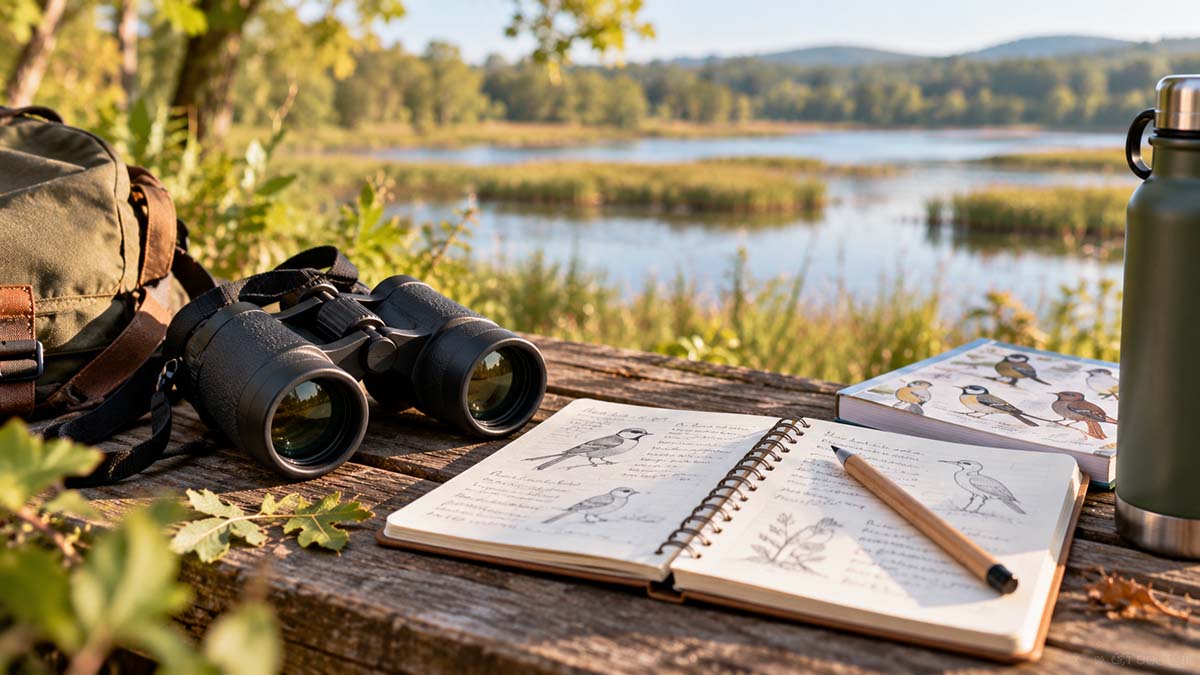
Try this instead: Keep a simple birdwatching journal.
Record the date, location, approximate appearance, and anything interesting you noticed.
You can write a few words or make a rough sketch.
Your notebook doesn't need to be neat or detailed.
If you're interested in building a regular writing habit, our How to Start Journaling: A Beginner's Guide can help.
13. Guessing a Species and Treating It as Certain
You compare your notes with a bird guide and find a photograph that looks similar.
You decide that must be the bird.
But several species may share similar markings, and a single photograph may not show enough detail for a reliable identification.
Try this instead: Be comfortable with uncertainty.
You can record a sighting as "possibly a sparrow," "unidentified small bird," or simply describe what you observed.
Compare multiple features and use a guide relevant to your location.
It's better to leave a bird unidentified than to force a name that isn't supported by what you saw.
14. Never Returning to the Same Place
You assume every birdwatching outing needs a new destination.
So you keep searching for different parks and reserves.
Exploring new places can be enjoyable, but returning to a familiar location has its own rewards.
Repeated visits give you opportunities to notice changes in bird activity and become more familiar with local species.
Try this instead: Choose one regular birdwatching spot.
Visit it at different times or on different days.
You might notice familiar birds behaving differently, new visitors appearing, or changes in the surrounding habitat.
A place doesn't have to be new to offer something new to observe.
15. Turning Birdwatching Into a Competition
You see other birdwatchers sharing long species lists, beautiful photographs, or exciting sightings.
Your own notebook contains only a few familiar birds.
It's tempting to compare your progress with theirs.
But birdwatching doesn't have to involve collecting sightings, identifying rare species, or achieving personal records.
Try this instead: Decide what you enjoy about the activity.
Maybe you like learning bird names.
Maybe you enjoy being outdoors.
Maybe you simply appreciate having a quiet reason to spend time away from your phone.
All of those are valid ways to enjoy birdwatching.
Your hobby should fit your interests, not someone else's expectations.
A Simple Checklist for Your Next Birdwatching Outing
You don't need to remember all 15 mistakes.
Before your next session, keep these five ideas in mind:
Choose somewhere accessible. A familiar park or window view is enough.
Give yourself 15 minutes. You can stay longer if you're enjoying it.
Observe before identifying. Notice size, shape, behavior, and sounds.
Respect wildlife. Keep your distance and avoid disturbing birds.
Record one discovery. Write down something you noticed, even if you don't know the bird's name.
That's a useful foundation for your next outing.
Do You Need to Avoid Every Mistake?
Of course not.
You'll forget to write things down.
You'll mistake one bird for another.
You'll sometimes walk past a bird without noticing it.
And you'll probably have outings when nothing particularly interesting seems to happen.
That's all part of learning.
The important thing is to remain curious and respectful of the wildlife around you.
You don't need to improve every time you go outside.
Sometimes a few peaceful minutes of observation are enough.
The Best Birdwatchers Keep Learning
Birdwatching becomes more rewarding when you stop worrying about getting everything right.
A bird you can't identify today might become familiar after several encounters.
A park that seems ordinary might reveal something interesting when you visit at a different time.
And a short walk you once considered uneventful might become something you genuinely look forward to.
Start with what you can see.
Notice what interests you.
Let your knowledge grow naturally.
If you'd like to build your confidence from the beginning, our step-by-step guide shows you exactly how to get started.
Read How to Start Birdwatching for Beginners →