How to Start Birdwatching for Beginners: A Simple Guide to Your First Birds
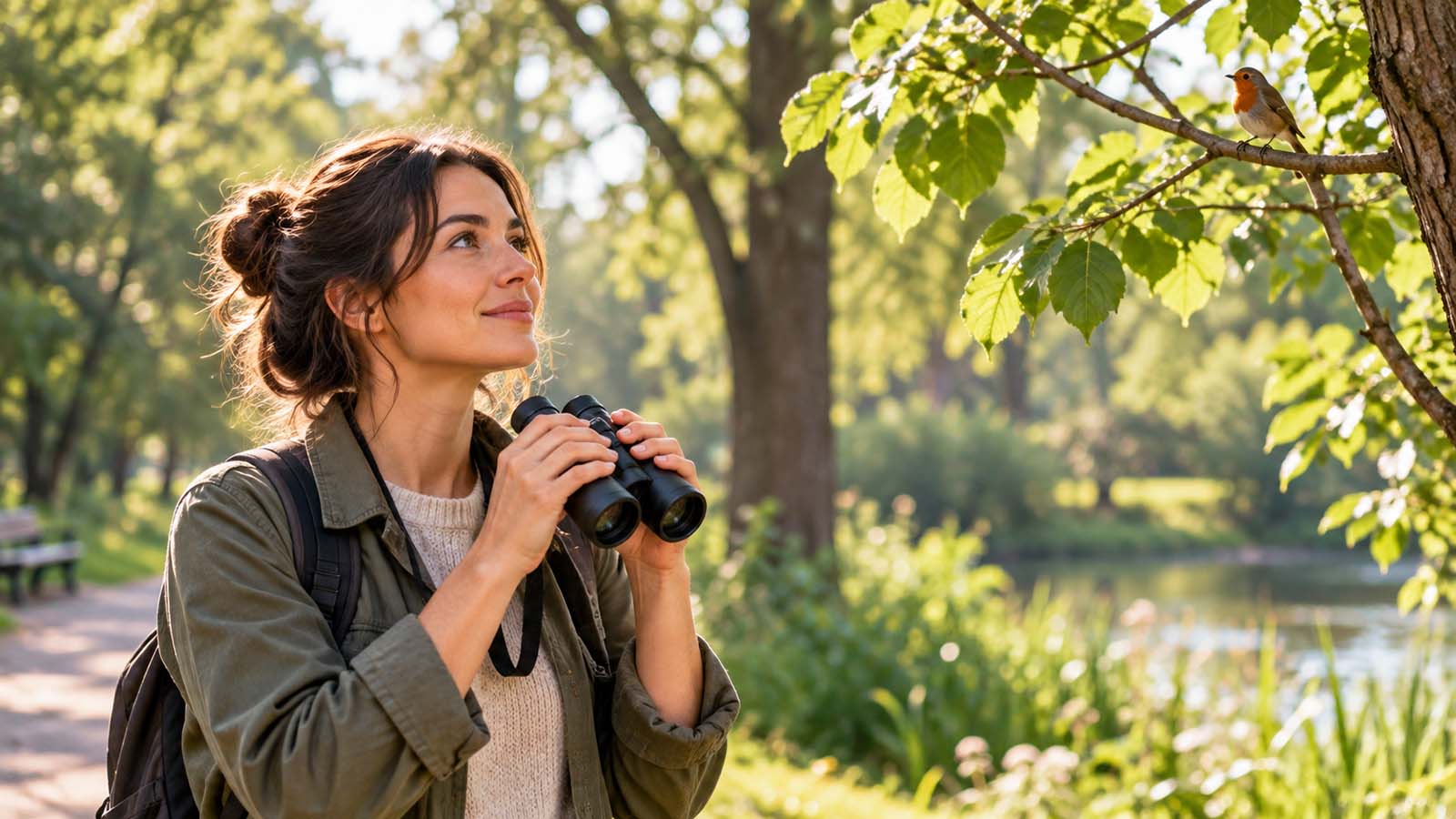
You don't need to travel into a forest to find birds worth watching.
They might already be outside your window.
Perhaps there's a small bird visiting the same branch every morning. Maybe you've noticed birds gathering on rooftops, hopping across the grass, or calling from trees you walk past every day.
You've probably seen hundreds of birds without paying much attention to them.
Birdwatching begins when you start noticing.
You don't need to know their names, own binoculars, or recognize birds by their songs. You just need a little time, somewhere comfortable to observe, and a willingness to be curious.
This beginner's guide will show you how to start birdwatching, where to look, what to notice, and how to enjoy your first outing without making the hobby unnecessarily complicated.
And the best part? You can begin in about 15 minutes.
What Is Birdwatching, Exactly?
Birdwatching, sometimes called birding, is the activity of observing birds in their natural surroundings.
Some people enjoy identifying different species. Others keep lists of birds they've seen, photograph them, listen to their calls, or travel to places known for interesting wildlife.
But birdwatching can also be much simpler.
You might spend ten minutes watching birds from a kitchen window. You might visit a local park and notice how different birds search for food. Or you might sit quietly in your garden and discover that several kinds of birds visit throughout the day.
You don't have to turn every sighting into a record or challenge.
For many beginners, the enjoyment comes from paying attention to an ordinary place and discovering how much is happening there.
If you're exploring different ways to spend time outdoors and away from screens, birdwatching is one of the activities featured in our 25 Offline Hobbies for Adults That Are Actually Fun.
What Do You Need to Start Birdwatching?
Very little.
It's easy to imagine birdwatchers carrying expensive binoculars, long camera lenses, and detailed field guides.
Those things can be useful, but they're not requirements.
Start With Your Eyes and Ears
Your most important tools are your ability to look and listen.
Find a place where birds are likely to appear, stay reasonably still, and observe what happens.
Watch how birds move.
Notice whether they spend time on the ground, in trees, near water, or on buildings.
Listen for calls and songs, even if you can't identify them yet.
The first skill to develop is noticing differences.
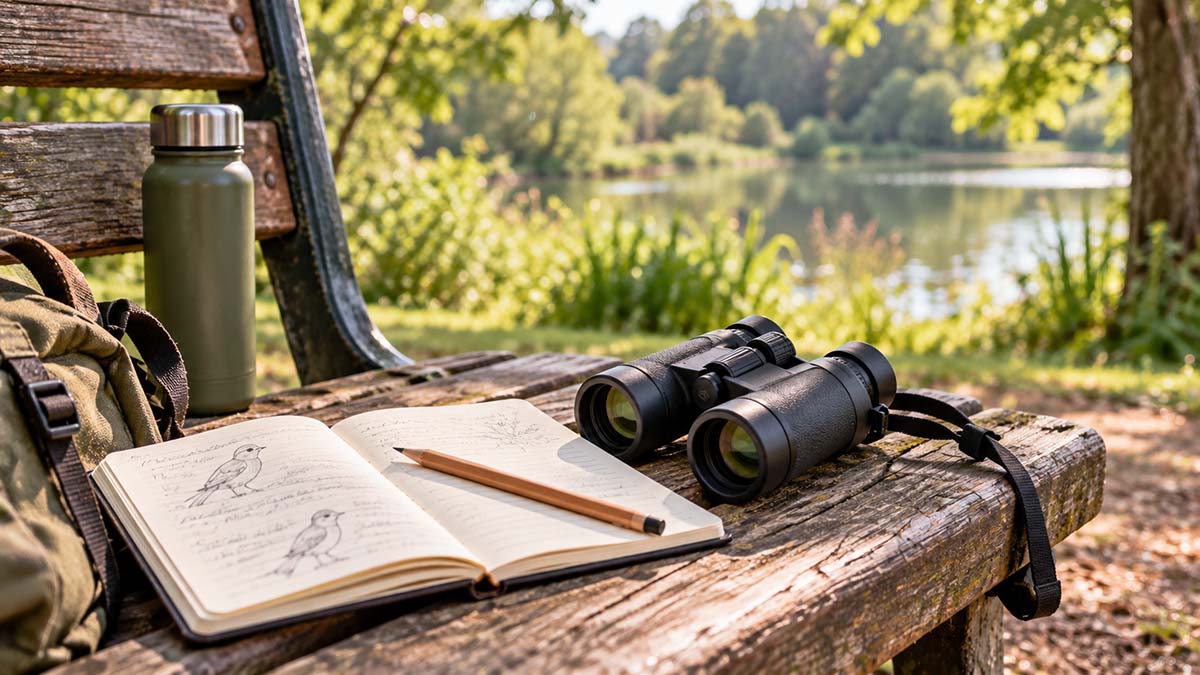
Bring a Small Notebook
A notebook is optional, but it can make birdwatching more interesting.
You can record:
Where you saw a bird
Its approximate size and colors
What it was doing
Any sounds you noticed
The date and location
Questions you'd like to investigate later
You don't need special birdwatching stationery.
An ordinary notebook and pencil work perfectly well.
Do You Need Binoculars?
No. You can begin without them.
Binoculars help you see birds at a distance without approaching them. They become useful when you want to notice details such as markings, beak shapes, and feather patterns.
If you eventually decide to buy a pair, many beginners find 8×42 binoculars a practical starting configuration.
The first number describes magnification. The second refers to the diameter of the objective lenses in millimeters.
But binocular quality, comfort, weight, and price vary considerably. If possible, try a pair before purchasing.
For your first few birdwatching sessions, use what you already have.
Where Can Beginners Go Birdwatching?
You don't need access to a nature reserve.
Birds live in cities, suburbs, towns, villages, gardens, and agricultural landscapes, as well as forests and wetlands.
The best place to start is somewhere accessible enough that you can return regularly.
Your Window, Balcony, or Garden
This may be the easiest starting point.
Choose a window overlooking trees, shrubs, rooftops, a garden, or another place where birds visit.
Sit comfortably and watch for a few minutes.
You may notice that certain birds appear at similar times or prefer particular places to perch.
Observing the same area repeatedly can help you recognize familiar visitors.
A Local Park
Parks often provide a mixture of trees, open grass, paths, and sometimes water.
That variety can create opportunities to observe birds with different habits.
Walk slowly and stop occasionally.
Look at tree branches, the edges of open spaces, and areas where birds can find food naturally.
You don't need to cover the entire park.
One quiet spot may be enough.
A Pond, Lake, or River
Water can be an interesting place to watch birds.
Depending on your location, you may see birds swimming, wading, diving, resting, or searching along the shore.
Stay on public or permitted paths and observe from a respectful distance.
Avoid approaching nests, chicks, or resting birds to get a closer look.
Your Everyday Walking Route
You can even begin while walking to a shop or around your neighborhood.
Notice birds on fences, trees, rooftops, wires, or patches of grass.
The advantage of watching birds near home is that you can revisit the same places and gradually recognize what's familiar.
When Is the Best Time to Watch Birds?
Many birds are active during the morning, making it a useful time to try birdwatching.
Late afternoon can also be rewarding.
However, bird activity varies by species, habitat, weather, season, and location. There isn't one perfect time that works everywhere.
If mornings are inconvenient, go whenever you have time.
A short afternoon session is better than an early-morning outing you never actually take.
For your first few attempts, try visiting the same place at different times.
You might discover that birds are easier to notice at one particular hour.
That discovery is part of the hobby.
Your First 15-Minute Birdwatching Session
Here's a simple way to begin today.
You don't need to prepare anything beyond choosing a suitable place.
Minutes 1–3: Find a Comfortable Spot
Choose a window, garden, park bench, or quiet place along a familiar walking route.
Make sure you're somewhere safe and permitted to be.
Settle in and look around.
Don't immediately start searching for unusual birds.
Instead, notice the environment.
Where are the trees? Is there water nearby? Are birds already making sounds?
Minutes 4–7: Watch for Movement
Look for birds flying between branches, hopping on the ground, or resting on rooftops.
Once you notice a bird, follow it with your eyes without moving closer.
Try to observe what it's doing.
Is it looking for food?
Is it sitting still?
Is it interacting with another bird?
You don't need to know its name.
Minutes 8–11: Notice Three Details
Choose one bird and try to remember three things about it.
For example:
Its approximate size
Its most noticeable colors or markings
Where it spent its time
If the bird flies away, don't worry.
You can write down what you remember.
Minutes 12–15: Record Your First Observation
Open your notebook and write a few sentences.
You might use a simple format:
Location: Neighborhood park
Bird: Small, brown and gray
Behavior: Hopping across the grass, stopping to look around
Question: Was it searching for insects or seeds?
That's a perfectly good first birdwatching entry.
You don't have to identify the species before your session counts.
How to Identify Birds Without Feeling Overwhelmed
Bird identification can seem difficult at first.
You may see a bird for only a few seconds. It might be far away, partly hidden by leaves, or moving too quickly to examine carefully.
Even experienced birdwatchers sometimes cannot confidently identify a bird.
The trick is to gather clues instead of guessing immediately.
1. Start With Size and Shape
Ask yourself:
Is the bird small, medium, or large compared with birds you already recognize?
Does it have a round body, long neck, short tail, or pointed wings?
What does its beak look like?
The overall shape can be more helpful than color alone, especially when lighting changes how feathers appear.
2. Look for Distinctive Markings
Notice any obvious features.
Perhaps the bird has a pale chest, a dark head, a striped wing, or a particularly long tail.
Try to remember the placement of the markings rather than simply writing "brown bird."
A rough sketch can help, even if you don't consider yourself good at drawing.
3. Pay Attention to Behavior
Where is the bird spending its time?
Is it walking on the ground, climbing a tree trunk, swimming, hovering, or flying between branches?
How does it move?
Different birds often have recognizable habits, although behavior alone may not be enough to identify a species.
4. Notice the Habitat
Record where you saw it.
A bird observed beside a pond may have different likely identities from one seen high in a dry woodland tree.
Habitat is a useful clue, but it isn't a guarantee.
Birds can appear outside their usual surroundings.
5. Listen to Its Sounds
If the bird makes a call, try to remember the pattern.
Was it a repeated whistle, a short chirp, a harsh call, or a longer sequence?
You can describe the sound in your notebook using your own words.
You don't need to memorize bird songs immediately.
6. Check a Reliable Local Guide
After your observation, compare your notes with a field guide or identification resource appropriate to your region.
Cornell Lab of Ornithology's All About Birds is a useful resource for North American species.
In the UK, the RSPB provides bird identification and birdwatching information.
Readers elsewhere should look for guides from local ornithological societies, wildlife organizations, or regional field-guide publishers.
Try to match several clues rather than relying on one color or photograph.
And if you're still unsure, it's completely fine to record the bird as unidentified.
Try Keeping a Birdwatching Journal
A birdwatching journal gives you a record of what you've noticed.
It can also make repeat visits more enjoyable.
Over time, you may recognize birds you've seen before, notice changes in activity, or become curious about seasonal visitors.
Your journal doesn't have to be elaborate.
Try this simple template:
Date:
Location:
Weather:
Birds noticed:
Interesting behavior:
Something to look up later:
You can also include small sketches, notes about sounds, or descriptions of the places you visit.
Here's an example of what an entry might look like:
Tuesday, 4:30 p.m. — Local park
Saw two small birds moving around the base of a tree. One had a darker head than the other. They stayed close together for a few minutes before flying into a nearby bush. I'd like to find out whether they were the same species.
The example doesn't identify the birds, and that's intentional.
A journal is useful even when you don't have all the answers.
If you enjoy recording observations, our How to Start Journaling: A Beginner's Guide can help you develop a simple notebook habit.
Common Beginner Birdwatching Mistakes
Most beginner mistakes are easy to avoid.
And none of them should stop you from enjoying the hobby.
Trying to Identify Every Bird
It's tempting to look up every bird you see.
But constantly searching for names can distract you from observing what the birds are actually doing.
Try watching first and identifying later.
Moving Too Quickly
Walking rapidly through a park can make it difficult to notice birds that are resting or partly hidden.
Try slowing down and pausing occasionally.
You may see more by spending ten minutes in one place than by rushing through several.
Getting Too Close
A closer view isn't worth disturbing wildlife.
If a bird changes its behavior because you're approaching, particularly near a nest or young birds, give it more space.
Use binoculars or observe from farther away instead.
Expecting Every Outing to Be Exciting
Some days you'll see several birds.
Other days you may notice only a few familiar visitors.
That's normal.
Birdwatching isn't a competition to collect as many sightings as possible.
Buying Too Much Equipment Too Soon
It's easy to become distracted by binoculars, cameras, field guides, and accessories.
But you don't need a collection of gear to discover whether you enjoy the activity.
Start small and let your interests guide future purchases.
How to Watch Birds Responsibly
Birdwatching should not come at the expense of the birds you're enjoying.
A few habits make a meaningful difference.
Keep a respectful distance. Avoid approaching birds closely for photographs or better views.
Never disturb nests. Don't handle eggs, chicks, or nesting materials.
Stay on permitted routes. Follow local access rules and respect private property.
Keep noise and disruption low. Avoid deliberately flushing birds into flight.
Be considerate of other people. Respect fellow visitors, residents, and other wildlife watchers.
Follow local wildlife guidance. Rules and sensitive habitats vary by region.
The American Birding Association's Code of Birding Ethics provides further guidance on putting birds' welfare first.
Remember that observing from a distance is often better than getting a perfect view.
How to Make Birdwatching a Regular Hobby
You don't need a strict schedule.
But returning to the same place can make birdwatching more interesting.
Try choosing one familiar location and visiting it several times.
You might start with:
Week 1: Watch birds from a window or garden for 15 minutes.
Week 2: Visit a nearby park and observe one bird's behavior.
Week 3: Try identifying two or three birds using a local guide.
Week 4: Return to your favorite location and notice what has changed.
This isn't a challenge you have to complete.
It's simply a way to explore the hobby without feeling overwhelmed.
If you discover that you enjoy birdwatching, you can gradually experiment with different habitats, learn more about bird calls, or join a local birdwatching group.
And if you prefer quiet observation without keeping lists or learning dozens of names, that's fine too.
What If You Don't See Any Birds?
It happens.
Birds may be less visible because of weather, nearby activity, the time of day, or simply where you've chosen to sit.
You haven't failed.
Try a different location, return another day, or spend a little more time listening rather than looking.
You can also notice signs of bird activity without seeing the birds themselves.
Perhaps you hear calls from a tree or notice movement deep in the branches.
Don't enter restricted areas or disturb vegetation to investigate.
Sometimes the most useful thing you can do is return later.
Birdwatching Without a Screen
One of the appealing things about birdwatching is that you can enjoy it without looking at a device.
Bird identification apps and online guides can be helpful, but you don't need to use them during every outing.
You can make a few notes on paper, then look up unfamiliar birds after you get home.
This gives you time to watch what is happening rather than constantly switching between the birds and your phone.
If you're trying to find a hobby that fits your available time, interests, and preferred pace, our guide to finding a hobby you actually enjoy offers a simple way to choose.
Start With the Birds Already Around You
Your first birdwatching trip doesn't have to be a trip at all.
It can begin with a window, a bench, a garden, or a short walk through your neighborhood.
Choose a comfortable place.
Spend 15 minutes looking and listening.
Notice one bird.
Write down something interesting about it.
That's enough to begin.
You can learn names, explore new places, and try binoculars later if you want to.
For now, let curiosity do the work.
Explore more ideas, beginner tips, and ways to enjoy this hobby in the Birdwatching Hobby Hub.
Explore the Birdwatching Hobby Hub