20 Fun Screen-Free Activities to Do With Friends (That Aren't Just Board Games)
When was the last time you spent an entire evening with friends and nobody needed to ask, “What should we do?”
Maybe you ordered food, sat around talking, and eventually someone suggested watching something. A few minutes later, everyone was scrolling through their phones.
There's nothing wrong with a relaxed evening. But sometimes you want to do something together that feels a little different.
Something you'll actually remember.
The good news? You don't need expensive tickets, complicated equipment, or a perfectly planned weekend.
Some of the most enjoyable activities with friends start with ordinary things: a pencil, a few ingredients, a walk around the neighborhood, or a question nobody has ever thought to ask.
Here are 20 screen-free activities to try with friends, whether you're planning a quiet afternoon, hosting a small gathering, or looking for something spontaneous to do together.
And no, you don't have to pull out another board game.
How to Choose an Activity Everyone Will Enjoy
Before deciding what to do, think about three things:
How many people are coming? Some activities are better with two or three friends. Others become more entertaining with a larger group.
What's everyone's energy level? A cooking challenge might be perfect for an energetic afternoon, while a storytelling game could suit a quieter evening.
How much preparation sounds enjoyable? If organizing the activity feels like a chore, choose something you can start in five minutes.
You don't have to ban phones or create strict rules. Simply agree to put them aside during the activity, while keeping one available if someone needs it for safety or an important call.
Quick Guide: Find Your Activity
If your group wants… | Try these activities |
|---|---|
Something free and spontaneous | Storytelling Relay, Observation Walk, Would You Rather |
A creative afternoon | Collaborative Drawing, Mini Art Gallery, Handmade Postcards |
A little friendly competition | Paper Tower Challenge, Mystery Ingredient Cook-Off, Trivia Night |
Something outdoors | Nature Bingo, Picnic Challenge, Neighborhood Scavenger Hunt |
A quiet evening | Memory Jar, Book Swap, Conversation Cards |
Ready to try something different? Start with whichever idea sounds easiest to organize.
Fun Screen-Free Activities to Do at Home
You don't need to leave the house to make an ordinary evening more interesting.
These activities work well in living rooms, kitchens, shared apartments, or around a dining table.
1. Play the Storytelling Relay
Group size: 3–8 people
Time: 15–30 minutes
You'll need: Nothing
One person starts a story with a single sentence.
For example:
“It was a perfectly normal Tuesday until a suitcase appeared outside the front door.”
The next person adds another sentence. Then the next person continues.
Keep going around the group until the story reaches a ridiculous, mysterious, or unexpectedly emotional conclusion.
Make it more interesting: Before starting, agree on a genre such as mystery, romance, science fiction, or comedy.
For an extra challenge, give everyone just ten seconds to contribute.
The goal isn't to tell a perfect story. It's to discover what happens when nobody knows where the story is going.
2. Host a Mystery Ingredient Cooking Challenge
Group size: 2–6 people
Time: 45–90 minutes
You'll need: A kitchen, ingredients, and basic cooking equipment
Turn an ordinary meal into a creative challenge.
Choose three familiar ingredients that everyone must use in a dish. Keep the selection realistic: perhaps potatoes, tomatoes, and cheese, or rice, mushrooms, and herbs.
Divide into pairs or small teams.
Give everyone a set amount of time to prepare something using the chosen ingredients and whatever additional basics are available.
When the food is ready, sit down together and sample the results.
You can vote for the most creative dish, best presentation, or most surprising combination.
Keep it welcoming: Check dietary restrictions and allergies before choosing ingredients. Follow normal food hygiene practices, and don't make tasting compulsory.
If your group prefers a calmer activity, prepare one dish together instead of competing.
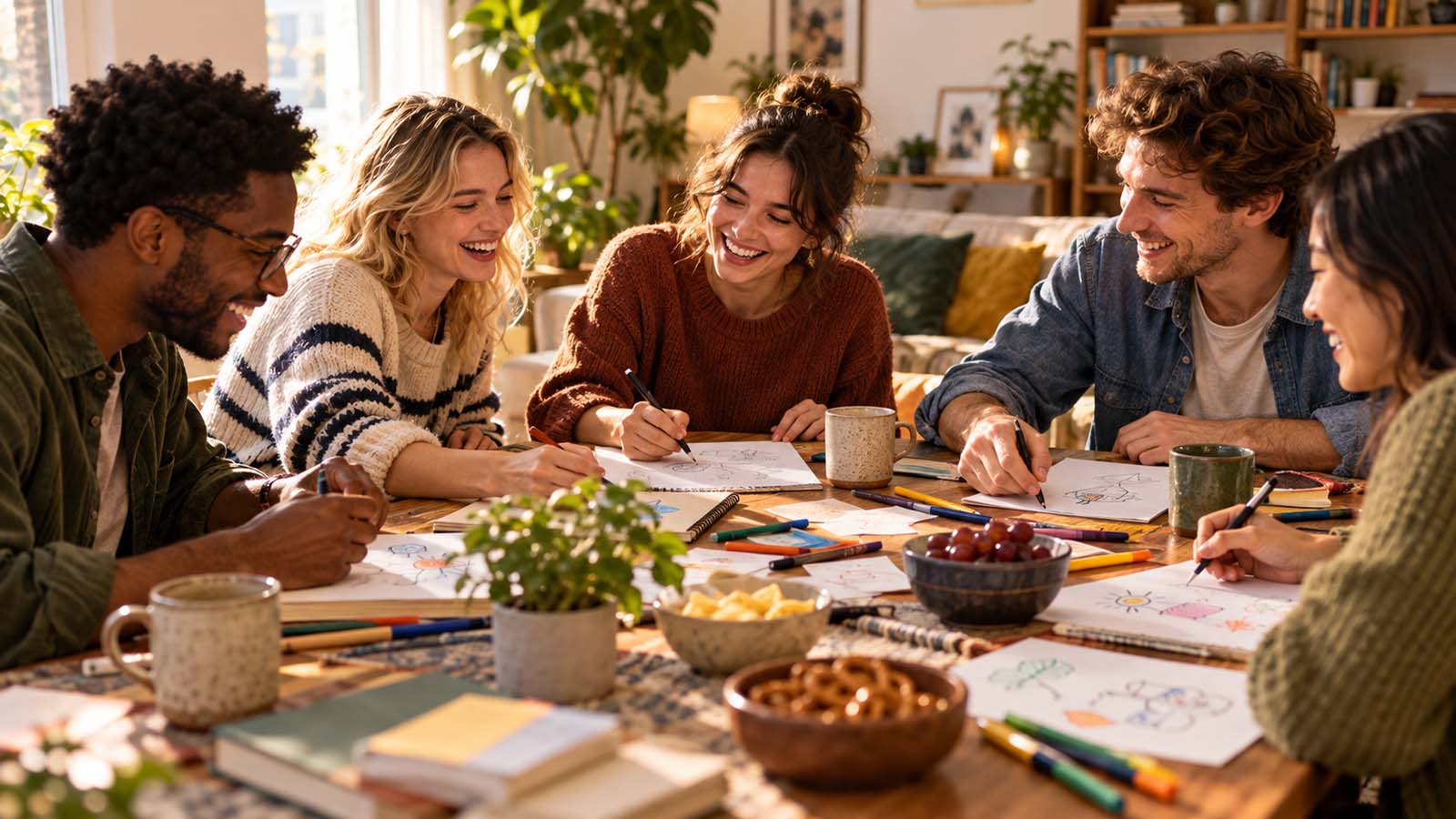
3. Try a Five-Minute Drawing Challenge
Group size: 2–10 people
Time: 20–40 minutes
You'll need: Paper and pencils
You don't have to be good at drawing to enjoy this.
Write simple drawing subjects on small pieces of paper: a sleepy cat, an imaginary house, a strange invention, or a superhero whose only power is making tea.
Everyone picks a subject and has five minutes to draw it.
At the end, reveal the drawings.
You can take turns explaining your creations, or have everyone guess what the pictures represent.
Try a different version: One person describes an object without naming it, while everyone else attempts to draw it from the description.
If someone discovers they enjoy drawing, our beginner's guide to sketching as an adult is a good place to continue.
4. Build the Tallest Paper Tower
Group size: 2–8 people
Time: 15–30 minutes
You'll need: Paper, tape, and a ruler
Give each team the same number of sheets of paper and the same amount of tape.
Set a timer for ten minutes.
The challenge is simple: build the tallest tower that can stand on its own for at least ten seconds.
Teams can fold, roll, or connect their paper however they like.
When the timer ends, measure the towers.
The fun comes from seeing how differently people approach the same problem.
Make it harder: Use only paper, without tape.
Or introduce a second round where teams can redesign their towers after seeing what worked.
5. Organize a Blind Taste Test
Group size: 3–8 people
Time: 20–40 minutes
You'll need: Several foods or drinks, small cups or plates, and paper
Choose a category such as different apple varieties, herbal teas, chocolates, or crackers.
Prepare small samples and label them with numbers.
Participants taste each sample without knowing which variety or brand they're trying.
Everyone writes down their guesses and favorites.
At the end, reveal the answers.
You might discover that your favorite snack isn't the one you expected.
Important: Tell everyone what ingredients or allergens may be present, and let people skip anything they don't want to try. There's no need to use blindfolds; simply hide the packaging.
Outdoor Activities to Enjoy With Friends
Sometimes a change of scenery is all you need.
These ideas encourage exploration without requiring an expensive trip or specialized equipment.
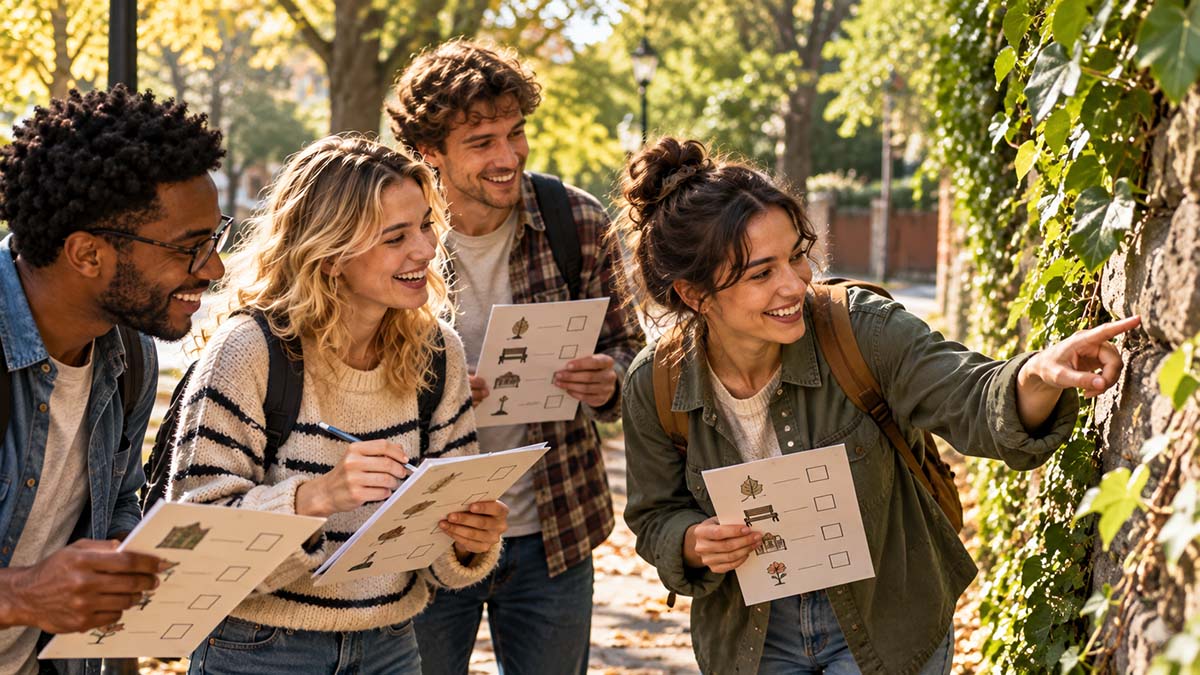
6. Go on a Neighborhood Observation Walk
Group size: 2–6 people
Time: 20–60 minutes
You'll need: Comfortable shoes; optional notebook
Choose a familiar walking route.
This time, turn the walk into an observation challenge.
Before leaving, agree on five things to notice:
An unusual doorway
A plant growing somewhere unexpected
An interesting pattern
A sound you haven't noticed before
Something that makes you curious
As you walk, point out your discoveries.
You might be surprised by how much you've overlooked in places you pass regularly.
Make it more interesting: At the end, each person shares their favorite discovery.
Stay on safe, permitted routes and respect private property.
7. Create a Paper-Based Scavenger Hunt
Group size: 3–10 people
Time: 30–60 minutes
You'll need: Paper, pens, and a prepared clue list
Create a list of objects or features to find in a park, neighborhood, or garden.
For example:
Something shaped like a heart
Three different leaf shapes
A building with an interesting window
Something yellow
A natural pattern
An object older than you
Give everyone a copy of the list.
Participants can work individually or in teams, marking each item as they find it.
No photographs are necessary.
The first team to complete the list—or the team with the most discoveries when time runs out—wins.
Keep it considerate: Observe without collecting plants, disturbing wildlife, entering restricted areas, or photographing strangers without permission.
8. Have a Picnic With a Surprise Theme
Group size: 2–8 people
Time: 60–120 minutes
You'll need: Food, drinks, and a suitable outdoor space
Instead of organizing an ordinary picnic, choose a playful theme.
You could try:
Everyone brings something homemade.
Each person brings food in one assigned color.
Every dish must be easy to share.
Everyone contributes something inspired by a childhood favorite.
Choose a location with enough space for everyone to sit comfortably.
Then enjoy the food, conversation, and whatever games naturally emerge.
Make it easier: Keep the theme optional and let people bring store-bought food. The goal is to enjoy time together, not create extra pressure.
Check local rules and weather conditions, and keep perishable food appropriately stored.
9. Play Nature Bingo
Group size: 2–10 people
Time: 30–60 minutes
You'll need: Homemade bingo cards and pencils
Before heading outside, draw a simple grid on paper.
Fill each square with something you might observe:
A bird, a fallen leaf, a flower, an insect, a feather, a cloud with an unusual shape, or a tree with textured bark.
Everyone receives a card.
As you explore, mark off the things you see.
The first person to complete a row wins.
For a more relaxed version, work together to fill the entire card.
Try this twist: Create seasonal cards based on the plants, weather, and wildlife found in your area.
Observe animals from a respectful distance and avoid disturbing nests or habitats.
10. Organize a Mini Outdoor Games Tournament
Group size: 4–12 people
Time: 45–90 minutes
You'll need: A few simple game materials
Create three or four short challenges using whatever you already have.
Possible events include:
Beanbag toss
Paper airplane distance contest
Ring toss
Target throwing with soft balls
A simple balance challenge
Divide into teams and rotate through the activities.
Award points for participation, creativity, or successful attempts.
At the end, announce the winning team—or invent amusing awards for everyone.
Keep it accessible: Choose games that suit participants' abilities, use soft equipment, and avoid obstacles or throwing activities in crowded public areas.
Creative and Hands-On Activities With Friends
Making something together can be more interesting than trying to create a perfect finished product.
These activities encourage experimentation, collaboration, and a little creative chaos.
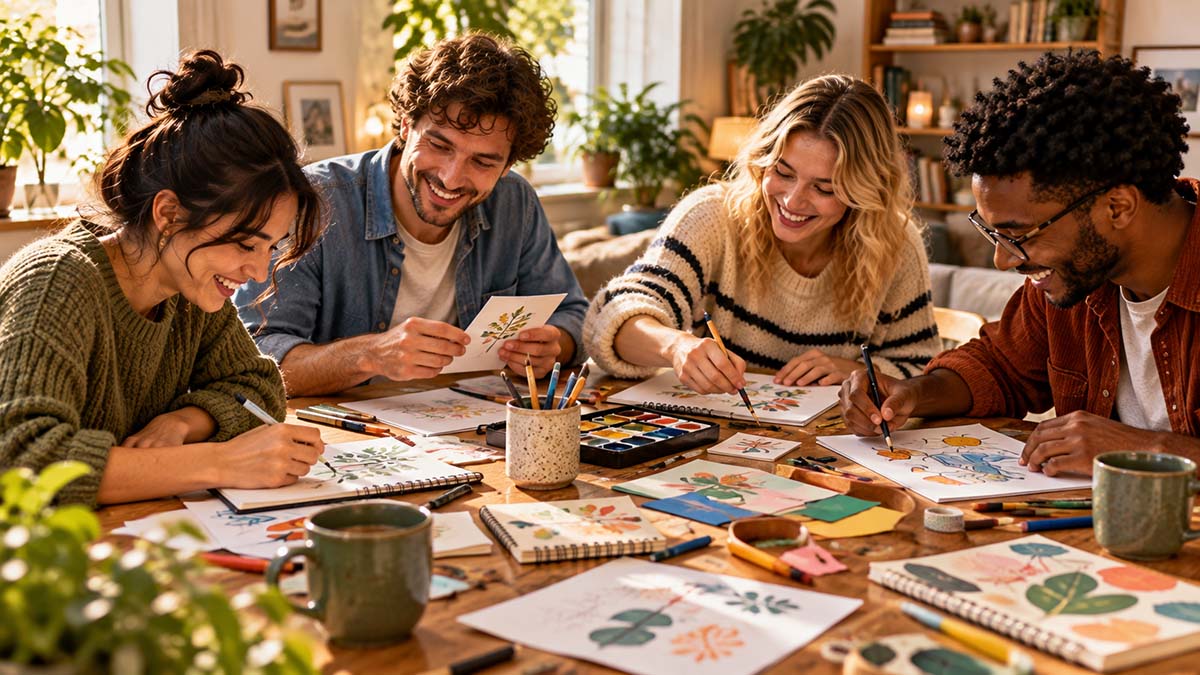
11. Make Collaborative Drawings
Group size: 3–8 people
Time: 20–40 minutes
You'll need: Paper and drawing materials
Give everyone a sheet of paper.
Each person begins a drawing and works on it for two minutes.
When the timer ends, pass the paper to the next person.
The next person adds something to the existing picture.
Continue until every drawing has traveled around the group.
Then reveal the finished creations.
Some drawings may become surprisingly cohesive. Others may turn into wonderfully strange combinations.
Make it more interesting: Choose a theme such as imaginary cities, unusual animals, or dream holiday destinations.
Nobody needs to explain or defend their artistic choices.
12. Create Handmade Postcards
Group size: 2–6 people
Time: 30–60 minutes
You'll need: Paper or card, pens, and optional art supplies
Cut paper into postcard-sized pieces.
Decorate the front with a drawing, collage, pattern, or short message.
On the back, write something to another person.
It might be a thank-you note, a favorite shared memory, or a message to someone you haven't spoken to recently.
You can exchange postcards with each other or send them to people outside the group.
Try this twist: Each person creates a postcard inspired by a place they've never visited but would love to explore.
The postcards don't need to look professionally designed. Personal touches are part of their charm.
13. Build a Tiny Art Gallery
Group size: 3–8 people
Time: 45–90 minutes
You'll need: Paper, pencils, craft materials, and a table or wall space
Invite everyone to create one small artwork.
The theme might be:
A favorite memory
A place that feels peaceful
An imaginary animal
Something that represents friendship
Set a time limit of 20 or 30 minutes.
When everyone finishes, arrange the pieces together like a miniature gallery.
Give each artwork a title.
Then walk around the exhibition and let the artists explain their ideas.
Make it more interesting: Invent a playful gallery name and create handwritten exhibition labels.
You can also let participants remain anonymous until the end.
14. Hold a No-Recipe Snack Challenge
Group size: 2–6 people
Time: 30–60 minutes
You'll need: Familiar ingredients and kitchen equipment
Put together a selection of simple ingredients suitable for assembling snacks.
Think bread, fruit, yogurt, vegetables, spreads, herbs, or other foods your group enjoys.
The challenge: everyone creates a snack without following a recipe.
Participants can work alone or in pairs.
When finished, each person gives their creation a name and explains the idea behind it.
Taste the snacks if everyone is comfortable doing so.
Keep it simple: Choose ingredients that don't require complicated preparation, and account for food allergies and dietary preferences.
You don't need to declare a winner. Sometimes the most enjoyable part is seeing what everyone invents.
15. Make a Shared Memory Collage
Group size: 2–8 people
Time: 45–90 minutes
You'll need: Paper, old magazines, printed pictures, scissors, and glue
Create a collage representing your friendship or a memorable time you've shared.
You can use printed photographs, ticket stubs, drawings, handwritten phrases, and cut-out images.
Choose a theme, such as “Our Best Adventures” or “Things We Want to Do Together.”
Everyone contributes something.
Arrange the pieces on one large sheet of paper.
When it's finished, decide whether to display it, store it, or give it to someone in the group.
A thoughtful alternative: If you don't have photographs or memorabilia, draw symbols representing shared memories instead.
Ask before using personal photos or sharing the finished collage publicly.
Quiet, Social Activities That Encourage Conversation
Not every gathering needs competition, noise, or a big group.
Sometimes the best activity gives people an easy reason to talk, laugh, or remember something together.
16. Play the Memory Jar Game
Group size: 3–10 people
Time: 20–45 minutes
You'll need: Paper, pens, and a bowl or jar
Ask everyone to write down one funny, surprising, or memorable experience they've shared with someone in the group.
Fold the papers and place them in a jar.
Take turns pulling out a memory and reading it aloud.
Everyone tries to guess who wrote it.
After the reveal, the person can tell the full story if they'd like.
Make it more interesting: Include memories from school, holidays, work, or previous gatherings.
Avoid embarrassing stories that someone might not want shared.
17. Host a Conversation Card Evening
Group size: 2–8 people
Time: 20–60 minutes
You'll need: Paper and pens
Write interesting questions on small pieces of paper.
Mix them together and place them in a bowl.
Take turns drawing a question.
Try prompts like:
What's a skill you'd love to learn?
Which ordinary day would you happily experience again?
What's something you believed as a child that makes you laugh now?
If you could spend a weekend anywhere nearby, where would you go?
What's the most unexpectedly useful thing you've learned?
You don't need to answer every question.
Allow anyone to pass, and let conversations develop naturally rather than rushing through the cards.
Try this twist: Ask everyone to contribute three questions before the evening begins.
18. Organize a Book or Magazine Swap
Group size: 3–10 people
Time: 30–60 minutes
You'll need: Books or magazines participants are happy to exchange
Ask each person to bring one or two books or magazines they're willing to pass along.
Arrange them on a table.
Before the exchange begins, everyone briefly introduces one item they've brought and explains why someone else might enjoy it.
Then let people browse and choose.
You can make the exchange completely informal or take turns selecting items.
Keep it fair: Agree beforehand whether items are gifts, loans, or temporary swaps.
Anyone who doesn't have something to bring should still be welcome to participate in the conversation.
19. Create a Friends' Trivia Night
Group size: 4–12 people
Time: 30–60 minutes
You'll need: Questions, paper, and pencils
Create a homemade trivia night based on topics your group enjoys.
Possible rounds include:
General knowledge
Music
Food
Travel
Childhood memories
Local history
Facts about your friendship group
Divide into teams.
Read the questions aloud and let everyone write down their answers.
Award points after each round.
Make it more interesting: Ask each participant to contribute a few questions in advance, so no single person has to prepare the entire game.
Avoid questions that reveal private information without permission.
20. Plan a Dream Weekend Together
Group size: 2–8 people
Time: 30–60 minutes
You'll need: Paper and pens
Imagine your group has a free weekend together.
The challenge is to design the most enjoyable weekend possible using activities everyone would genuinely consider doing.
Each person suggests one idea.
It could be a picnic, a cooking afternoon, a walk, a craft session, or a visit to a nearby place.
Write the suggestions on paper.
Then create a simple weekend itinerary.
You can make it playful by introducing constraints, such as:
Keep spending low.
Include one outdoor activity.
Include something nobody has tried before.
Leave at least two hours completely unplanned.
The best part: If the plan turns out to be realistic, you might actually do it.
How to Make a Screen-Free Gathering Feel Natural
You don't need to announce a strict digital detox.
A simple invitation works better:
“Want to try something different this weekend? I found a few fun activities we could do together.”
Choose one or two ideas rather than planning every minute.
Prepare any materials before people arrive.
Keep the atmosphere relaxed.
If someone doesn't want to participate in a particular game, give them another way to join in, such as keeping score, choosing music beforehand, or helping organize materials.
And remember that an activity doesn't need to fill the entire gathering.
Sometimes 20 minutes of drawing or storytelling is enough to get everyone laughing and talking.
The rest of the evening can unfold on its own.
What If Your Friends Have Different Interests?
That's normal.
One person may love creative activities. Another might prefer being outdoors. Someone else may enjoy conversation more than competition.
Instead of searching for one perfect activity, try rotating who gets to choose.
You could even create a small activity jar.
Ask everyone to write down two or three ideas they'd genuinely enjoy.
When your group meets, pull one out and give it a try.
If it doesn't work, choose another.
You can also explore our 25 offline hobbies for adults for more inspiration, or read How to Find a Hobby You Actually Enjoy if you're still figuring out what kinds of activities suit you.
For even more everyday alternatives to scrolling, see our 50 Things to Do Instead of Scrolling.
The Best Plans Are Often the Simplest
You don't need a special occasion to make time with friends more memorable.
You can draw together at a kitchen table.
Invent a ridiculous story.
Walk through a familiar neighborhood and notice things you've never seen before.
Or spend an evening answering questions that lead to conversations you didn't expect.
Not every activity will become a favorite.
Some will be funny. Some will be awkward. Some will surprise you.
But the point isn't to organize the perfect gathering.
It's to spend time doing something together.
Start with one idea from this list, invite a friend, and see where the afternoon takes you.
Want to discover an offline activity that fits your interests, time, and energy?
Find My Hobby