15 Easy Hobbies You Can Start at Home Without Spending Much Money
You decide you want a new hobby.
Something enjoyable to do after work. Something that doesn't involve another screen. Maybe something creative, relaxing, or just different from your usual routine.
Then you start looking into it.
Suddenly, there are starter kits, special tools, online courses, and long lists of things you supposedly need before you can begin.
What started as a simple idea now feels like an expensive project.
But finding a hobby doesn't have to begin with shopping.
Some of the most enjoyable hobbies can start with a notebook, a pencil, an old piece of clothing, or a few things you already have around the house.
And you don't need to be particularly good at them.
The goal isn't to master a new skill in a weekend. It's to find something you genuinely enjoy doing.
Here are 15 inexpensive hobbies you can try at home, including what you need, how to get started, and how to avoid spending more than necessary.
Can You Really Start a Hobby Without Spending Money?
Absolutely—although it depends on what you already own.
If you have paper and a pencil, you can try sketching, journaling, creative writing, or simple paper games.
If you have a book you've been meaning to read, you can start a reading habit.
If you have an old shirt and basic sewing supplies, you might experiment with visible mending.
Other hobbies, such as embroidery or paper quilling, may require inexpensive materials that aren't already in your home.
The important distinction is between free to try and inexpensive to start.
A hobby may cost nothing when you already have the materials, but require a small purchase for someone else.
And an affordable beginner activity can become expensive if you decide to collect specialized equipment.
There's nothing wrong with investing in a hobby you love.
You just don't have to make that investment on day one.
Quick Comparison: Which Cheap Hobby Should You Try?
Hobby | Minimum materials | First session | Cost to try |
|---|---|---|---|
Journaling | Paper and pen | 10 minutes | Free if owned |
Reading | A book or library access | 15 minutes | Often free |
Creative writing | Paper and pen | 15 minutes | Free if owned |
Sketching | Pencil and paper | 15 minutes | Free if owned |
Origami | Paper | 15 minutes | Free if owned |
Collage making | Scrap paper, glue | 30 minutes | Free or low |
Hand lettering | Paper and pen | 15 minutes | Free if owned |
Visible mending | Needle, thread, old fabric | 30 minutes | Low |
Embroidery | Needle, thread, fabric | 30 minutes | Low |
Paper quilling | Paper strips, glue | 30 minutes | Low |
Indoor gardening | Plant or cutting, suitable container | 15 minutes | Free or low |
Puzzles | Existing puzzle or homemade one | 20 minutes | Free if owned |
Solo card games | Deck of cards | 15 minutes | Free if owned |
Memory challenges | Household objects | 10 minutes | Free |
Paper crafting | Paper, scissors, optional glue | 30 minutes | Free or low |
The times are suggested starting sessions, not fixed requirements. Choose a hobby that fits the materials and time you have available.
Quiet Hobbies That Cost Almost Nothing
These activities are easy to begin in a small space, especially when you want something calm to do at home.
1. Journaling
What you need: A notebook or a few sheets of paper and a pen
Try it for: 10 minutes
Cost: Free if you already have writing materials
Journaling doesn't have to mean writing a detailed account of your day.
You can make lists, describe something you noticed, record memories, or write about a question that's been on your mind.
There's no requirement to write beautifully or even use complete sentences.
Your first activity: Write the sentence, “Today, I noticed…” and finish it five different ways.
You might write about the weather, something funny you heard, a small frustration, or an ordinary moment you enjoyed.
That's enough for your first entry.
Keep it affordable: Use any notebook you already own. You don't need a guided journal, expensive stationery, or decorative supplies.
If you want more structure, read our beginner's guide to journaling or explore 25 journaling prompts for beginners.
2. Reading
What you need: A book, magazine, or printed reading material
Try it for: 15 minutes
Cost: Often free with books you own or library access
Reading is one of the easiest hobbies to return to if you've fallen out of the habit.
You don't need an ambitious reading goal.
You don't have to finish a book every week or work through a list of classics.
Start with something that genuinely interests you.
That might be a mystery novel, a collection of short stories, a biography, or a book about a subject you've always wanted to understand.
Your first activity: Choose something you've been meaning to read. Sit somewhere comfortable and read for 15 minutes.
When you finish, ask yourself whether you want to continue.
If the answer is no, try a different book.
Keep it affordable: Revisit books you already own, borrow from friends, or explore a local library where available.
3. Creative Writing
What you need: Paper and pen
Try it for: 15 minutes
Cost: Free if you have writing materials
You don't need to want to publish a novel to enjoy creative writing.
You can invent characters, write short scenes, create imaginary conversations, or describe places that don't exist.
Creative writing can be playful, personal, strange, or completely experimental.
Your first activity: Start with this sentence:
“The letter arrived twenty years too late.”
Write for ten minutes without stopping to correct every sentence.
Don't worry about the ending.
The goal is to discover what happens next.
Keep it affordable: Skip writing software and courses for now. A notebook is enough to explore whether storytelling interests you.
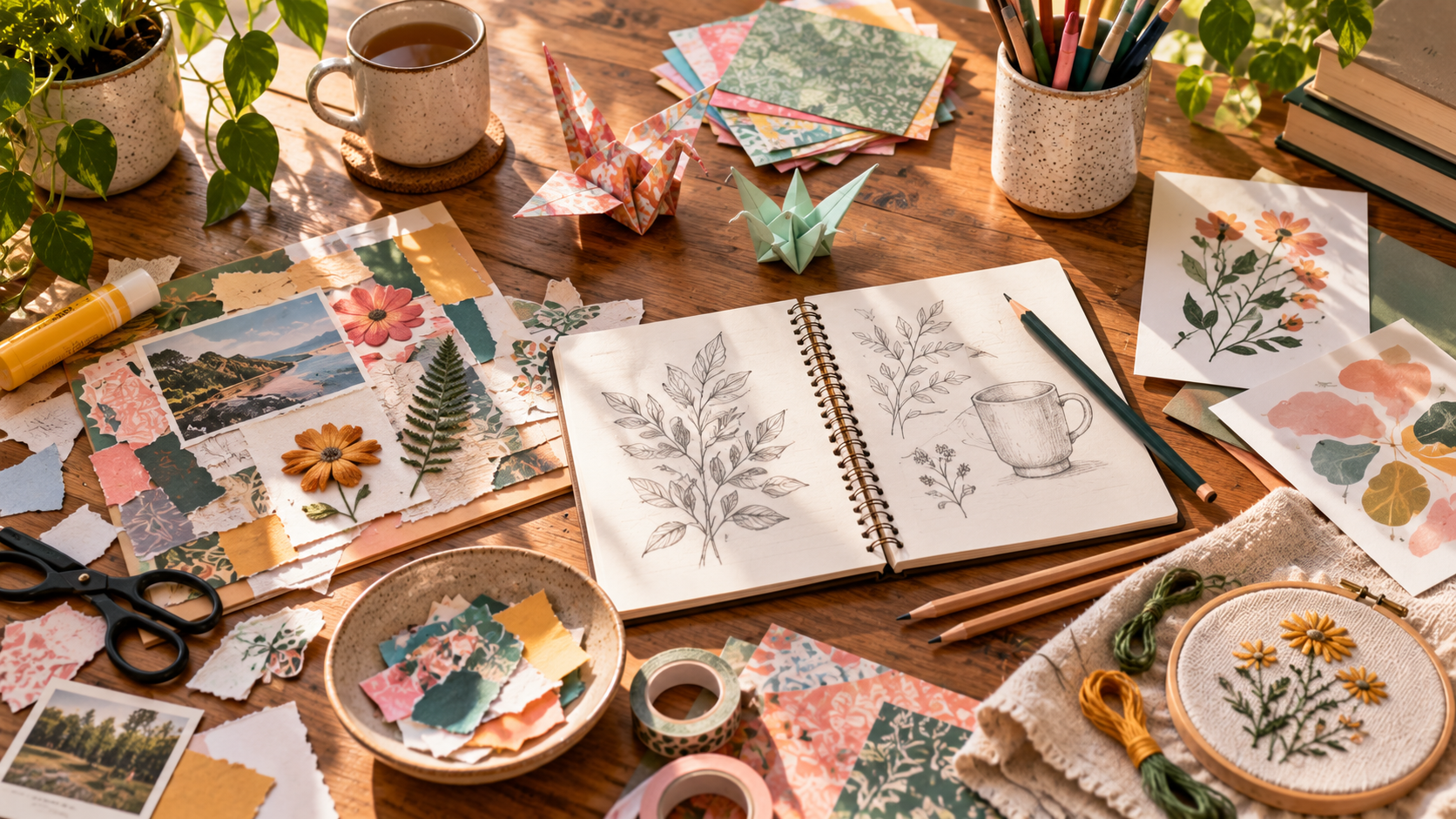
Creative Hobbies You Can Start With Paper
If you enjoy making things, these activities offer an approachable introduction without requiring a dedicated craft room.
4. Sketching
What you need: Pencil, paper, and an ordinary object
Try it for: 15 minutes
Cost: Free if you own a pencil and paper
Sketching is a hobby that can begin almost anywhere.
You don't need to know how to draw faces, landscapes, or realistic portraits.
Start by observing the shape of something simple.
A mug, spoon, shoe, or piece of fruit works well.
Your first activity: Place a mug on a table and draw it for 15 minutes.
Begin with its overall shape. Then add the handle and a little shading.
Don't restart because the drawing looks awkward.
Your first sketch is practice, not a final artwork.
Keep it affordable: Use an ordinary pencil and basic paper. Specialized drawing pencils can wait.
For a complete first-session tutorial, see How to Start Sketching as an Adult.
5. Origami
What you need: Paper
Try it for: 15 minutes
Cost: Free if you have suitable paper
Origami is the art of folding paper into shapes and figures.
Some designs are intricate, but beginners can start with simple folds.
You don't need patterned origami paper for your first attempts.
Ordinary paper cut into a square can work for many beginner designs.
Your first activity: Make a simple paper boat or folded paper hat using instructions you already know or a printed reference.
Focus on aligning the edges and making clear folds.
If the result is uneven, unfold it and try again.
Keep it affordable: Practice with scrap paper that's clean on one side. Save decorative paper for later.
6. Collage Making
What you need: Old paper, magazines, packaging, scissors, and glue
Try it for: 30 minutes
Cost: Free or low-cost, depending on materials available
Collage is a creative hobby built around arranging existing images, colors, textures, and shapes.
You can make something abstract or create a picture around a theme.
Unlike drawing, you don't have to produce every element from scratch.
Your first activity: Collect a few pieces of paper in three colors.
Cut or tear them into different shapes.
Arrange the pieces on another sheet until you like the composition.
Then glue them down.
You can add handwritten words or simple pencil marks if you want.
Keep it affordable: Reuse clean packaging, old magazines, or paper scraps. Avoid buying decorative materials until you've tried making a few collages.
7. Hand Lettering
What you need: Paper and a pen or pencil
Try it for: 15 minutes
Cost: Free if owned
Hand lettering is about drawing letters as visual shapes rather than simply writing them.
You can experiment with thick and thin strokes, spacing, decorative details, and different styles.
It's a creative activity even if your everyday handwriting is messy.
Your first activity: Choose a short word such as “bloom,” “hello,” or “create.”
Write it in five different styles.
Try tall narrow letters, rounded letters, block capitals, and letters with simple shadows.
Choose your favorite version and refine it.
Keep it affordable: Start with a pencil or ordinary pen. Brush pens and specialty markers are optional upgrades.
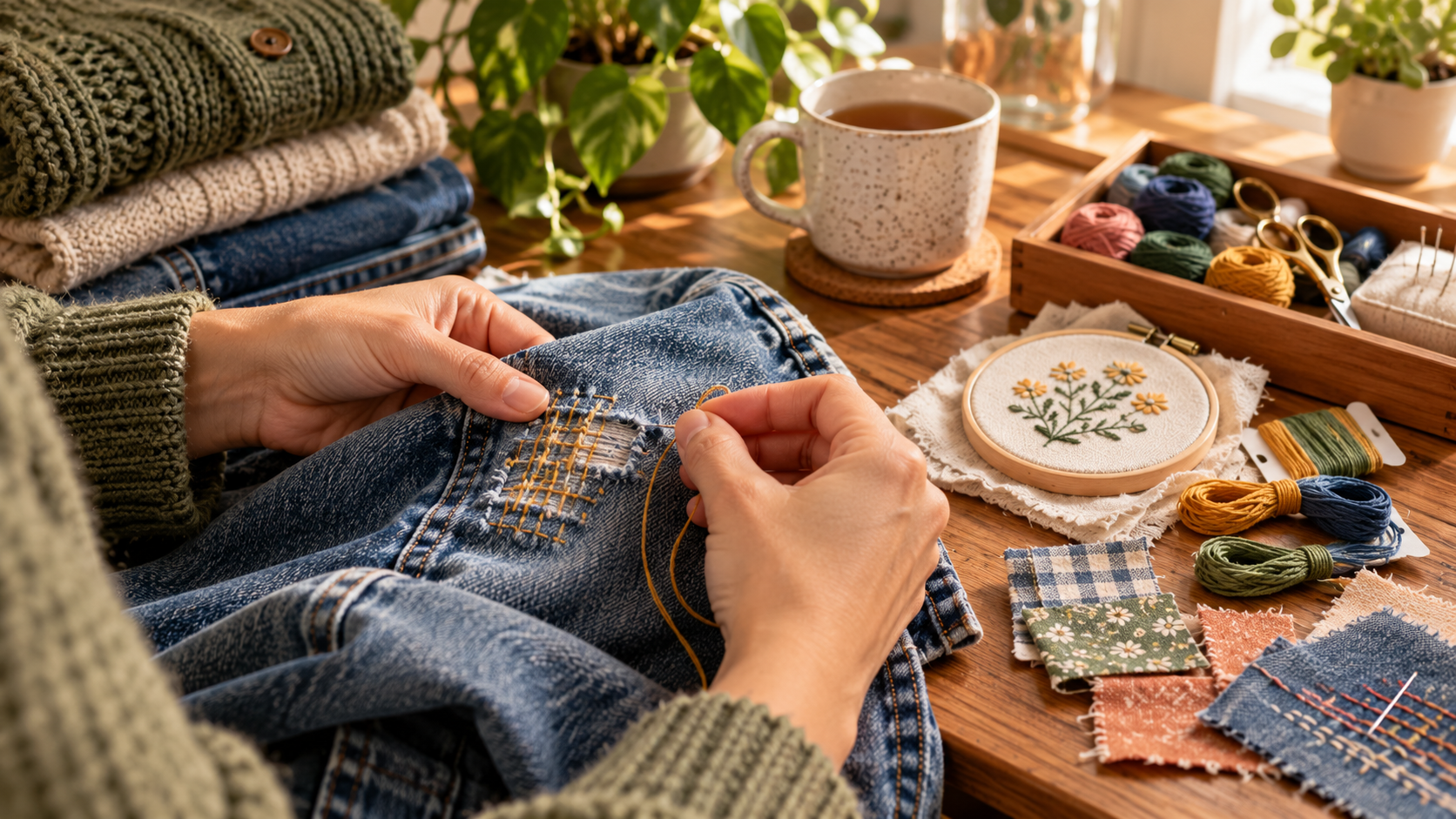
Hands-On Hobbies With Small Material Requirements
These hobbies may need a few supplies, but you can often begin with materials you already have or borrow.
8. Visible Mending
What you need: Old clothing or fabric, needle, and thread
Try it for: 30 minutes
Cost: Low if you need basic sewing supplies
Visible mending is the practice of repairing fabric in a way that intentionally shows the stitches or patch.
Instead of hiding every repair, you can turn it into a decorative detail.
It's a practical hobby that combines creativity with everyday usefulness.
Your first activity: Find an old piece of fabric that you're comfortable practicing on.
Use a needle and thread to make a row of simple running stitches.
Try creating a small square, line, or pattern.
Once you're comfortable, experiment with repairing a worn area on an item of clothing.
Keep it affordable: Use leftover thread and fabric scraps where possible. Practice on old material before working on something valuable.
9. Embroidery
What you need: Fabric, embroidery thread, and a suitable needle
Try it for: 30 minutes
Cost: Low, though some basic supplies may be necessary
Embroidery involves decorating fabric with stitches.
You can create flowers, shapes, letters, patterns, or simple abstract designs.
You don't need to begin with a complicated project.
Learning one basic stitch is a perfectly reasonable first goal.
Your first activity: Draw a small line or simple shape on scrap fabric.
Practice making running stitches along it.
Try to keep the stitches roughly even, but don't worry about perfection.
Keep it affordable: Start with a small amount of thread and fabric you can safely practice on. A hoop may be helpful for some projects, but don't buy an entire collection of supplies before learning the basics.
Our guide to starting embroidery as an adult walks through the process in more detail.
10. Paper Quilling
What you need: Narrow paper strips, glue, and a tool for rolling paper
Try it for: 30 minutes
Cost: Low; you may need to improvise or obtain basic supplies
Paper quilling uses rolled and shaped strips of paper to create decorative patterns.
The results can look surprisingly detailed, but the basic technique is straightforward.
You roll a strip, allow it to loosen slightly, and shape it with your fingers.
Your first activity: Cut a few narrow strips from ordinary paper.
Carefully roll each strip around a suitable blunt, narrow object.
Let the coils loosen, then experiment with shaping them into circles, teardrops, or simple petals.
Arrange several shapes into a small flower design.
Keep it affordable: Try paper scraps before buying specialty quilling strips. Use care when cutting paper, and avoid sharp improvised tools.
11. Simple Indoor Gardening
What you need: A suitable plant or cutting, container, light, and water
Try it for: 15 minutes initially
Cost: Free or low-cost if suitable materials are available
Indoor gardening can be as simple as caring for one plant.
You don't need a large collection of pots or an elaborate growing setup.
The interesting part is learning what your plant needs and noticing how it changes over time.
Your first activity: Choose one plant you already own, or obtain a suitable plant or cutting from someone who can share it.
Find out what kind of light and watering conditions that particular plant needs.
Check its current location and make a simple care plan.
Keep it affordable: Reuse appropriate containers when possible, but make sure the plant has suitable drainage and growing conditions. Not all plants grow well in water, and not every cutting can be propagated successfully.
If you have pets or young children, check whether the plant is safe for them before bringing it into your home.
Playful Hobbies That Need Little Equipment
Not every hobby has to produce something.
Sometimes the enjoyment comes from solving a challenge, experimenting, or playing.
12. Puzzles
What you need: A puzzle, puzzle book, or homemade challenge
Try it for: 20 minutes
Cost: Free if you already have suitable materials
Puzzles come in many forms.
You might enjoy jigsaws, word puzzles, number puzzles, logic problems, or simple homemade challenges.
The best starting point is something difficult enough to be interesting without becoming frustrating.
Your first activity: Find a puzzle you already own or make a simple word-search grid using paper.
Choose a short session and see how much you enjoy the process.
Keep it affordable: Revisit old puzzle books, borrow a jigsaw, or create paper-based challenges rather than buying new sets immediately.
13. Solo Card Games
What you need: A standard deck of playing cards
Try it for: 15 minutes
Cost: Free if you already own a deck
A deck of cards can provide plenty of entertainment without a screen.
Solo card games are especially convenient when you want a short activity that doesn't require anyone else to join.
You can learn simple patience-style games and gradually explore different variations.
Your first activity: Set up a familiar solitaire game using physical cards.
Play one complete round, even if you don't win.
Notice whether you enjoy the rhythm of arranging cards and making decisions.
Keep it affordable: One ordinary deck is enough. There's no need to purchase themed or collectible cards.
14. Memory Challenges
What you need: Small household objects, paper, and a cloth
Try it for: 10 minutes
Cost: Free
Memory challenges can be playful activities rather than formal training exercises.
You can create them using things already in your home.
Your first activity: Place ten small objects on a table.
Look at them for one minute.
Cover them with a cloth.
Then write down as many as you can remember.
Reveal the objects and see what you missed.
Try again with a different arrangement or a few more items.
Keep it affordable: Use safe everyday objects such as keys, spoons, buttons, pencils, or coins. Keep small objects away from young children.
Treat this as a game, not a test of intelligence or a promise of improved memory.
15. Paper Crafting
What you need: Paper, scissors, and optional glue
Try it for: 30 minutes
Cost: Free or low-cost
Paper crafting includes making decorative objects, cards, paper flowers, simple models, and other handmade creations.
It's flexible enough for complete beginners and doesn't require a large workspace.
Your first activity: Make a simple folded greeting card.
Cut a piece of paper to size, fold it in half, and decorate the front with shapes cut from scrap paper.
Write a short message inside.
You can give it to someone or keep it as your first project.
Keep it affordable: Reuse suitable paper and packaging. You don't need a cutting machine, specialty card stock, or decorative tools to begin.
Which Hobby Should You Choose?
If several ideas sound interesting, don't feel you have to pick the perfect one immediately.
Start with your current mood and the materials you already have.
Want something quiet? Try journaling, reading, or a puzzle.
Want to make something? Try sketching, collage, origami, or paper crafting.
Want a practical skill? Try visible mending or embroidery.
Want something playful? Try solo card games or a memory challenge.
You can also explore 25 Offline Hobbies for Adults That Are Actually Fun for a wider range of activities.
And if choosing feels harder than starting, our guide to finding a hobby you actually enjoy can help you narrow your options.
Try the Seven-Day No-Spend Hobby Challenge
Here's a simple way to explore hobbies without committing to one immediately.
You don't have to complete every day consecutively. The point is to experiment.
Day 1: Write Something
Spend ten minutes journaling or creative writing.
Use whatever paper and pen you already own.
Day 2: Draw Something
Choose an everyday object and sketch it for 15 minutes.
Don't judge the result.
Day 3: Make Something From Paper
Try a simple fold, collage, or handmade card using spare paper.
Day 4: Play Something
Choose a card game, puzzle, or memory challenge.
Give yourself 15 to 20 minutes.
Day 5: Read Something
Spend time with a book, magazine, or printed story you already have access to.
Day 6: Revisit Your Favorite
Choose whichever activity you enjoyed most during the previous five days.
Try it again.
Notice whether the second session is just as enjoyable.
Day 7: Decide What Comes Next
Ask yourself three questions:
Which activity made me want to continue?
Which one fit most naturally into my day?
Would I enjoy trying it again without buying anything?
If one hobby stands out, keep exploring it.
If nothing feels right, that's useful information too.
You can try another set of activities.
How to Keep a New Hobby Affordable
Starting cheaply is one thing. Keeping the hobby affordable is another.
A few simple habits can help.
Use What You Already Own
Before purchasing anything, check whether you already have suitable materials.
An old notebook, spare fabric, paper scraps, or a deck of cards might be enough to begin.
Borrow Before You Buy
Friends, family members, community groups, and libraries may have books or materials you can borrow.
Availability varies, but it's worth exploring.
Start With One Small Project
Don't plan an entire collection of supplies before finishing your first activity.
Choose one small project.
Complete it.
Then decide what would genuinely improve your next attempt.
Avoid Buying Supplies for Your Imaginary Future Self
It's easy to imagine becoming someone who fills beautiful sketchbooks, creates intricate embroidery, or grows dozens of houseplants.
That future might happen.
But you don't need to shop for it today.
Buy for the activity you're actually doing now.
Let Your Interests Change
You're allowed to try something and decide it isn't for you.
A hobby isn't a lifelong contract.
Sometimes the value of trying something new is simply discovering what you enjoy—and what you don't.
Do Cheap Hobbies Feel Less Rewarding?
Not necessarily.
The amount you spend doesn't determine whether an activity is enjoyable.
A simple drawing can be satisfying.
A handwritten story can make you laugh.
Repairing an old piece of clothing can give you something useful to wear again.
And a quiet afternoon with a book can be exactly what you wanted.
Expensive equipment may expand what's possible in certain hobbies, but it doesn't automatically make the experience more meaningful.
What matters is whether you enjoy spending your time that way.
Start Small. See What Sticks.
You don't need a special room, a large budget, or a long list of supplies to begin a hobby.
You might start with a notebook.
A pencil.
A few sheets of paper.
Or something you already have tucked away in a drawer.
Try one activity for fifteen minutes.
Then ask yourself a simple question:
Would I like to do that again?
If the answer is yes, you've found something worth exploring.
And if the answer is no, there are plenty of other possibilities.
For more ideas, see our 50 Things to Do Instead of Scrolling.
Not sure which hobby fits your time, budget, and interests?
Find My Hobby